

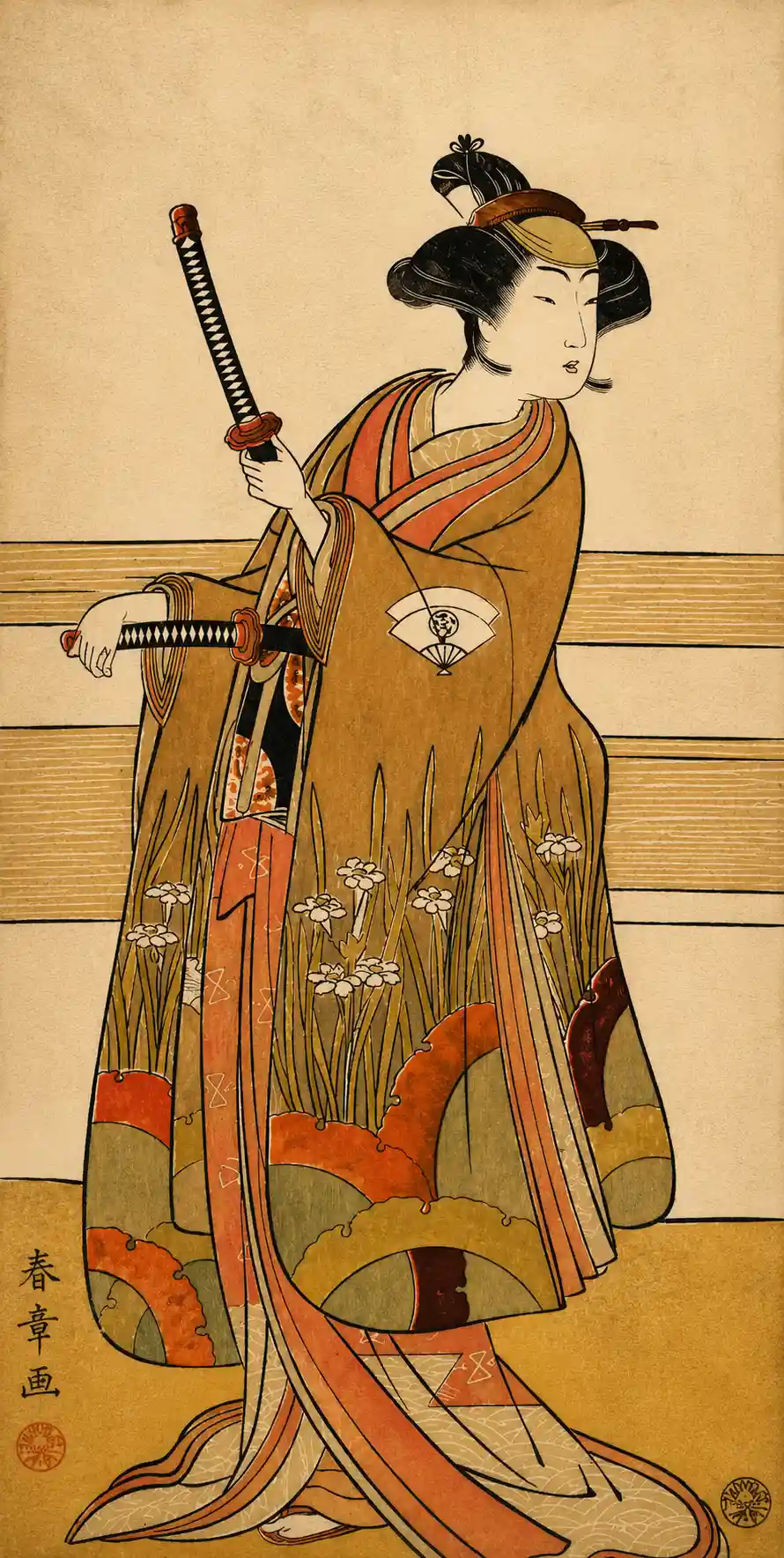
Onoe Tamizo in Shadowed Silence
The lantern's glow flickers. Shadows dance across the wooden stage. Onoe Tamizo stands poised, a samurai woman wrapped in layers of silk. Her gaze is firm, piercing through the dim light, the weight of her costume mirroring the weight of the role she embodies. The air hangs heavy with expectation.
A faint rustle of paper echoes as spectators shift, their breaths held in the collective silence. The scent of incense drifts, mingling with the whisper of distant footsteps. She moves, the rustling fabric breaking the stillness, each step calculated, each gesture echoing with unspoken stories of valour and sacrifice.
Her hand grips the hilt of a katana. The metal cold, its promise sharp. The stage seems a world apart, where time blurs, and the boundaries of reality dissolve. The audience watches, entranced, as the art of kabuki transforms the air, filling it with the echoes of Edo’s forgotten whispers.
Historical Echo
In the Edo period, kabuki theatres thrived with stories of heroism and intrigue. Katsukawa Shunshō captured these moments with vivid precision. His portrayal of Onoe Tamizo as a samurai woman reflects a society captivated by the theatrical blending of gender and power. The image immortalises the era’s fascination with strong, complex characters, forever frozen in the elegance of ukiyo-e.