

Silent Resolve
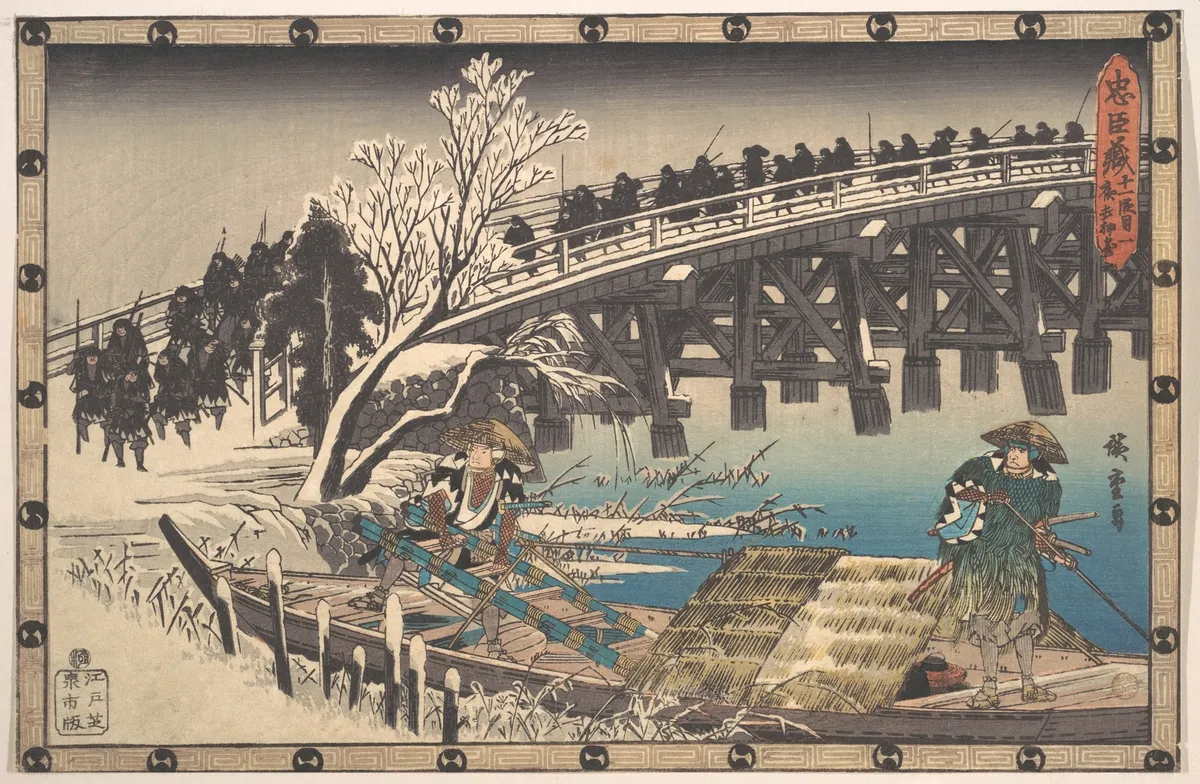
The bridge stretched long under the moon's watchful eye. Cold air wrapped around the figures moving slowly, deliberately. The night was silent, save for the soft rustle of robes and the occasional clink of armour. Each step was a promise, a vow sworn under the cloak of darkness.
The ronin moved in unison, shadows barely breaking the night's stillness. Their faces were set, eyes fixed on the path ahead. Beneath their feet, the wooden planks creaked softly, bearing the weight of their resolve. The river below whispered secrets to the night, but none could distract them from their purpose.
Lanterns flickered at the bridge's edge, casting a faint glow. It caught the glint of steel, the only hint of the night's intentions. The air was thick with anticipation, the kind that made breaths shallow and hearts pound with quiet intensity.
The bridge was long, but not endless. On the other side lay destiny, shaped by hands bound to honour and revenge. The ronin's journey was silent, but their intent roared like the river below, unstoppable and unyielding.
Historical Echo
In the Edo period, ronin were masterless samurai, often regarded with suspicion. Yet, their story here is one of loyalty and retribution. Utagawa Hiroshige captured this moment of poised tension, the crossing of a bridge symbolising a passage to fate. The night attack upon Moronao is a tale of justice meted out by those who had lost everything but their honour.