

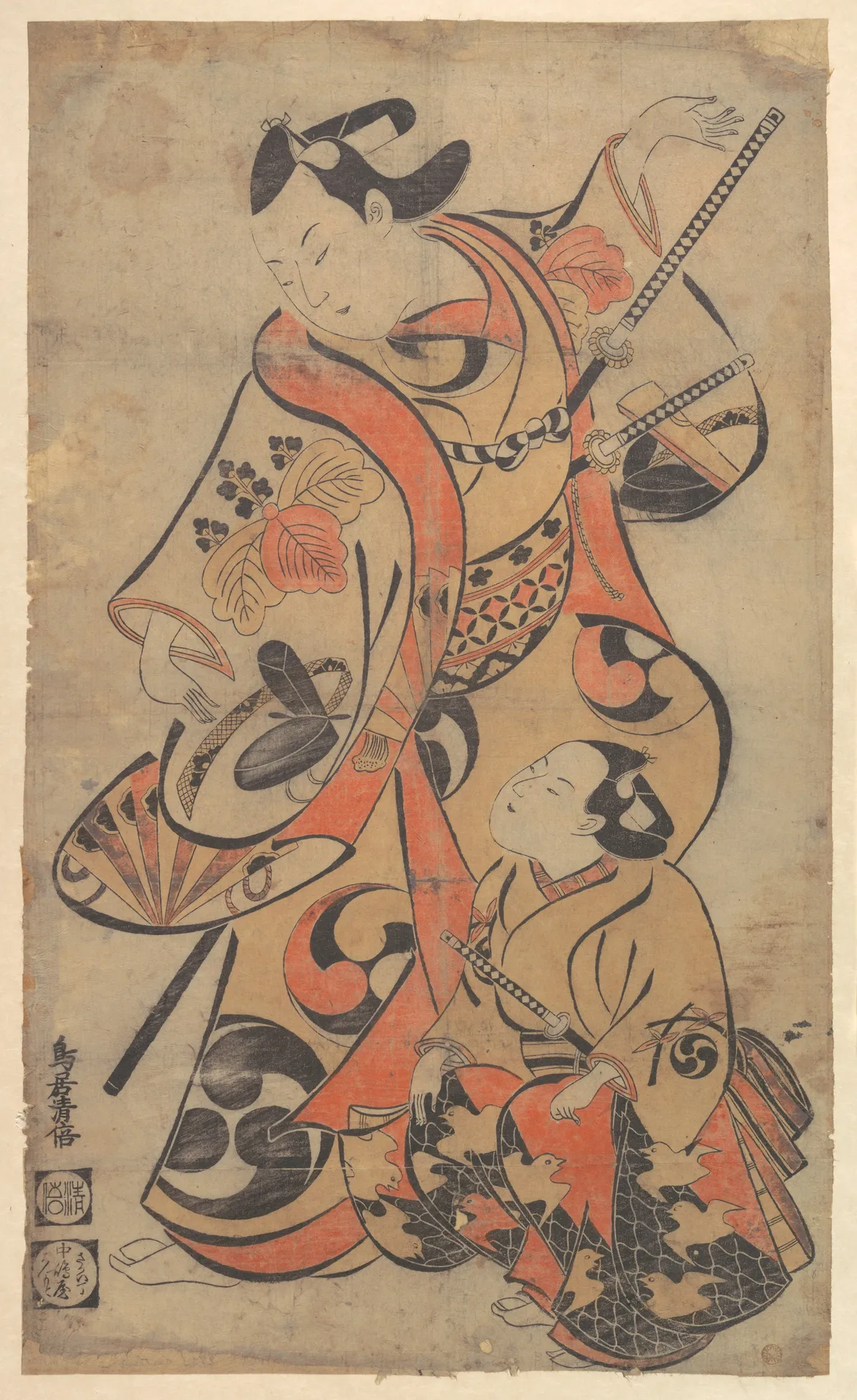
The Actor's Transformation
The night air was thick with anticipation. Lanterns flickered, casting wavering shadows on the wooden stage. The audience murmured in the dim light, waiting. Then, silence fell.
Yoshizawa Ayame stepped onto the stage. His presence was commanding, every inch a samurai. The fabric of his costume whispered as he moved, brushing against the tatami beneath his feet. His eyes were intense, capturing the spirit of the warrior he embodied.
A hush enveloped the theatre. Ayame's hand rested upon the hilt of his katana, fingers poised. The sound of distant drums echoed, a heartbeat beneath the surface tension. He began to speak, his voice a low rumble that filled the space.
The crowd leaned forward, drawn into the world he conjured. Ayame's movements were precise, each gesture a stroke of the artist's brush. His transformation complete, he was the samurai, living and breathing before them.
The weight of history hung heavy in the air. This was more than performance; it was the soul of Edo. The boundaries between actor and character, reality and illusion, blurred under the moonlit sky.
Historical Echo
In the early 18th century, kabuki theatre was a vibrant force in Edo. Torii Kiyomasu I captured this energy in his prints. He immortalised actors like Yoshizawa Ayame, whose portrayal of samurai roles was legendary. These prints were windows into a world of drama and discipline, where the stage was a battlefield of emotion and artistry.