

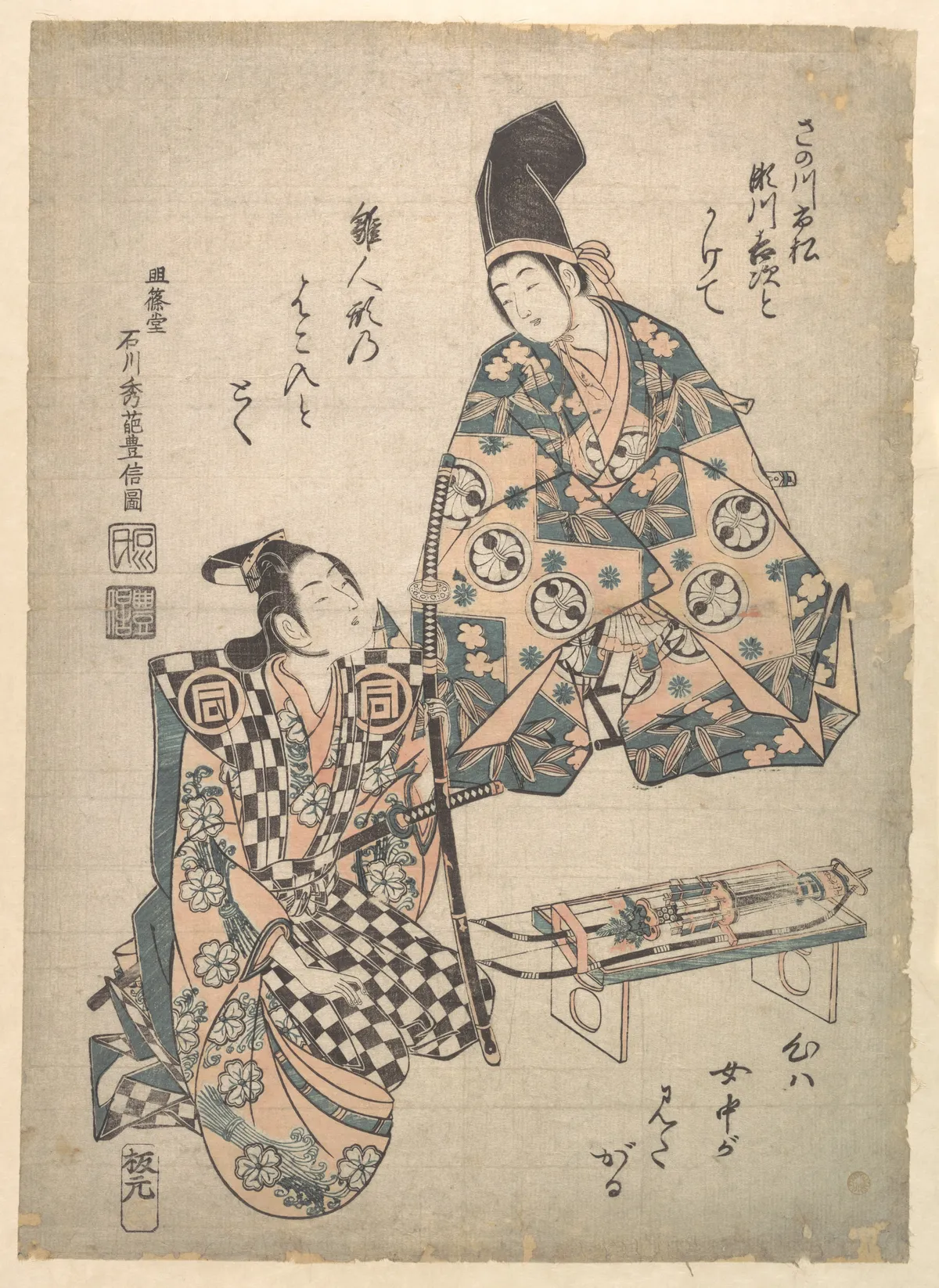
The Daimyo's Young Son
The paper lanterns cast a soft glow. The air, thick with anticipation, carries the scent of incense. Segawa Kichiji stands poised, his silk robes whispering with each breath. He embodies the young son of a daimyo, innocence and duty wrapped in brocade. His eyes, dark and reflective, meet the audience without seeing them.
Beside him, Sanogawa Ichimatsu stands firm. A samurai attendant, his presence a protective shadow. Armour gleams under the dim light, a cold, metallic promise. His hand rests on the hilt of a sword, the weight unnoticed in his practiced grip.
The stage, simple yet profound, holds its breath. The actors' movements, deliberate and slow, capture the court's elegance. Whispers of the audience barely disturb the silence. Each gesture, each pause, a dance of restraint and control.
The night outside is silent. A gentle breeze rustles through the trees, a quiet reminder of the world beyond the theatre's walls. Inside, time stretches, held in the delicate balance between performance and reality.
Historical Echo
In Edo's vibrant theatre district, kabuki plays thrived. Ishikawa Toyonobu captured these moments, immortalising actors in their roles. The prints served as both art and advertisement, drawing patrons into the world of drama and spectacle. This print, from around 1750, reflects the period's fascination with the interplay of status and identity on stage.