

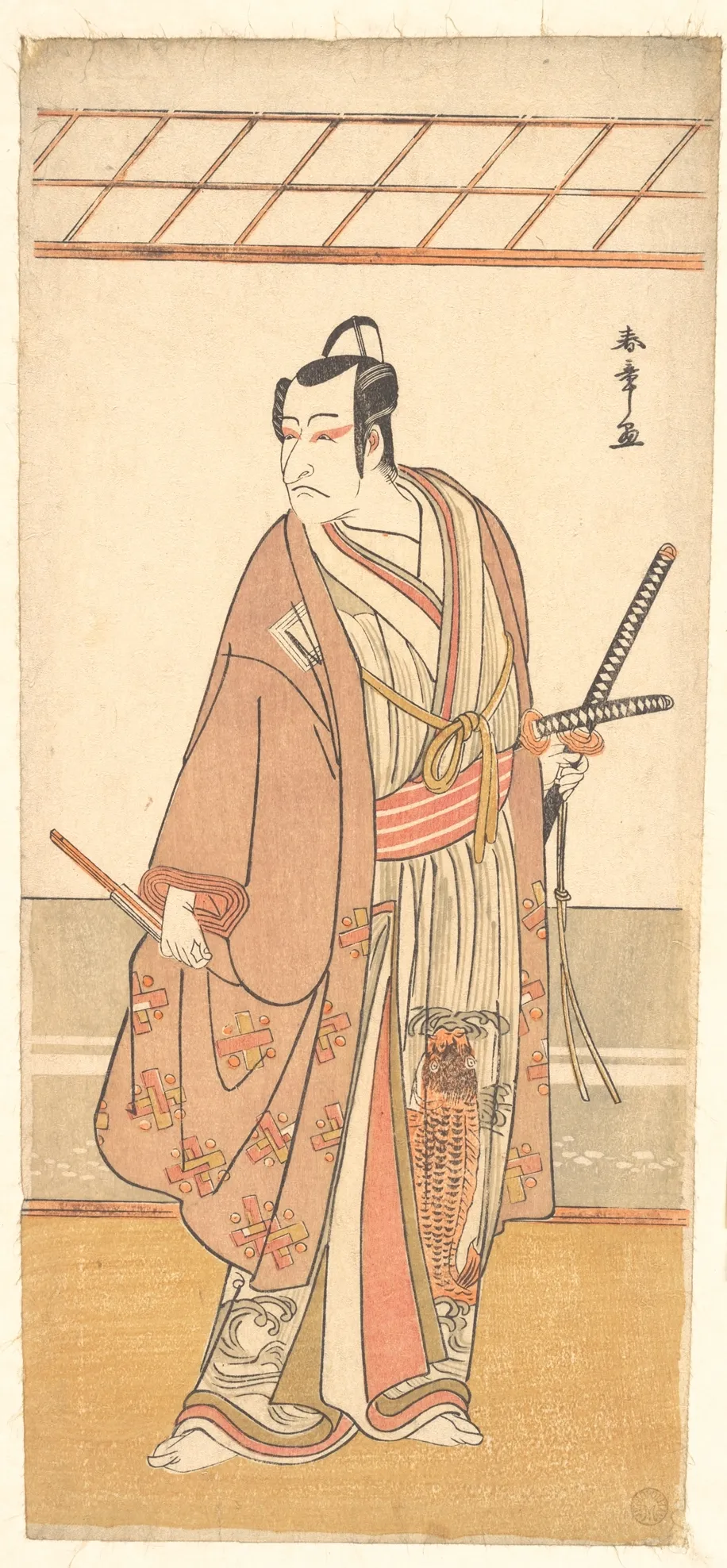
The Actor's Poise
The kabuki theatre hummed with anticipation. Shadows flickered against the wooden walls. Ichikawa Danjuro V stood centre stage. His presence commanded the room. The purple haori draped over his shoulders shimmered in the dim light. Each fold heavy with the weight of his role. He was not merely an actor. He was a legend.
The audience held their breath. Silence thick as fog. The rustle of his garment, the soft thud of his footsteps. They were lost in the illusion. The boundary between actor and samurai blurred. Danjuro was both man and myth. His eyes, dark and knowing, spoke of battles won and lost.
A faint scent of incense wafted through the air. The theatre's musty wooden scent mingled with it. Danjuro's hand rested on the hilt of his sword. Not for use, but for the weight of tradition. His voice, when it came, was low. Resonant as a distant drum. Every word cut through the silence like a blade.
The role demanded more than skill. It required his soul. The audience, entranced, leaned forward. Their hearts mirrored his every move. The air was thick with the unspoken. The scene, frozen in time.
Historical Echo
During the Edo period, kabuki theatre was more than entertainment. It was a mirror to society, reflecting its fears and desires. Ichikawa Danjuro V was a master. Renowned for his aragoto style, he embodied strength and power. Katsukawa Shunshō captured this essence in his print. The purple haori symbolised nobility. It was a statement, bold and unyielding. This print preserves a moment. A fleeting glimpse into a world where theatre and reality intertwined.