

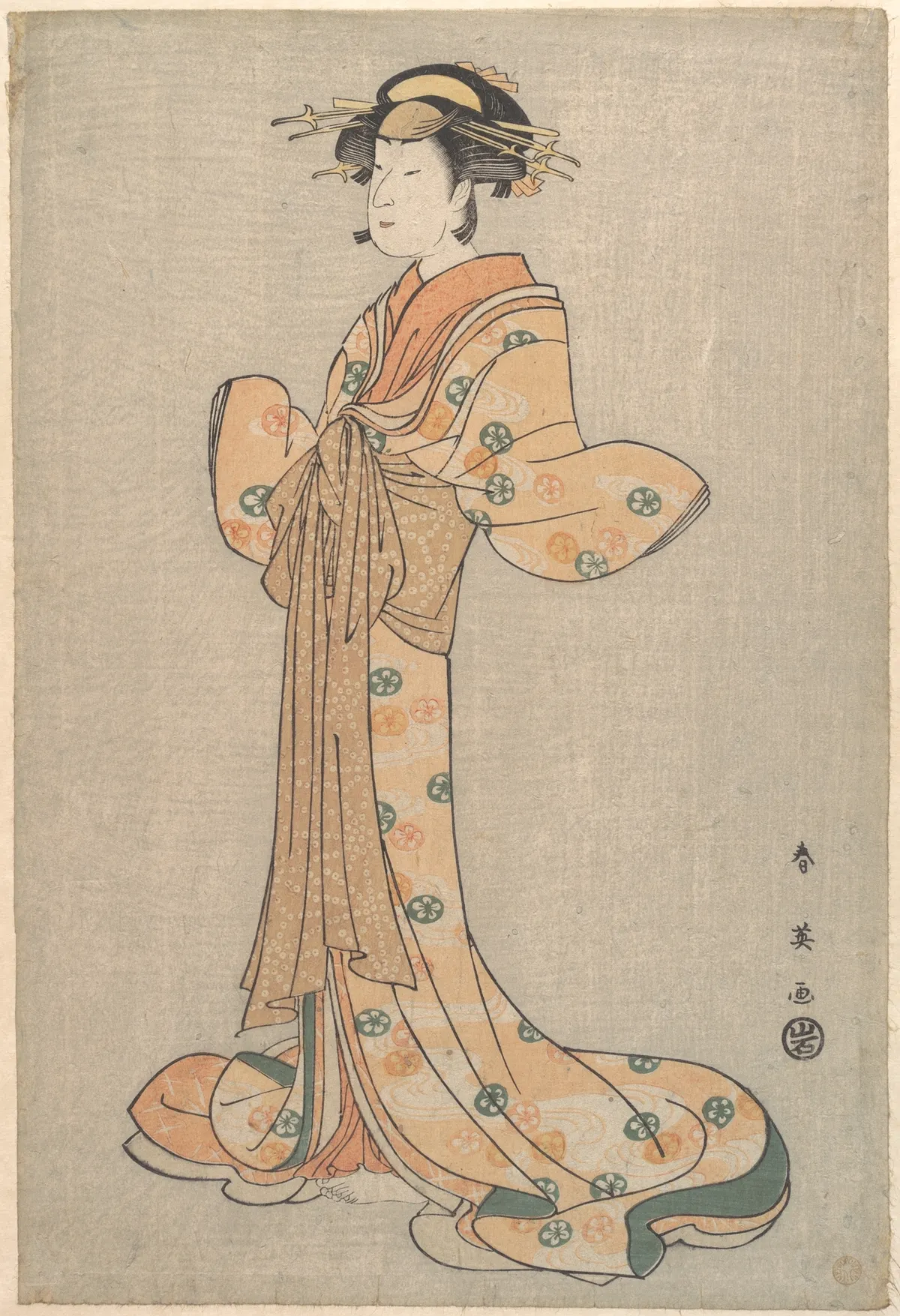
The Courtesan's Gaze
The room was dim, lit by flickering candles. Shadows danced upon the tatami mats. Nakamura Noshio II stood poised, embodying the courtesan Okaru. Silk robes rustled with each subtle shift. The air was heavy with the scent of incense and anticipation.
Outside, rain pattered against wooden eaves, a soft rhythm in the night. Within, the audience held its breath. Okaru's eyes, painted with kohl, looked out with a knowing sadness. Her lips, a perfect vermilion bow, whispered words not meant to be spoken aloud.
Silence stretched, broken only by the distant clatter of a shamisen. Each note hung in the air, fragile as the moment. The actor's presence filled the space, weighty and ethereal. His transformation was complete; he was no longer the man, but the woman, the story, the very air around them.
Time slowed. The world outside faded away, leaving only this room, this story, this courtesan's gaze.
Historical Echo
In the late 18th century, the kabuki theatre thrived. Actors like Nakamura Noshio II were revered for their ability to transform. Katsukawa Shun'ei captured this essence in his prints. Here, the lines between actor and character blurred. The courtesan Okaru became a vessel for emotion, a reflection of Edo's complex society. Through Shun'ei's eyes, the print remains a testament to the ephemeral beauty of performance.