

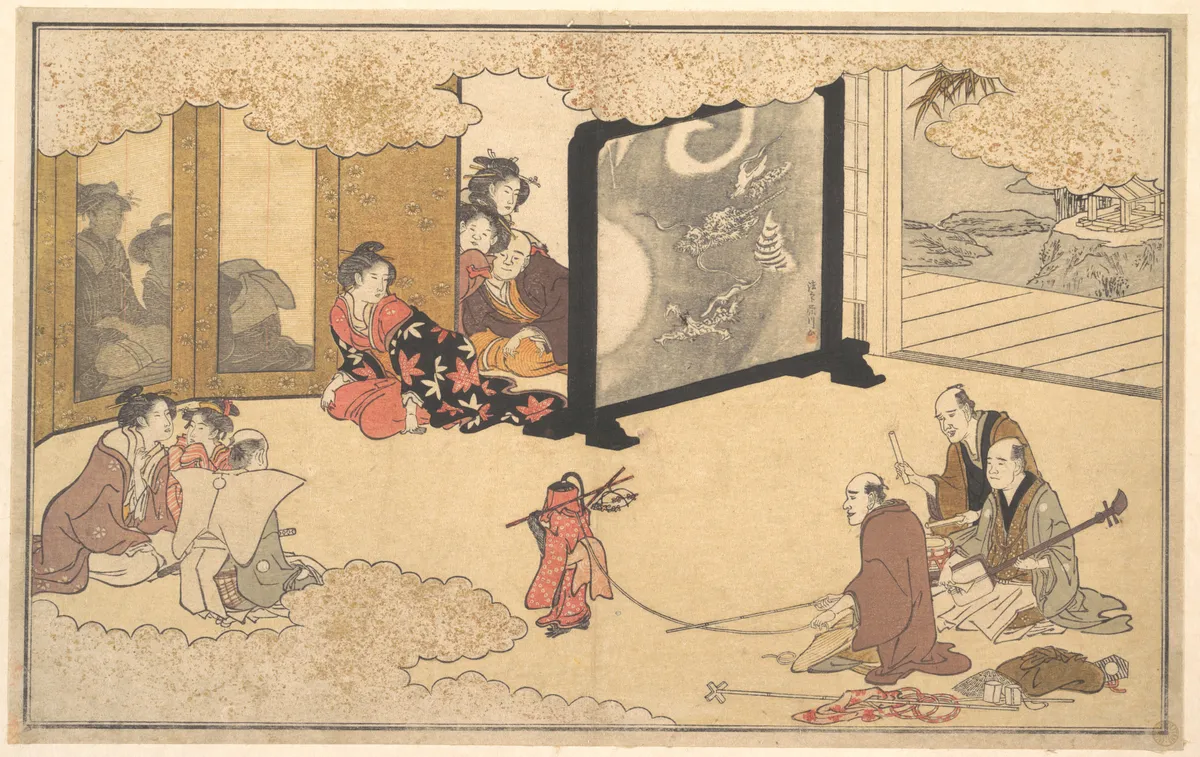
An Evening at the Theatre
The lanterns flicker softly in the evening air. The theatre hums with anticipation. Shadows dance across the wooden floor, mingling with the murmurs of the waiting crowd. Perfumed smoke drifts lazily, carrying the scent of incense and the warmth of bodies packed close.
On the stage, actors in vibrant costumes move with deliberate grace. Their painted faces, stark in the dim light, convey emotions of love, betrayal, and honour. Fans flutter, and the rustle of silk kimonos echoes through the hall.
An old man coughs softly, his eyes fixed on the stage. A child leans forward, eyes wide, captivated by the spectacle. The audience breathes in unison, caught in the spell of the performance.
The theatre is a world unto itself, a place where reality blurs into the fantastical. Utamaro captures this moment, freezing the ephemeral in wood and ink. Here, in this print, the echoes of laughter and applause remain, a testament to the magic of the kabuki stage.
Historical Echo
In the late 18th century, kabuki theatre was a cornerstone of Edo's cultural life. Kitagawa Utamaro, renowned for his portraits of women, turned his skilled hand to capturing the theatre's vivid life. His prints immortalised the actors' expressive performances and the audience's rapt attention. This was a time when the lines between audience and performer blurred, creating an immersive experience that Utamaro conveys with precise elegance.