

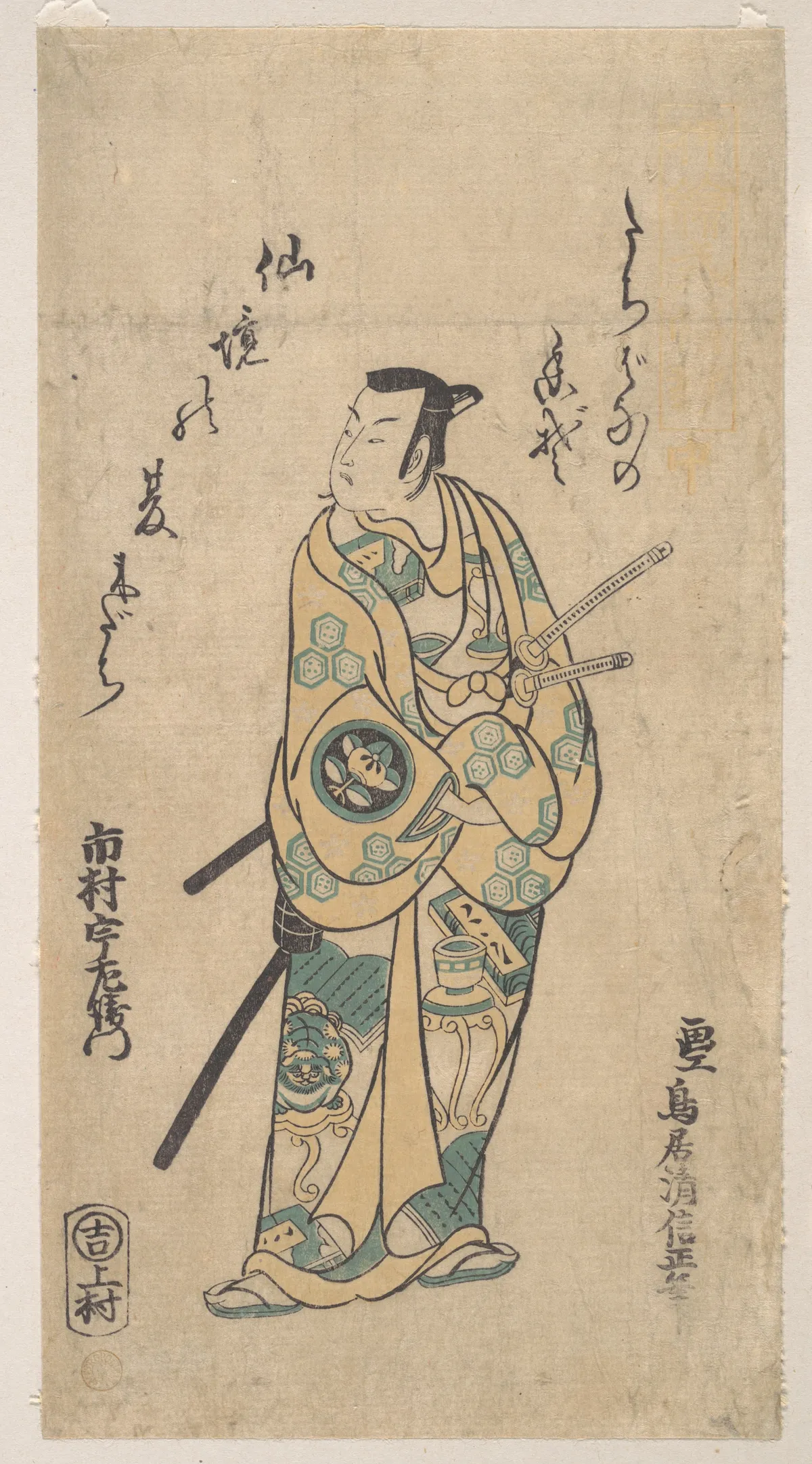
Green and Yellow Silence
The stage is silent, save for the whisper of the actor's robes. Ichimura Uzaemon VIII stands as a samurai, his presence commanding the dimly lit space. Green and yellow fabrics drape his form, shimmering under the soft glow of lantern light.
His gaze is fierce, yet contemplative. The weight of the samurai's duty hangs in the air, a silent echo of battles fought and alliances made. The theatre's wooden floor creaks gently, a reminder of the world beyond this moment.
The actor shifts his stance, his feet sliding quietly over the polished boards. The audience holds its breath, caught in the stillness that envelops the room. The paper-thin line between reality and performance blurs, drawing them into the world of the warrior.
Lanterns flicker, casting shadows that dance across his face. The scent of incense lingers, mixing with the subtle aroma of aged wood. Each movement, each gesture, tells a story of honour and sacrifice, of roles played both on and off the stage.
Outside, the night deepens. Inside, the samurai stands, timeless in his green and yellow, a figure both real and imagined, forever captured in the fleeting art of ukiyo-e.
Historical Echo
In the mid-18th century, the world of kabuki thrived. Actors like Ichimura Uzaemon VIII were celebrated figures, masters of transformation. Torii Kiyonobu I, renowned for his vivid depictions, captured these moments with striking clarity.
This woodblock print, created around 1742, reflects the period's fascination with theatre and its characters. The bold colours and dynamic lines embody the energy of the performance, a testament to the enduring allure of kabuki and its stories.