

The Actor's Gaze
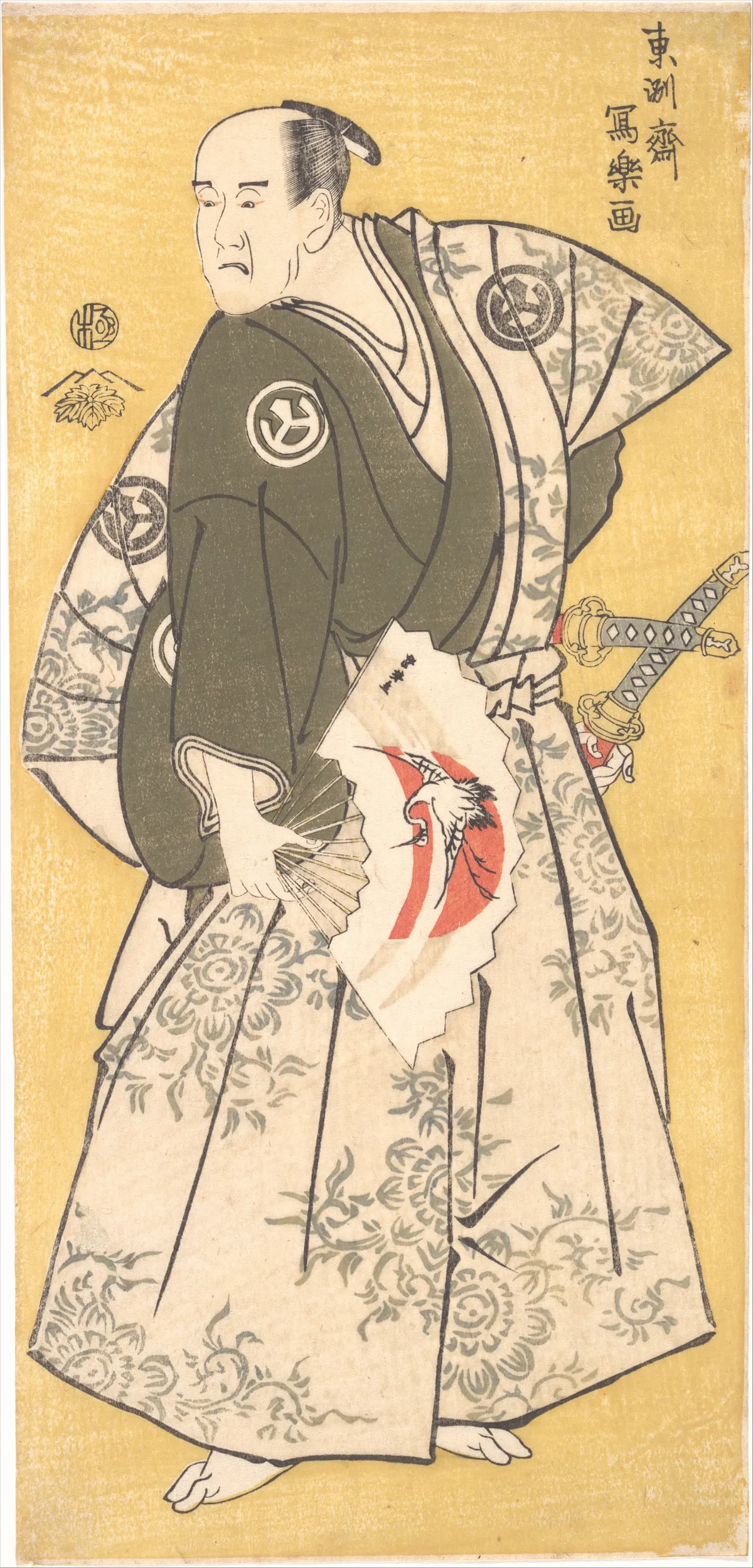
A dimly lit stage. Shadows creep across the wooden floor. Yamashina Shirojuro stands centre stage, his eyes fixed on an unseen horizon. The air is thick with the scent of incense, mingling with the mustiness of old costumes. He wears the guise of Nagoya Sanzaemon, a samurai burdened by fate. His kimono rustles softly as he moves, each step deliberate, echoing through the theatre.
The audience is silent, breaths held as if caught in a spell. Shirojuro raises his hand, fingers splayed like the branches of a winter tree. His face, a canvas of painted emotions, captures the flickering candlelight. The lines etched in his brow speak of hidden turmoil. His lips, a thin line, tremble with unspoken words.
The actor becomes the samurai. In this moment, time suspends. The theatre walls fade away, leaving only the intensity of his gaze, the weight of his role. He embodies the struggle between duty and desire, a tension felt in the very air.
His voice breaks the silence, low and resolute. It carries the echoes of ancient battles, the honour of loyal service. The words weave through the audience, binding them to his tale. Each syllable is a stone dropped in a still pond, rippling through the night.
In the flickering light, the boundary between actor and role blurs. Shirojuro's presence fills the space, commanding attention, leaving an indelible mark on all who watch. The performance is a fleeting dream, leaving only the lingering scent of incense and the memory of his gaze.
Historical Echo
Tōshūsai Sharaku's portrayal of Yamashina Shirojuro as Nagoya Sanzaemon captures the essence of Edo period kabuki. The artist's work is renowned for its striking realism and emotional depth. Sharaku's prints, though produced for only ten months, have left a lasting impact on the ukiyo-e tradition. The actor's intense expression and elaborate costume exemplify the dramatic flair of the time, reflecting the cultural and aesthetic values of late 18th-century Japan.