

The Silent Stage
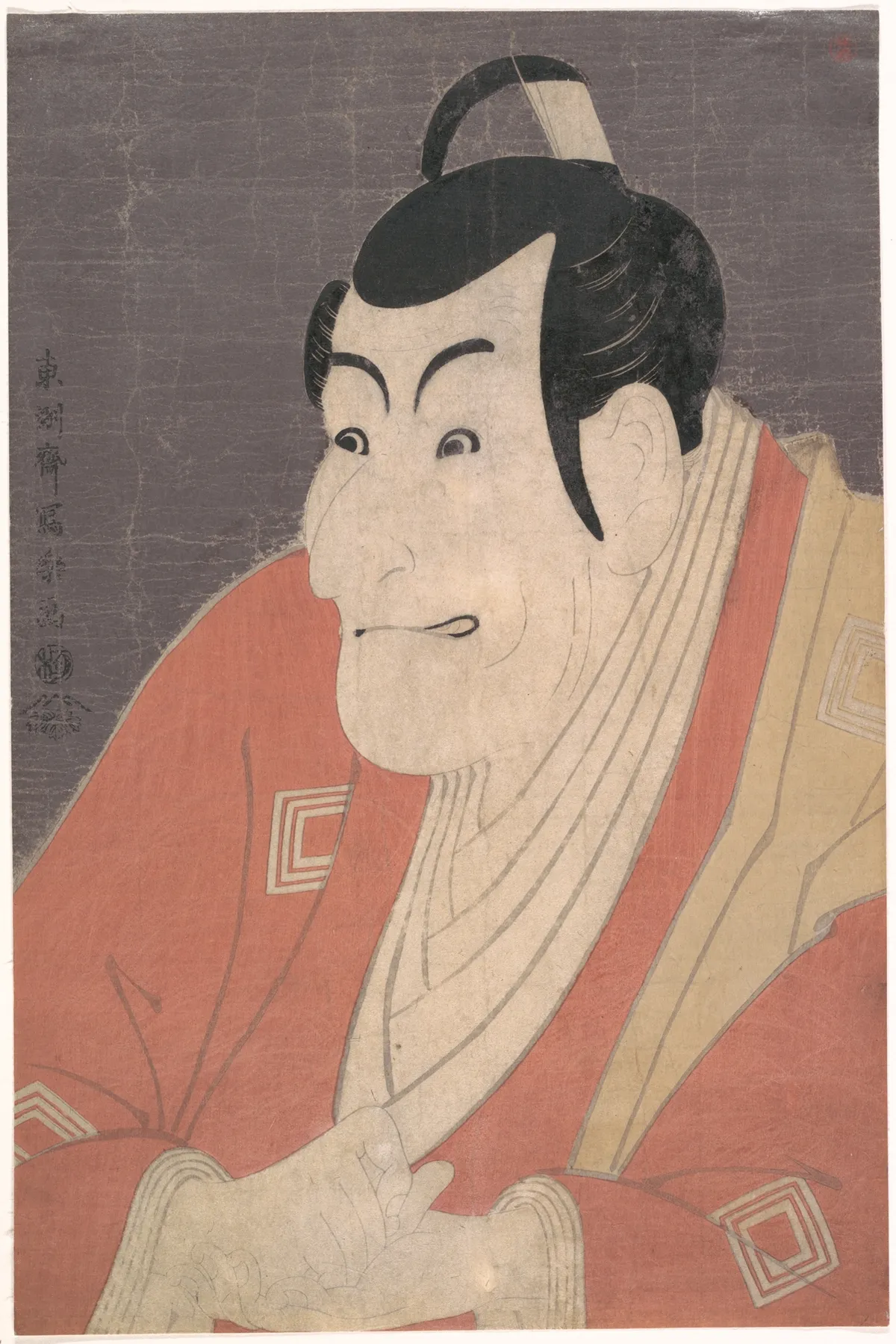
The paper holds a breath. Ink settles into fibres, tracing the sharp features of Ichikawa Ebizō. Beneath the dim glow of lanterns, his eyes pierce the silence. He stands alone, yet the echo of applause seems to hover in the air. His face, a study in intensity, speaks more than words ever could.
The weight of his robe is palpable. Rich fabric drapes over his shoulders, each fold a testament to his craft. The air is thick with the scent of old wood and lingering incense. Shadows play across his visage, accentuating the lines of tension that mark his role in the play "The Colored Reins of a Loving Wife".
Outside, the world is silent. Inside, the stage whispers tales of love and duty. His stance, poised and deliberate, captures the moment before action. The anticipation is a living thing, felt in the stillness of the room.
Each stroke of Sharaku's brush adds to the weight of the moment. The actor's presence is magnetic, drawing the viewer into the ancient drama. Through the print, time stretches thin, connecting the past with the present.
Historical Echo
In May 1794, Tōshūsai Sharaku captured the essence of Kabuki theatre. His portrayal of Ichikawa Ebizō, also known as Ichikawa Danjūrō V, is legendary. This print embodies the dramatic flair of the Edo period stage. Sharaku's work remains a haunting reminder of the ephemeral nature of performance art.