

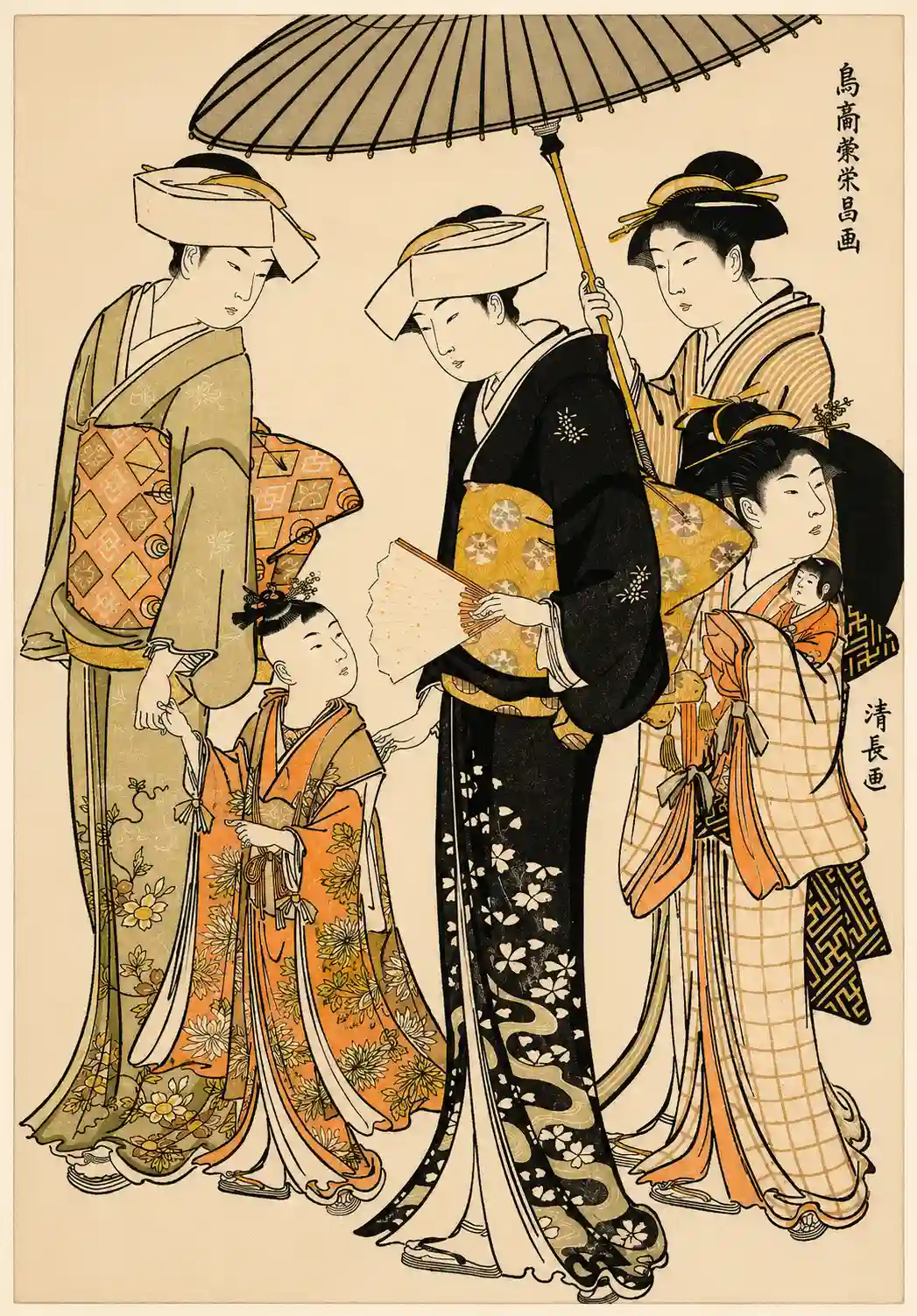
A Quiet Procession
The wooden corridors creaked under the soft tread of slippered feet. The air was heavy with the scent of sandalwood and polished cedar. A young samurai girl, her stature graceful and deliberate, moved with a quiet dignity. Her kimono, an intricate weave of silken threads, whispered with each step. She was followed by four attendants, each mirroring her movements, their faces serene yet attentive.
Outside, the garden lay shrouded in morning mist. Dew clung to the pine needles, glistening like scattered jewels. The subdued light filtered through paper screens, casting delicate patterns on the floor. The house, a sanctuary of tradition and discipline, echoed faintly with the distant call of a cuckoo.
The girl paused, her gaze steady and unyielding. She embodied the spirit of her lineage, a legacy of honour and duty. Her attendants waited in silent deference, their presence a testament to her rank and the respect she commanded.
In the stillness, the weight of history was palpable. It hung in the air like the lingering notes of a forgotten melody.
Historical Echo
In the late 18th century, samurai families navigated a world of shifting allegiances and strict societal codes. Women of noble birth, like the girl in the print, were trained in the arts of etiquette and governance. Though bound by the constraints of their roles, they wielded influence through quiet strength and strategic alliances.
Torii Kiyonaga, a master of the ukiyo-e form, captured the elegance and poise of such figures. His work, a window into the lives of the elite, continues to resonate with the subtle power of its subjects. Through his eyes, we glimpse a world where every gesture and glance held profound significance.