

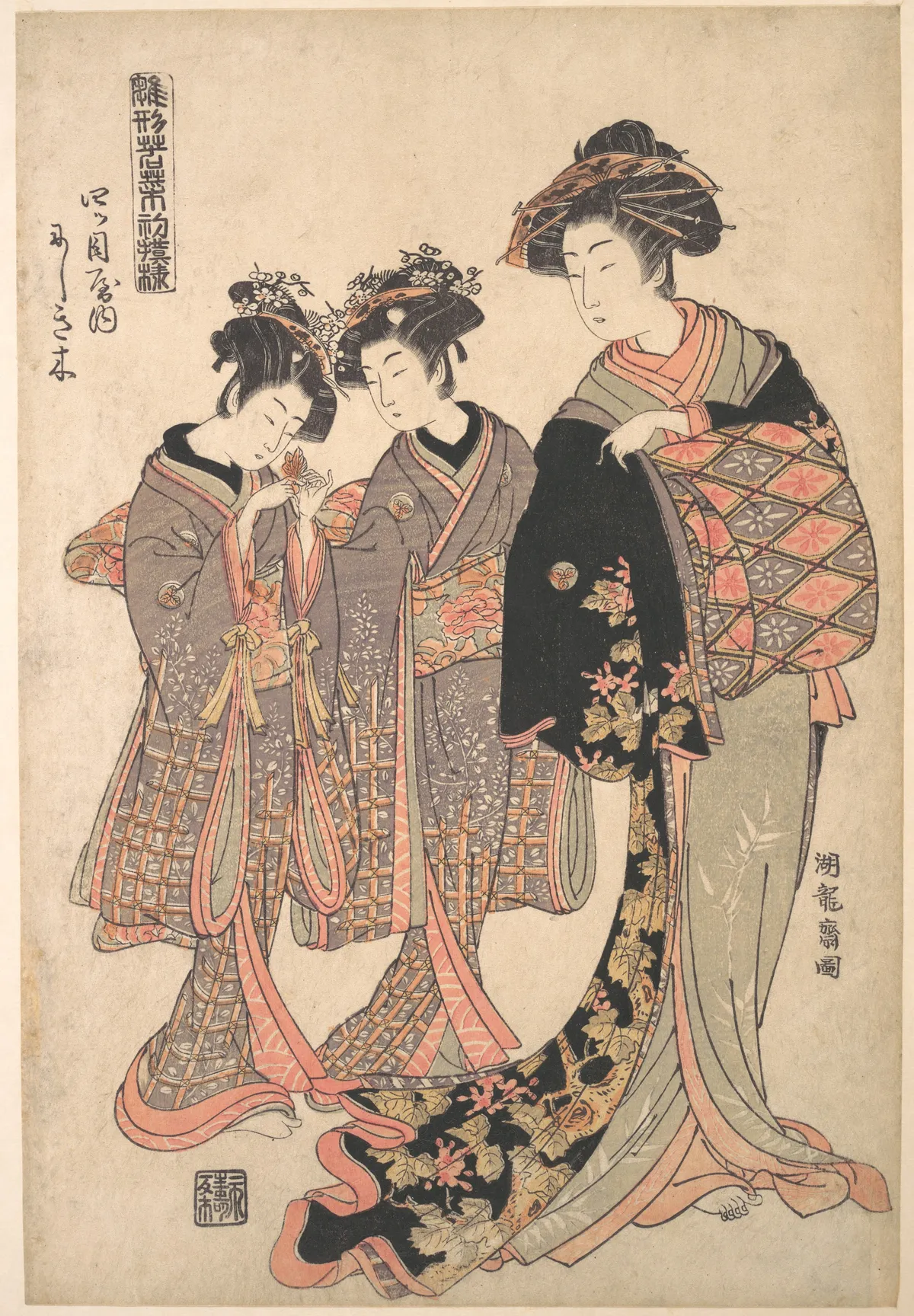
Nishikigi's Quiet Elegance
The air was heavy under the paper lanterns. Shadows danced softly against the walls of Yotsumeya Brothel. In the dim light, the courtesan Nishikigi stood poised, a vision in silken layers. Her kimono flowed like quiet water, patterns rich and subtle, whispering of spring herbs. The fragrance of incense lingered, mingling with the distant laughter from another room. She moved with the grace of the cherry blossoms outside, her presence commanding the hushed space. Each step was deliberate, the swish of fabric a gentle sigh against the tatami. Her eyes, dark and knowing, spoke of stories untold, held captive within the brothel's wooden frames. As a breeze rustled through, the paper screens shivered, echoing the unvoiced desires of the night. Nishikigi paused, the weight of her role hanging gently on her shoulders, as transient as the moonlight slipping through the slatted windows.
Historical Echo
In the Edo period, courtesans like Nishikigi were celebrated figures, their lives both revered and constrained within the floating world. They were artists, skilled in conversation, music, and dance. The Yotsumeya Brothel was one of many establishments in the Yoshiwara district, a place where art and desire intertwined. Isoda Koryūsai captured this ephemeral world with delicate precision, each line and colour a testament to the courtesan's allure and the era's fleeting beauty.