

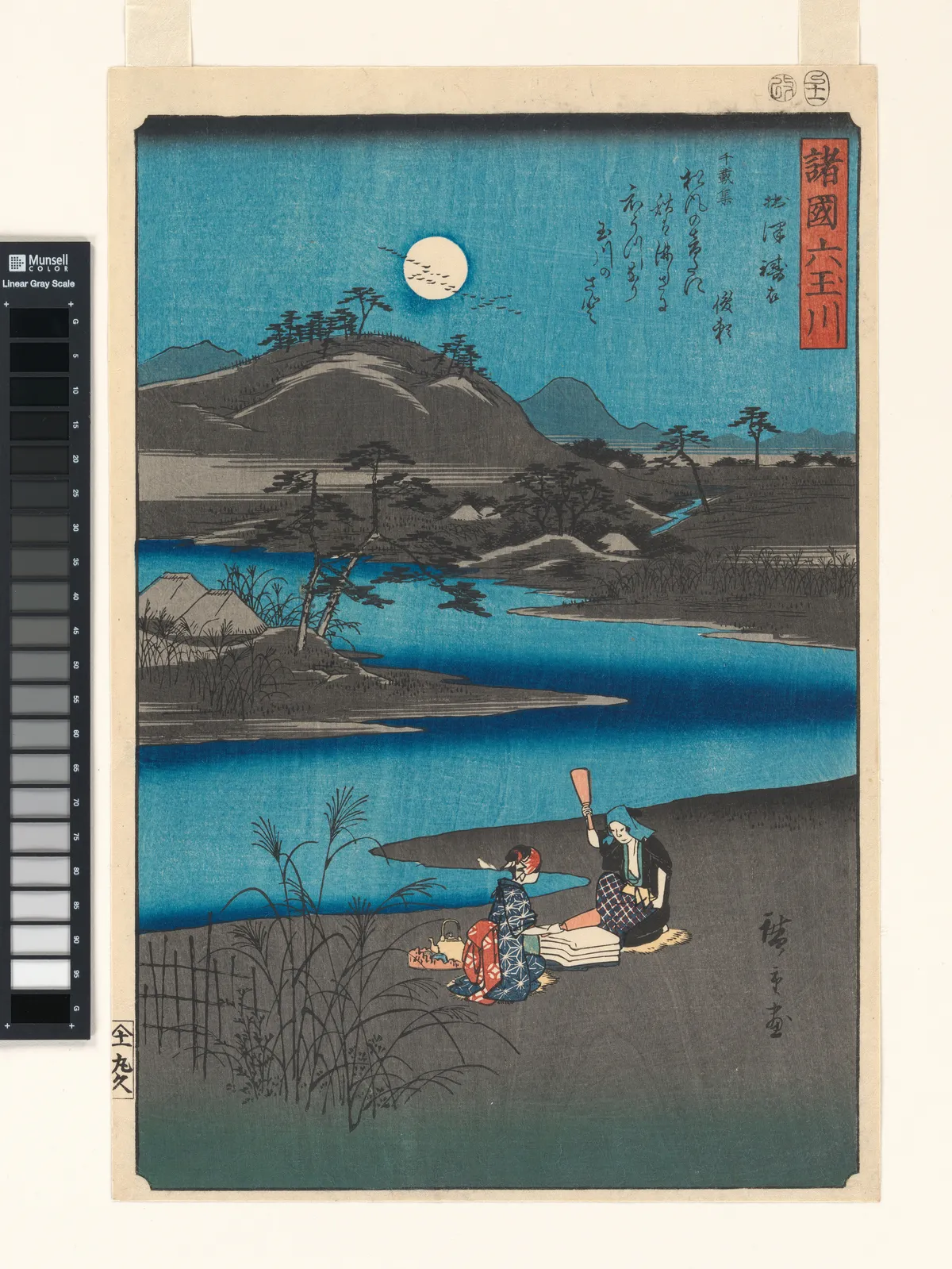
Jewel Waters
Mist clings to the air like an unspoken promise. The rivers wind silently through the provinces, each one a silent poem. Hiroshige's brush captures their essence in cool blues and gentle greys. In the distance, mountains loom like ancient guardians, their peaks veiled by the morning fog. Along the banks, willows bend, their leaves whispering secrets to the water. The air is thick with the scent of damp earth and fresh rain.
A fisherman casts his net, disturbing the water's surface. Ripples dance in the early light, then fade into stillness. A heron stands motionless, its reflection an echo in the river's mirror. Somewhere, a distant bell tolls, its sound absorbed by the mist.
Each river tells its own story. The Tama River, with its clear, laughing waters. The Kinuta, where the sound of cloth beating echoes in the quiet. Here, nature and life intertwine, as fleeting as the seasons. Hiroshige captures this transient beauty, preserving it in wood and ink.
Historical Echo
In 1857, Utagawa Hiroshige embarked on a journey through Japan's six most celebrated rivers. His prints, a series of woodblock masterpieces, capture the serene beauty and cultural significance of these waterways. Each river bore its own legend, its own song, offering solace and inspiration to poets and painters alike. Through Hiroshige's eyes, the rivers became more than mere landscapes. They were living, breathing entities, woven into the very fabric of Japanese tradition.