

The Actor in the Shadows
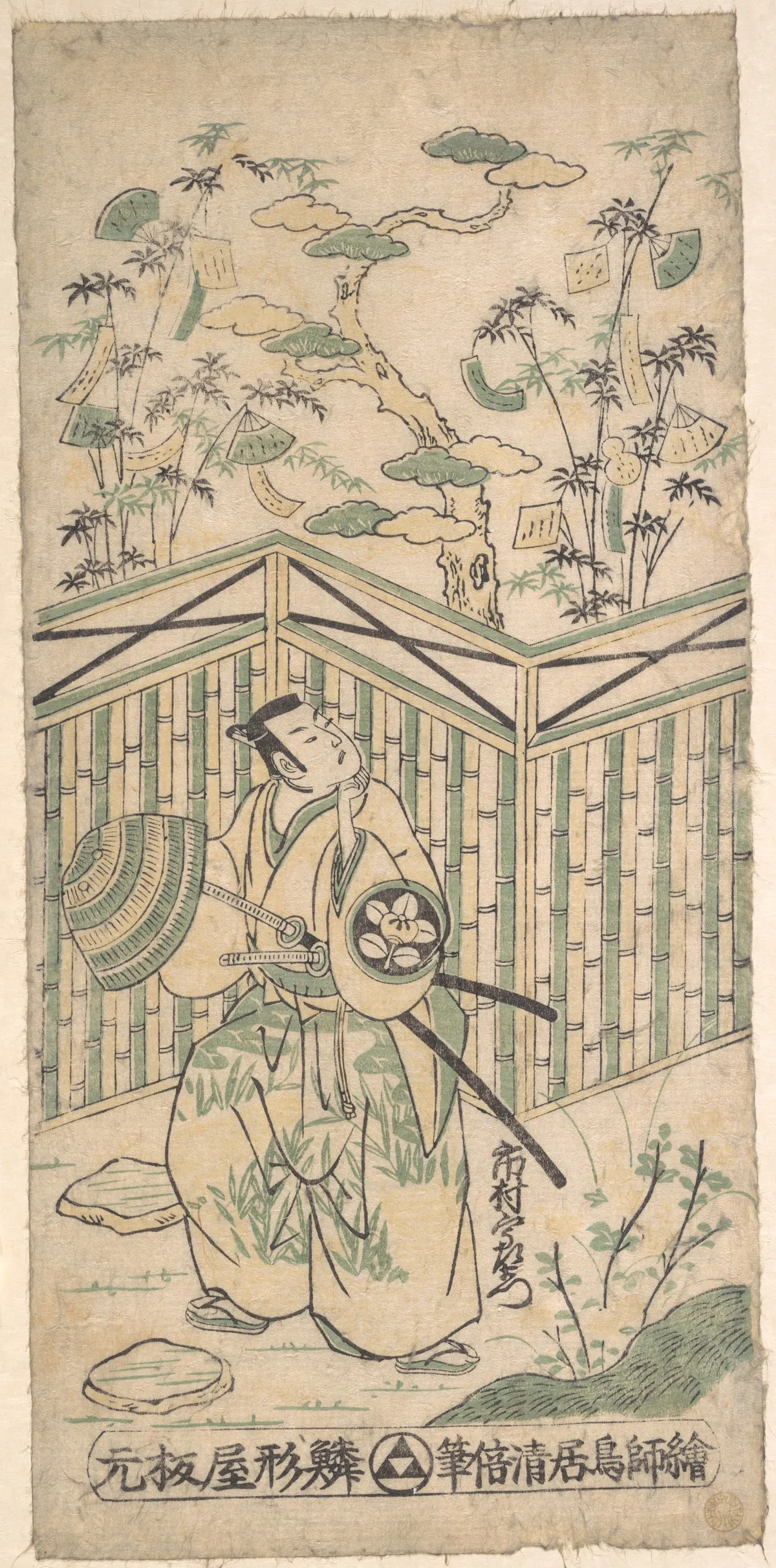
The stage is silent, save for the soft rustle of silk. Ichimura Uzaemon, cloaked in the guise of a samurai, stands poised. His basket hat casts a shadow over his eyes, lending an air of mystery. The wood beneath his feet creaks softly as he shifts his weight. The audience holds its breath. Incense smoke curls lazily from a brazier, mingling with the scent of pine. The air is thick with anticipation.
His costume, a cascade of muted colours, whispers with each movement. Layers of fabric, heavy with history, drape around him. The dim glow of lanterns casts flickering patterns on the backdrop, a world painted in delicate strokes. The actor embodies the spirit of a time long past, a spectral figure come to life.
A wooden sword rests at his side, its presence a silent promise of stories untold. The basket hat, a humble disguise, shields him from prying eyes. Yet, it is his eyes that tell a different tale—one of honour, of duty, of a life bound by the code of the warrior. The crowd, an ocean of silent spectators, watches with bated breath as history unfurls on the stage.
Historical Echo
In the Edo period, the kabuki stage was a world of its own. Actors like Ichimura Uzaemon Eighth were the stars, bringing legendary figures to life. Torii Kiyomasu I captured this essence with his woodblock print. The basket hat, a symbol of anonymity, was both a practical and theatrical device. It allowed the samurai to move unseen, a shadow among shadows. In the flickering light of Edo's theatres, such prints offered a glimpse into a world of drama and tradition. The actor, both man and myth, stood at the crossroads of reality and illusion.