

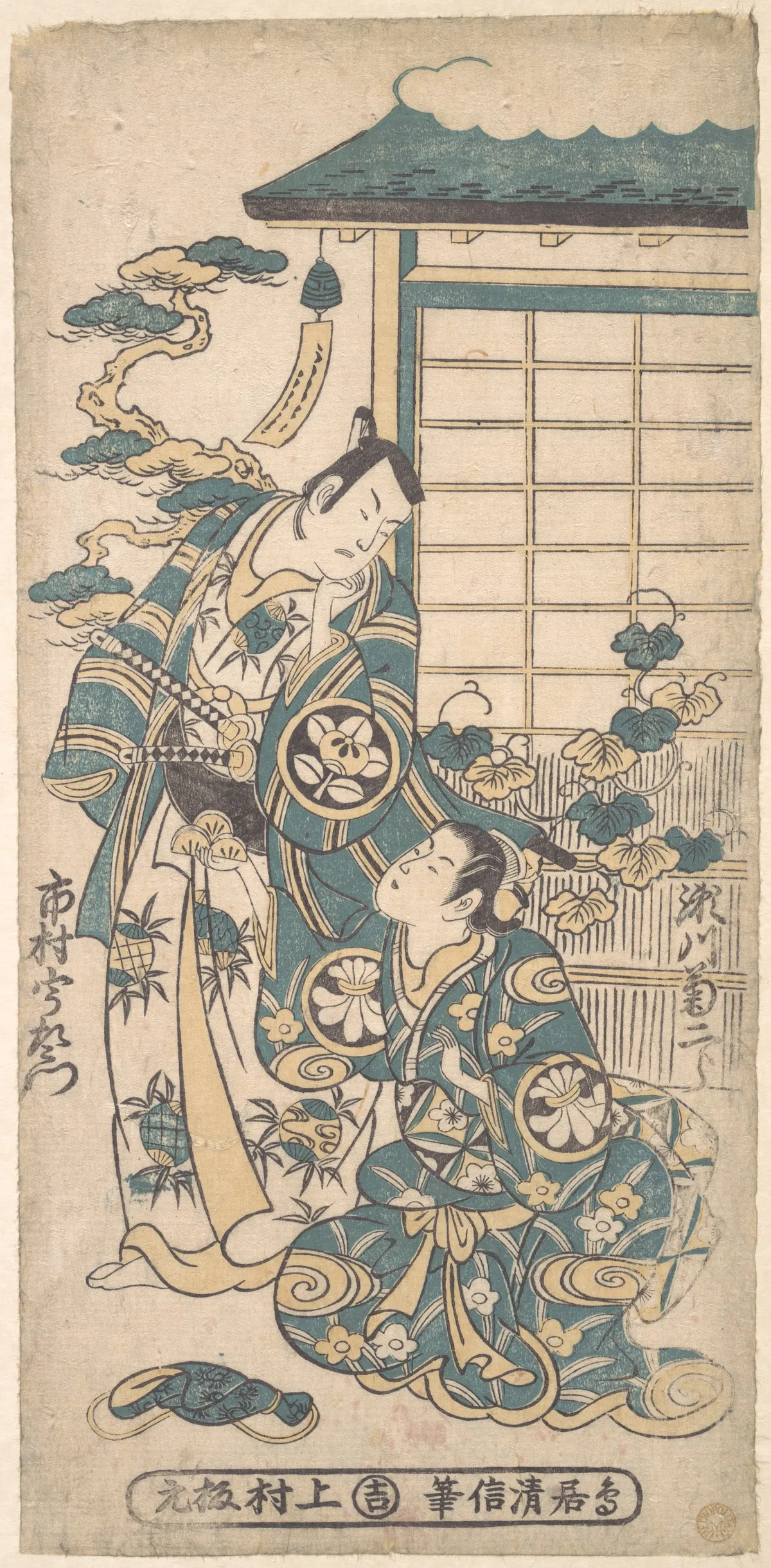
The Samurai's Gaze
His eyes pierce the dimly lit theatre. The audience holds its breath. Ichimura Uzaemon, in the guise of a samurai, stands rigid on the stage. His armour glints under the flickering oil lamps. Sweat trickles down his brow, mingling with the thick white makeup. He raises his hand with slow precision, his gestures echoing the weight of the wooden sword.
Each movement speaks of battles fought and honour preserved. The rustle of silk as his robes sway seems amplified in the hush. The theatre smells of pine and incense, a contrast to the imagined battlefield. Shadows dance across his face, lending depth to the stoic mask he wears.
The audience, caught between reality and illusion, watches as he embodies the spirit of the warrior. The air grows heavier with anticipation. Silence stretches, punctuated only by the soft shuffle of feet in the aisles.
Historical Echo
In the Edo period, the theatre was a realm of transformation. Actors like Ichimura Uzaemon were revered, their performances blurring the line between actor and role. Torii Kiyonobu I captured this ephemeral world in his prints, preserving the allure of kabuki. His woodblock prints, like this one from 1745, offer a glimpse into an age where drama was both entertainment and art.