

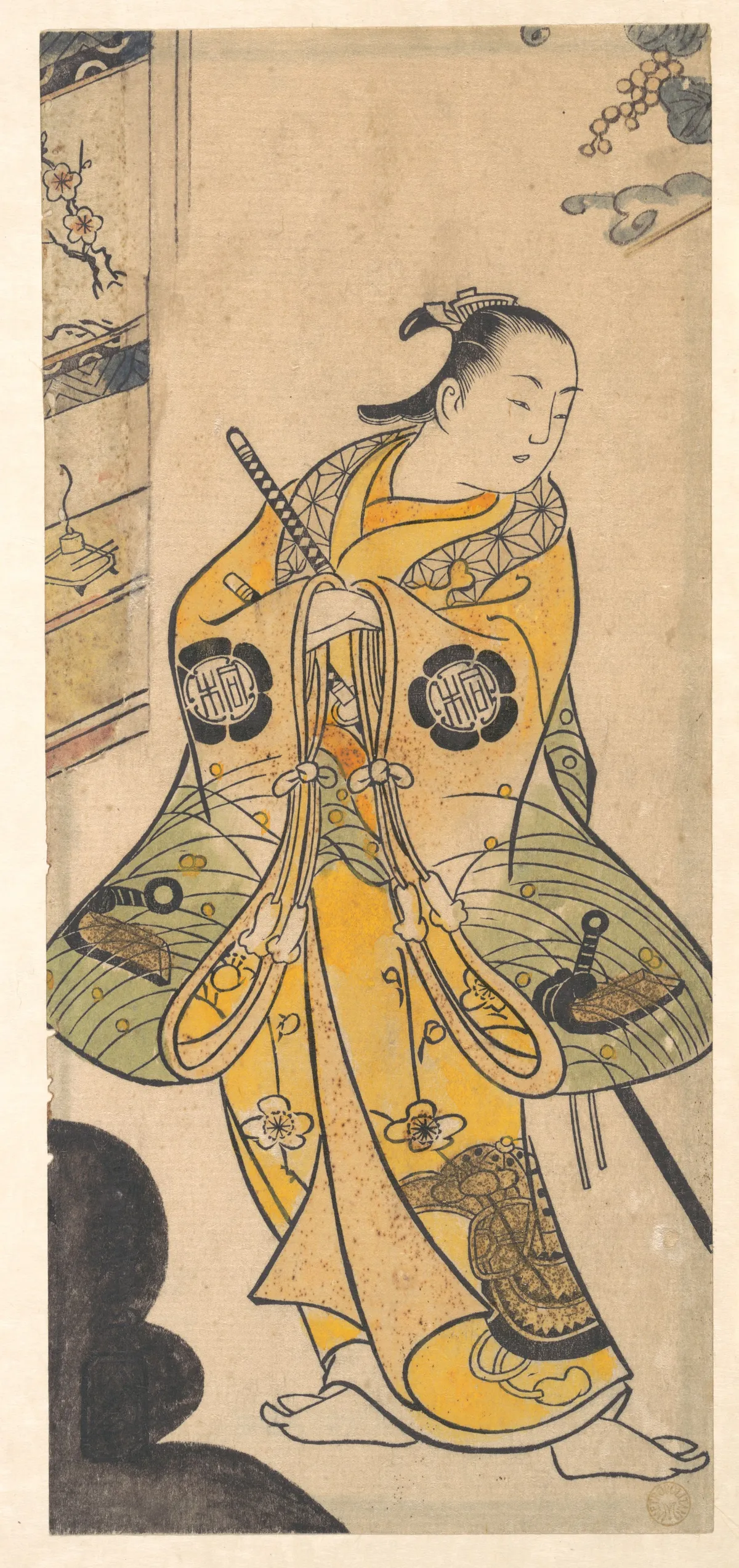
The Stage of Shadows
The lanterns cast flickering shadows. Paper walls whispered of silk robes and wooden clogs. The actor stood, still as a statue, yet alive with tension. His eyes, sharp and focused, peered through the dim light. The air held a chill, mingled with the scent of incense and dust.
His costume, a delicate cascade of embroidered silk, rustled softly. The weight of the sword at his side was a familiar comfort. The kabuki stage was a world of its own, suspended in time, echoing with whispers of past performances.
Outside, the night was silent. Only the distant clatter of a rickshaw broke the stillness. Inside, the actor embodied a samurai youth. His movements were precise, deliberate. Each gesture spoke of honour, duty, and the inevitability of fate.
The audience sat in hushed reverence. The print captured this moment, a snapshot of an ephemeral world. A world where actors became legends, and stories were woven from the fabric of shadows.
Historical Echo
In the Edo period, kabuki theatre was a mirror of society. Torii Kiyotada, a master of capturing its essence, immortalised actors in their roles. This print, from around 1735, reflects the fusion of art and life. A samurai youth, portrayed by an actor, stands at the crossroads of performance and reality.