

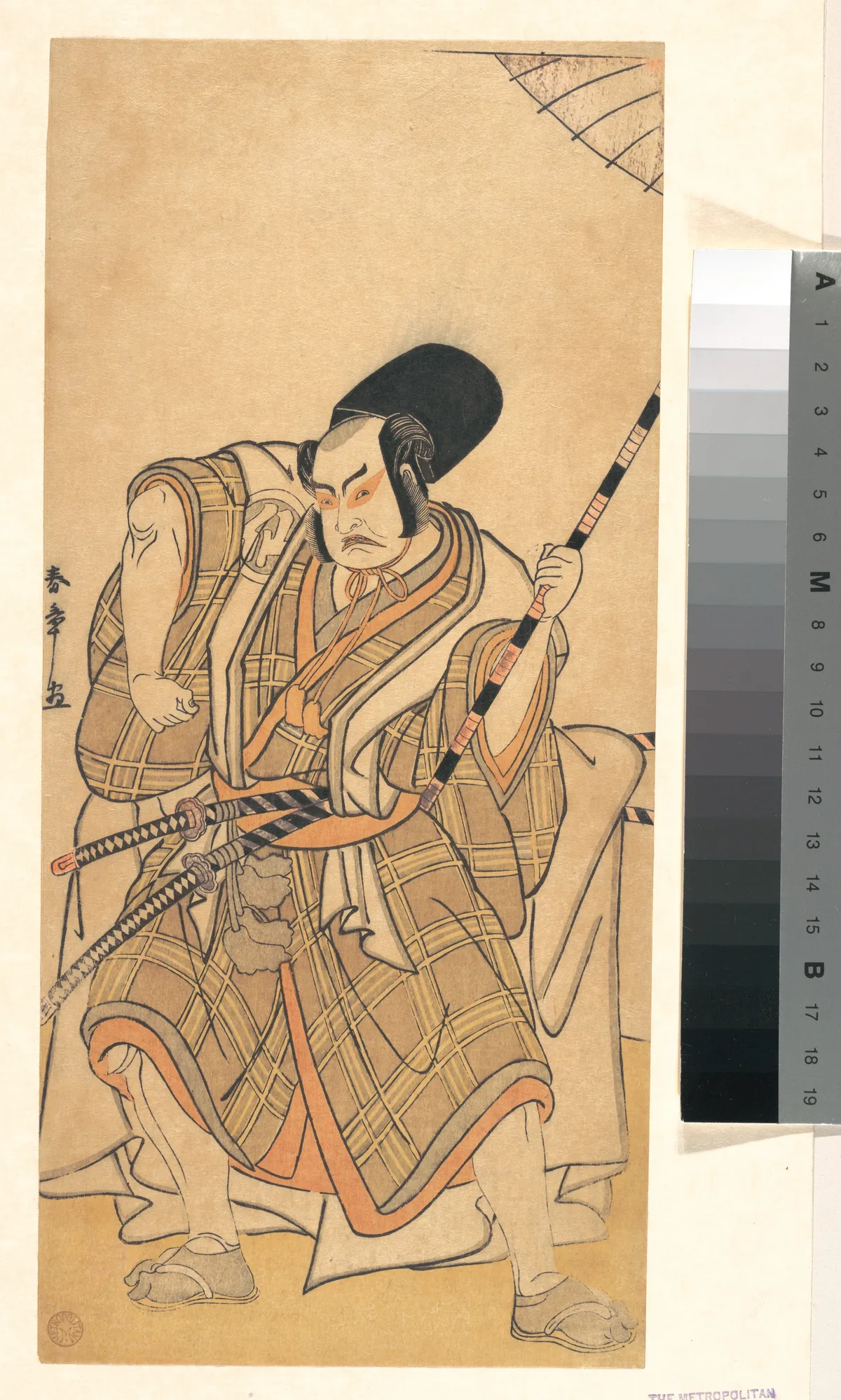
The Disguised Samurai
A soft rustle of silk. The air, damp, clings to the wooden beams of the shrine. Lanterns flicker, casting uncertain shadows on the tatami. Nakamura Sukegorō II, his form hidden beneath the modest garb of a Shichō, moves with silent purpose. His eyes, sharp, scan the empty courtyard. The scent of incense mingles with the distant murmur of a festival, a reminder of the world outside these sacred walls.
He adjusts his grip on the concealed blade, its weight familiar, comforting. The guise of a shrine attendant is perfect, yet his heart beats with the rhythm of a warrior. In this quiet disguise, he waits, poised between duty and deception. The night deepens, and with it, the tension; every creak of the floorboards, every whisper of the wind, a reminder of the fragile balance he maintains.
The shrine's kami, silent witnesses, watch over the scene. Their presence a constant, their judgement unseen. Sukegorō’s breath mists in the cool air, a fleeting sign of life in the stillness. He is a part of the shadows, a figure of duality, where performance meets reality, where a samurai’s honour dances on the edge of a wooden stage.
Historical Echo
In the Edo period, kabuki actors often portrayed samurai, blurring lines between theatre and life. Katsukawa Shunshō captures this duality in his print. Actors like Nakamura Sukegorō II embraced these roles, embodying the spirit of bushido through their art. The Shinto shrine setting underscores the cultural reverence and the quiet solitude of a samurai’s path.