

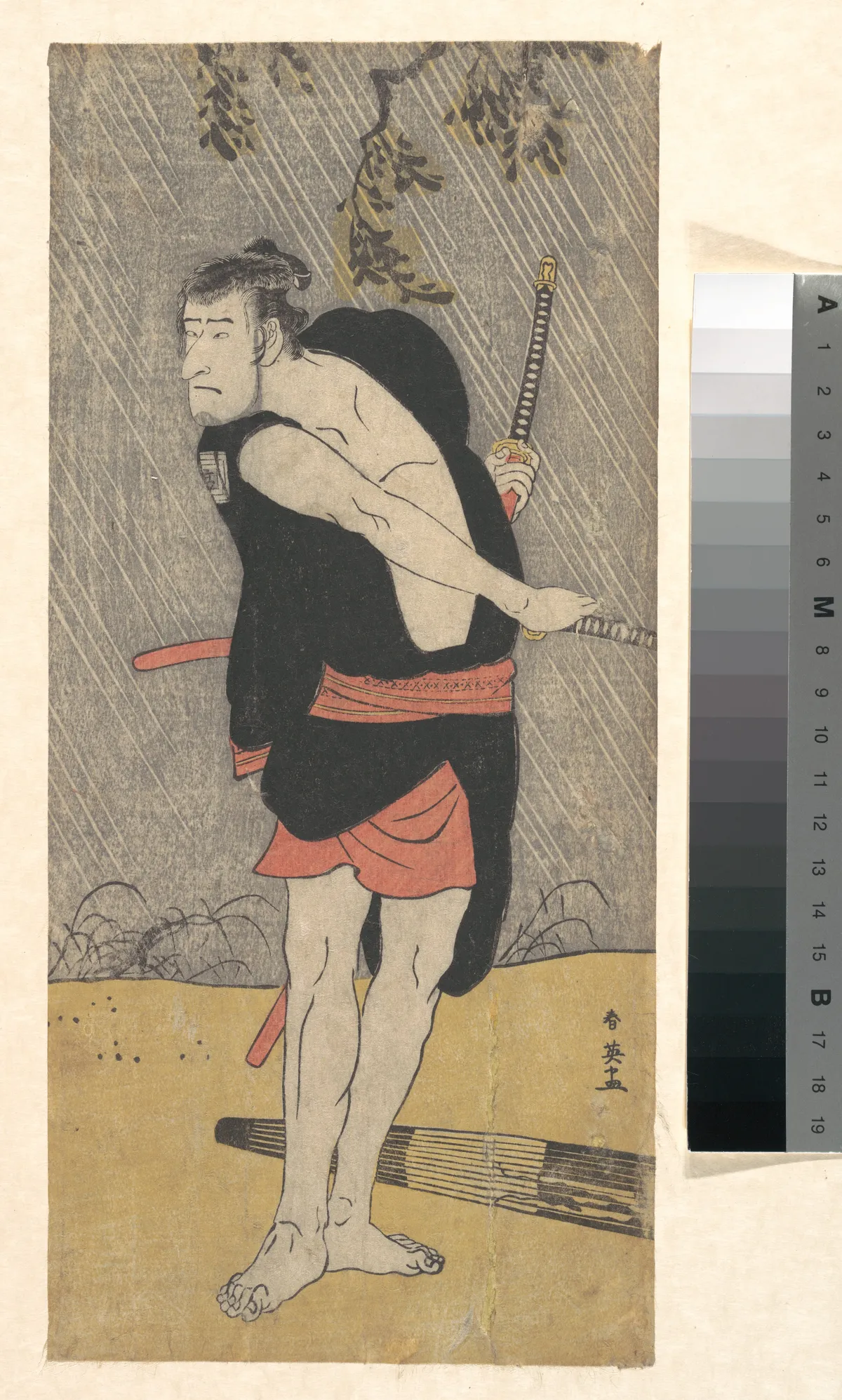
The Actor in Armour
The room is quiet. Only the faint rustle of fabric breaks the silence. Ichikawa Komazo II stands still, eyes narrowed. His armour, lacquered and glistening, feels heavy against his skin. The kabuki stage waits beyond the paper walls, the audience expectant and hushed.
A single candle flickers, casting shadows across the wooden floor. The air smells of old pine and ink. Komazo adjusts his helmet, feeling the cool metal under his fingertips. He breathes deeply, the scent of the theatre filling his lungs.
His mind drifts to the samurai he portrays. A warrior of old, bound by honour and duty. Komazo feels the weight of both actor and warrior, the line between them blurring. The stage is his battlefield, the audience his judges.
Outside, the night deepens. The sound of distant shamisen echoes, a lone note hanging in the air. Komazo steps forward, the paper screen sliding open. Light spills onto the stage, bright and blinding. He becomes the samurai, each movement precise, deliberate.
The crowd holds its breath. The actor and his role, inseparable, dance across the boards. In this moment, Komazo is both man and myth, his spirit echoing through the annals of time.
Historical Echo
In the Edo period, kabuki theatre was a realm of transformation. Actors like Ichikawa Komazo II donned the guise of samurai, becoming living embodiments of honour and tradition. The stage was a sacred space, where reality and performance intertwined. Katsukawa Shun'ei captured this ephemeral magic, immortalising the tension and grace of the actor poised for battle. The print speaks to the enduring allure of the warrior spirit and the timeless art of kabuki.