

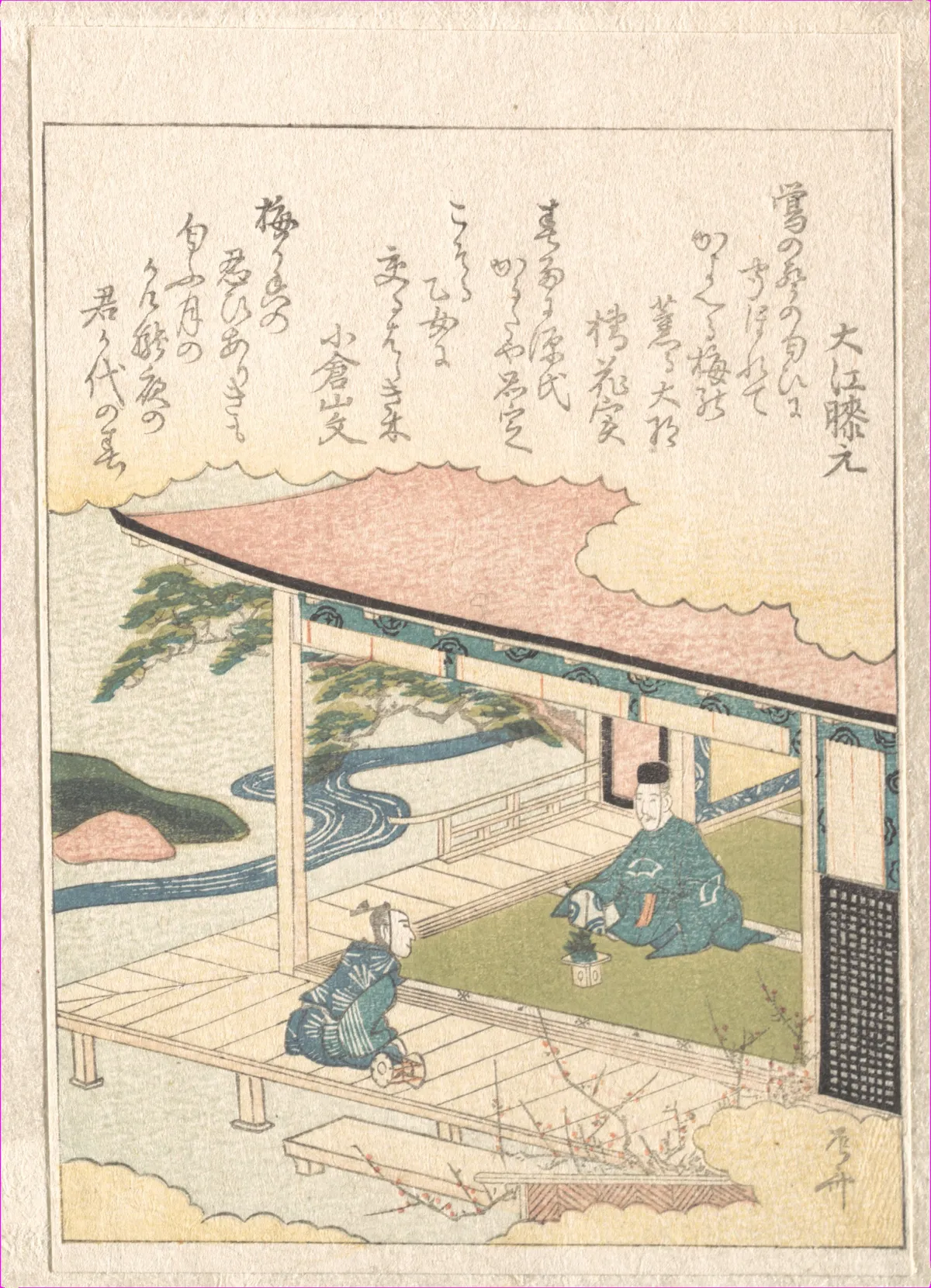
Silent Admiration
The samurai stands motionless, a figure carved from the shadows of dawn. His armour glints softly in the dim light, each plate a testament to battles fought and survived. Before him, the pine tree stretches its ancient limbs, a guardian of the past whispering secrets through its needles. Beside it, the plum blossoms shiver in the morning breeze, their delicate scent mingling with the dampness of the earth.
He breathes in deeply. The air is cold, crisp, tinged with the promise of spring. His gaze lingers on the blossoms, each petal a fleeting moment of beauty. Memories flicker, unbidden, of distant fields and the clang of swords. Yet here, among the trees, there is only silence. Only the gentle rustle of leaves and the distant call of a bird.
His hand rests upon the hilt of his sword, not in readiness, but as if drawing strength from its familiar weight. The world around him is alive, vibrant, yet untouched by the turmoil beyond. He closes his eyes, allowing the tranquillity to seep into his bones. This is his sanctuary, a place where time pauses, where honour and duty fade into the quietude of nature.
Historical Echo
In the Edo period, samurai were not only warriors but also connoisseurs of art and nature. They found solace in the simplicity and transience of life, often expressed through the admiration of natural beauty. The pine tree symbolised longevity and resilience, while plum blossoms represented the fleeting yet fragrant joys of life. In this moment, the samurai stands not as a warrior, but as a man attuned to the silent poetry of his surroundings.