

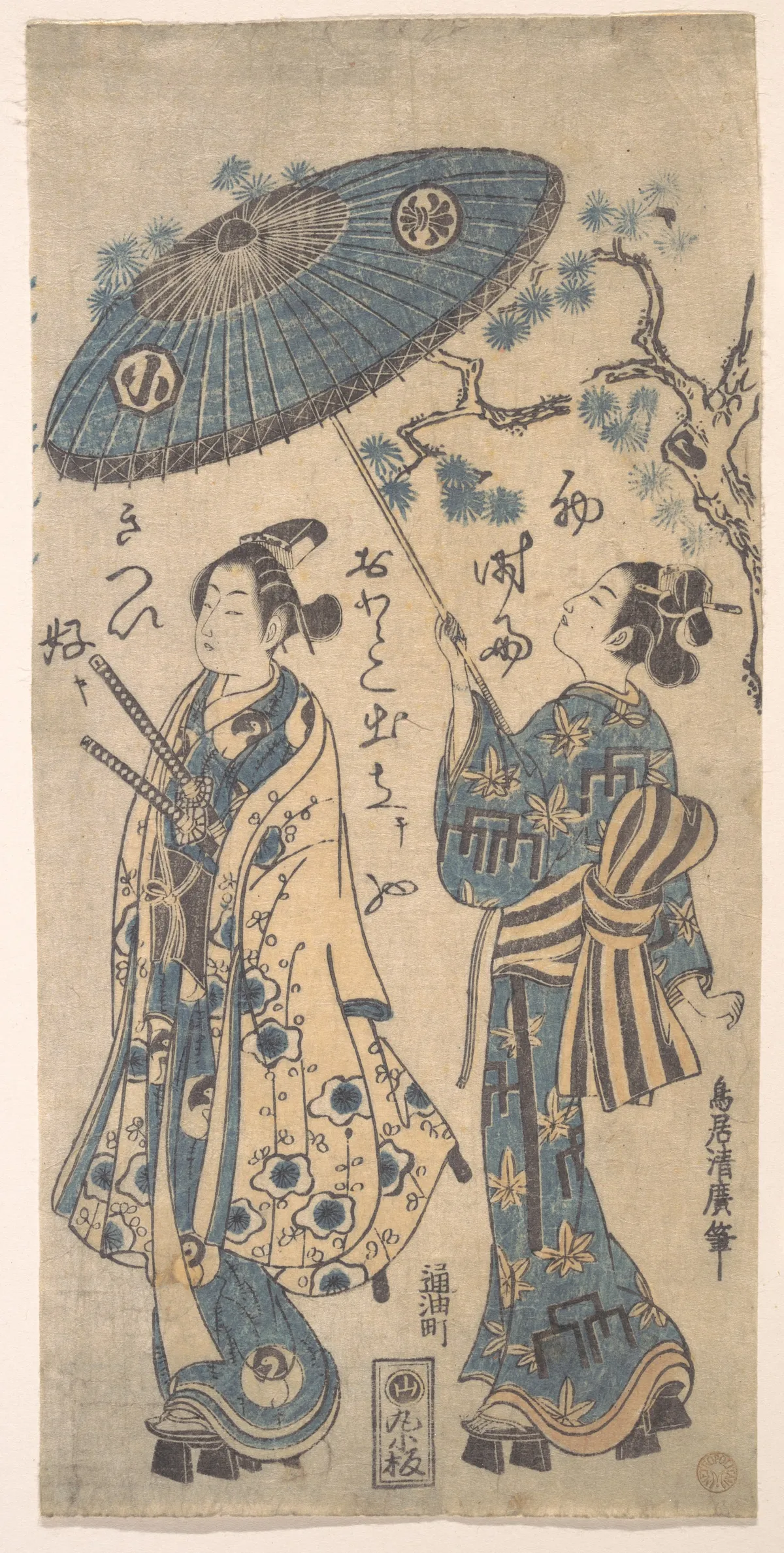
The Young Samurai's Masquerade
In the dim glow of flickering lanterns, Arashi Wakano stood poised. The stage was silent, save for the soft rustle of silk. He wore the guise of a young samurai, yet his robes whispered of femininity. The air was tense, heavy with anticipation. Shadowed figures in the audience leaned forward, captivated by the transformation before them.
Wakano's movements were deliberate, each step a dance of duality. Beneath the costume, the actor's heartbeat echoed the pulse of history. The scent of incense lingered, mingling with the faint smell of pine from the wooden stage. His eyes, sharp and focused, scanned the faces masked in darkness, searching for recognition, understanding.
The print captured this fleeting moment, immortalising the actor's artful deception. His expression was serene, yet beneath lay the weight of tradition and expectation. The world outside the theatre was forgotten, consumed by the illusion he conjured. Each gesture spoke of samurai honour, yet each glance hinted at the delicate balance of identity.
Historical Echo
In the Edo period, kabuki theatre was a realm of transformation. Actors like Arashi Wakano blurred lines between gender and status, challenging societal norms. Torii Kiyohiro's print captures this tension, a moment where art transcends reality, leaving an indelible mark on the viewer's soul. In the stillness of the ukiyo-e, the echoes of applause and whispered admiration persist, long after the actor has exited the stage.