

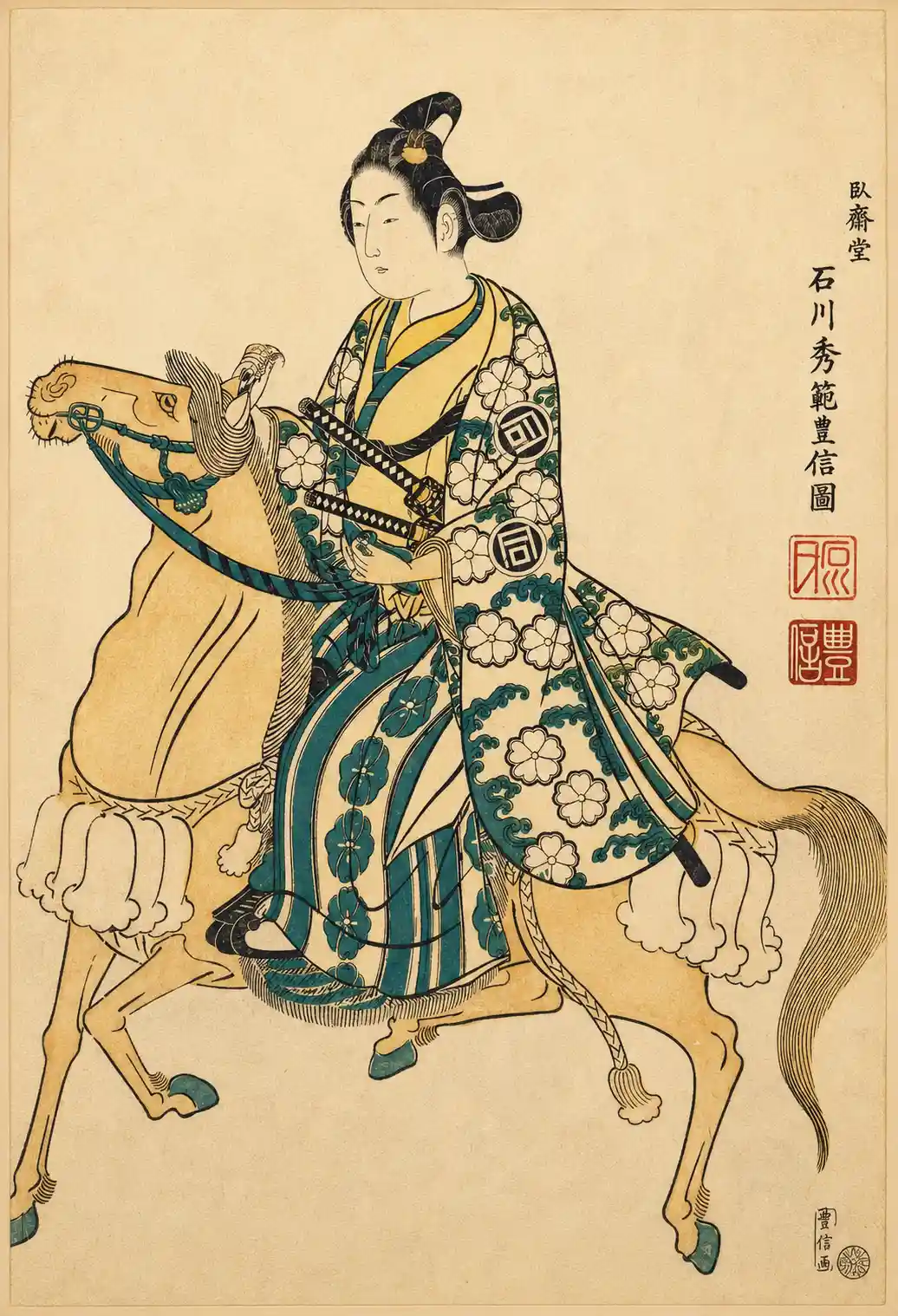
The Young Samurai's Ride
The horse's hooves clattered against the cobblestones, a rhythmic echo in the cool, early morning air. Sanokawa Ichimatsu, clad in the garb of a young samurai, sat astride the horse, his posture both proud and tense. The fabric of his costume rustled softly with each movement, a whisper of silk and history.
A faint mist lingered in the air, blurring the edges of the world, as if the very air held its breath, waiting. The actor's eyes were sharp, scanning the path ahead, but his mind wandered to the stories he would tell, the roles he would play. The weight of his sword at his side felt both real and imaginary, a symbol of the warrior he portrayed.
Ichimatsu's presence on horseback was a performance in itself, a dance between reality and illusion. The city around him was waking, the sounds of merchants setting up their stalls mingling with the distant clatter of a teahouse door sliding open. Yet, here, in this moment, he was a samurai, riding with purpose through the streets of Edo.
The morning light crept over the rooftops, casting long shadows that reached out like fingers. It touched the actor's face, highlighting the resolve in his expression, a flicker of the character he embodied. The world seemed to hold its breath, as the young samurai rode on, into history, into legend.
Historical Echo
In the Edo period, the line between actor and character often blurred. Sanokawa Ichimatsu was famed for his roles in kabuki theatre, where he brought samurai to life. Ishikawa Toyonobu captured not just a portrait, but a moment where art and life intersected. The young samurai's ride remains etched in time, a testament to both performance and the enduring spirit of the warrior.