

The Onnagata's Silence
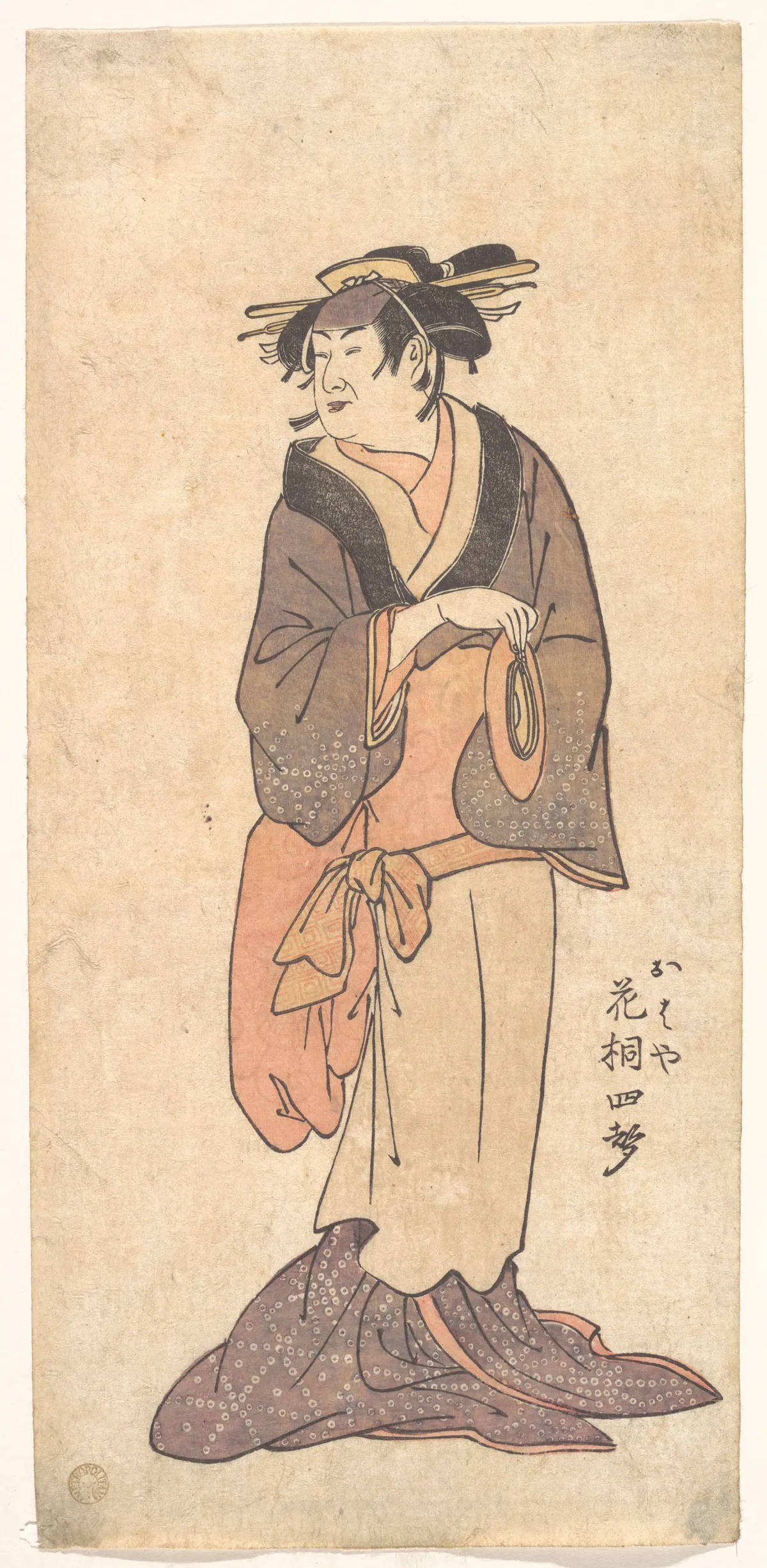
The paper lanterns flicker. Shadows dance in the corners of the room. Hanagiri Toyomatsu steps onto the stage. His feet glide over the wooden floor, echoing softly in the expectant silence. Dressed in the delicate robes of Ohaya, his movements are fluid, like water flowing through reeds.
The audience holds its breath. In the dim light, his painted face is a mask of serene beauty. His eyes, dark and distant, seem to hold secrets of another world. The air is thick with the scent of incense, mingling with the mustiness of old wood.
Toyomatsu's sleeves whisper as he turns, the fabric rich and heavy. Each gesture is precise, each pause deliberate, as if the weight of centuries resides in his fingertips. Somewhere in the distance, a shamisen starts to play, its strings vibrating in the stillness.
He speaks, his voice a gentle murmur, a thread weaving through the hushed crowd. The words of Ohaya float like autumn leaves, fragile and poignant. The audience is entranced, their world dissolving into the story unfolding before them.
The stage is a realm of shadows and light, where reality blurs and the spirit of the past breathes once more. And as Toyomatsu moves, a living ghost upon the boards, the night deepens, wrapping the theatre in its silent embrace.
Historical Echo
In the twilight of the Edo period, the art of Kabuki thrived. Onnagata, male actors who played female roles, were revered for their ability to transcend gender. Hanagiri Toyomatsu was one such actor, celebrated for his portrayal of Ohaya, a role that demanded grace and subtlety. The print captures a moment from 1793, an era when theatre was a mirror reflecting the complexities of society. In the flickering light of the stage, Toyomatsu's performance becomes a haunting echo of a world now past.