

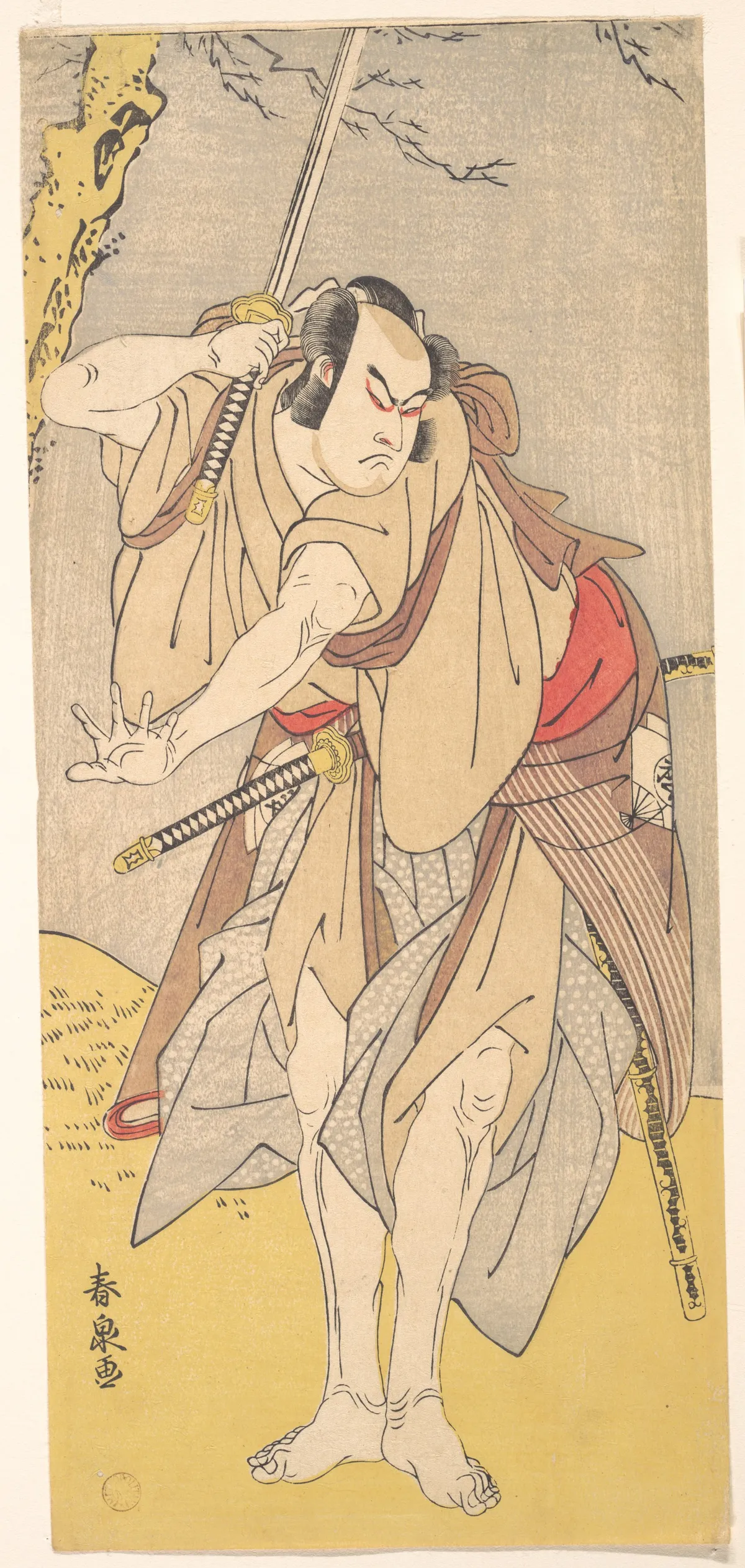
The Unseen Duel
The dim lantern light flickered against the paper walls, casting long shadows. Onoe Matsusuke stood still, his hand firm around the sword's hilt. Silence thickened the air. The weight of the kimono rested heavily on his shoulders. The stage was barren, save for the faint scent of incense hovering like a ghost. His eyes, sharp and focused, bore into the imagined opponent before him.
In the audience, whispers hushed as the tension mounted. The theatre seemed to hold its breath. Matsusuke's feet shifted slightly, the sound of fabric brushing against wood barely audible. His presence commanded the room, a solitary figure embodying a samurai's spirit.
The blade glimmered, a cold sheen under the flickering light. Matsusuke's movements were deliberate, each step a dance with the unseen. The rustle of his attire echoed like distant thunder, a reminder of battles fought, of stories untold. His expression, a mask of calm, concealed the weight of a thousand tales.
Outside, the wind sighed through the narrow streets of Edo, carrying the distant echo of footsteps long past. Inside, the audience sat transfixed, caught in the spell of Matsusuke's silent duel. The actor's portrayal blurred the lines between reality and illusion, between the man and the warrior he became.
Historical Echo
In the late 18th century, Edo's theatres thrived. Actors like Onoe Matsusuke captivated audiences with their skilled performances. Katsukawa Shunsen's print immortalises Matsusuke, capturing the essence of kabuki and the timeless allure of the samurai. Ukiyo-e, with its vivid storytelling, served as both art and advertisement, drawing theatre-goers and preserving the ephemeral magic of the stage.