

The Echo of Footfalls
The stage was quiet. Heavy air clung to the walls, saturated with incense and whispers. Ichikawa Danjūrō V stood motionless. His eyes were sharp like unsheathed steel. The dim lantern light caught the edge of his kabuto, casting a long shadow.
The audience held its breath. A single cough echoed, then silence reclaimed its dominance. His armour whispered as he moved, each deliberate step a note in an unspoken symphony. The weight of his costume was a burden he bore with grace, a testament to his craft and legacy.
Outside, the world was damp and restless. The rain tapped against the wooden theatre, a soft percussion to the drama inside. The actor's voice cut through the silence, low and resonant, a samurai's vow given life. The words were ancient, yet they echoed with urgency, commanding attention.
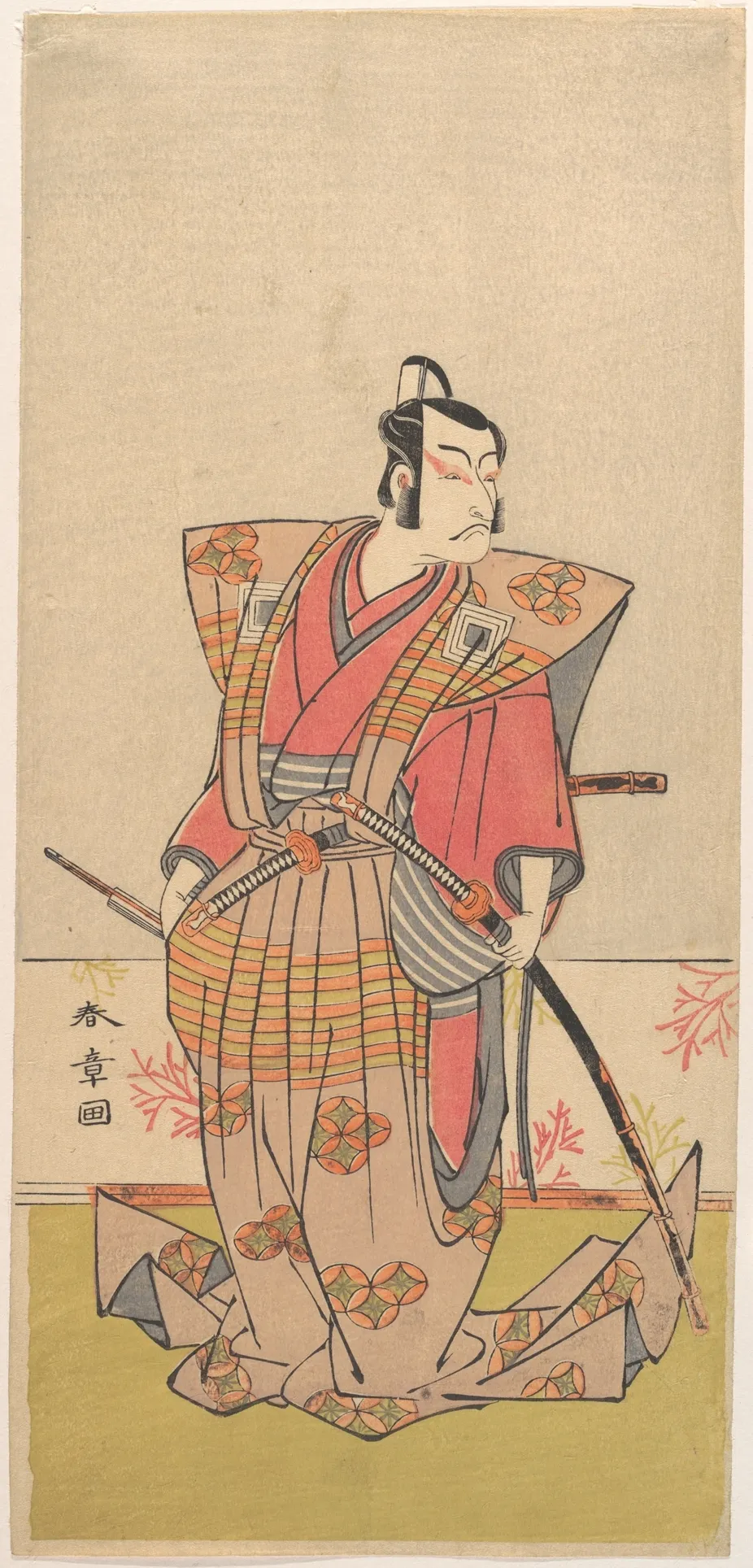
Katsukawa Shunshō captured this moment, freezing the essence of Danjūrō's portrayal. The paper bore witness to the actor's transformation, each stroke of ink a tribute to the ephemeral nature of performance. The ukiyo-e print was not merely an image, but a vessel of memory, preserving the spirit of an era long past.
Historical Echo
Ichikawa Danjūrō V was renowned for his roles in Kabuki theatre. He embodied the spirit of the samurai, bridging the world of the stage and the legacy of the warrior class. Katsukawa Shunshō's woodblock print immortalised his presence, a testament to the power of performance in Edo Japan. The print, created in 1771–72, captures a fleeting moment, echoing the cultural vibrancy of the period.