

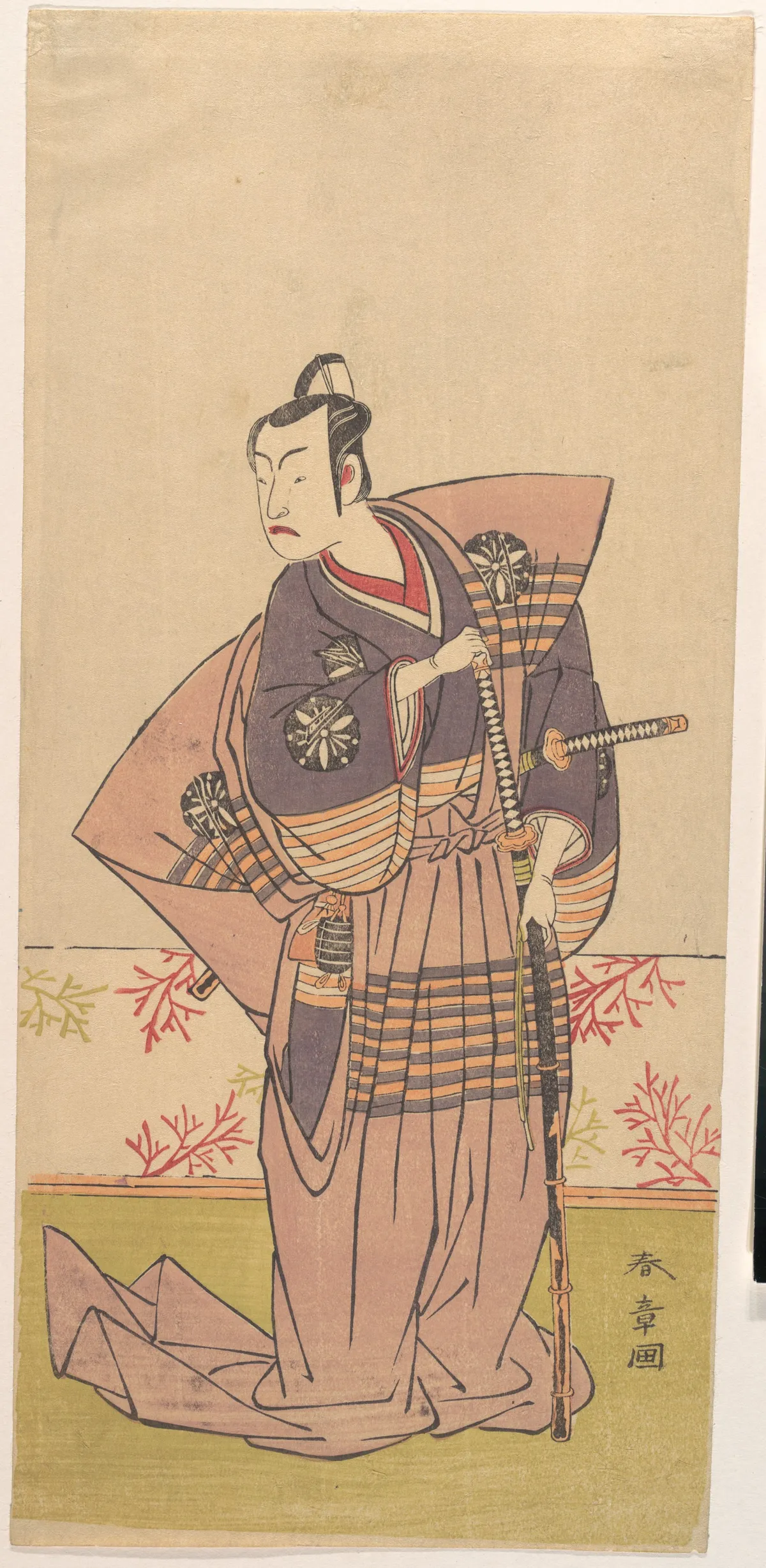
The Actor's Transformation
The stage lights flicker. Shadows dance across wooden floorboards. Matsumoto Koshiro, clad in armour, stands still. His eyes narrow, scanning the imagined battlefield. A hush settles over the audience. The scent of ink and wood lingers in the air. His kabuki wig, heavy and ornate, shifts slightly with each breath. Koshiro embodies the warrior spirit, his posture both rigid and fluid. Each movement deliberate, a testament to years of practice.
The air thickens with anticipation. Silence stretches, taut as a drawn bowstring. Then, a sudden shift—a war cry pierces the quiet. Koshiro lunges forward, his hand grasping the hilt of an invisible sword. The audience gasps, captivated by his transformation. The boundaries of actor and samurai blur, merging into a singular presence.
The echo of his sandals on the stage is a steady rhythm. His expression, fierce and unwavering, captures the essence of bushido. The weight of tradition presses down, as tangible as the layers of his costume. A bead of sweat glides down his temple, unnoticed.
Time slows, the world reduced to the stage and its solitary figure. Koshiro's performance a living tableau, frozen in the viewer's mind. The echoes of his cry linger, long after the curtain falls.
Historical Echo
In Edo's vibrant theatres, kabuki thrived. Matsumoto Koshiro II was renowned for his fierce samurai portrayals. Katsukawa Shunshō captured these moments, immortalising the actor's transformation. This print from 1771–72 reflects the era's fascination with warriors and their honour. The lines between reality and performance blurred, a dance of identity and illusion.