

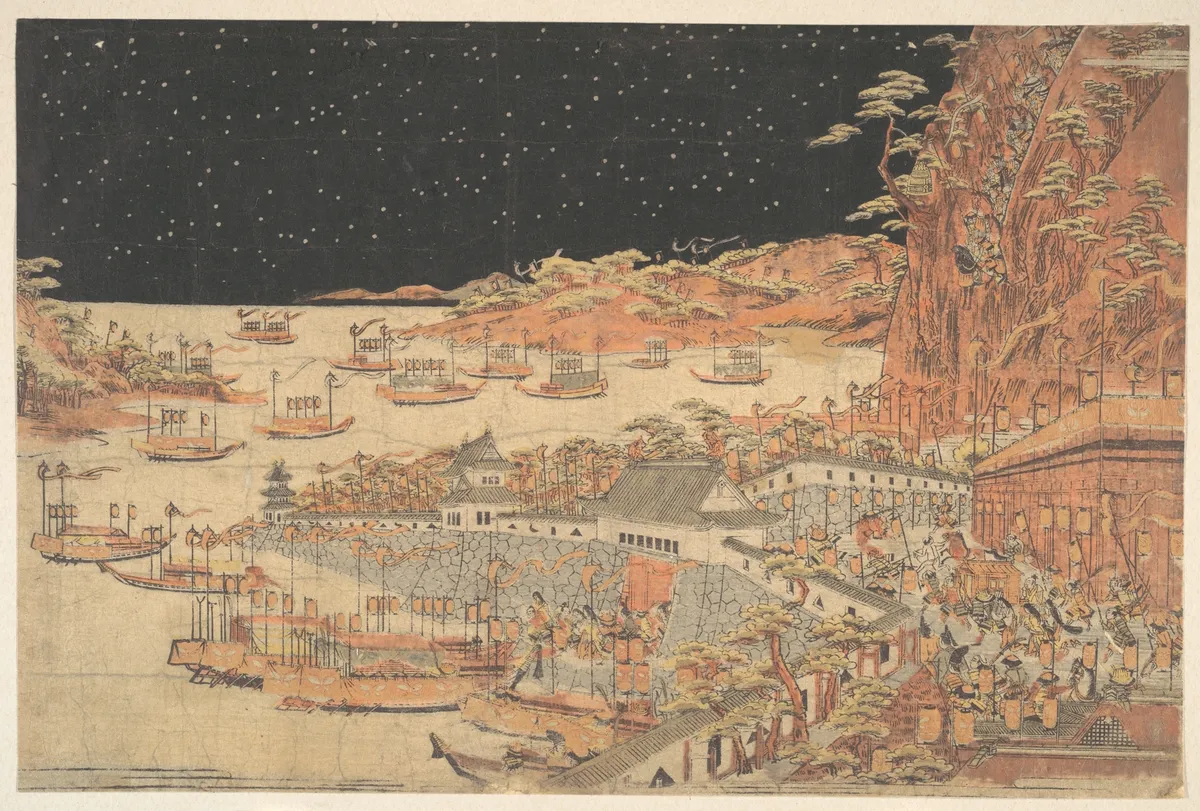
The Charge at Ichi-no-Tani
The air is thick with the scent of pine and salt. Waves crash against the distant shore, a tumultuous rhythm that mirrors the chaos of clashing swords. Samurai on horseback gallop through the narrow pass, their armour clattering with each stride. Banners flutter violently in the cold sea breeze, snapping like the jaws of an unseen beast. The warriors' breaths form clouds in the sharp morning air, mingling with the smoke of distant fires.
Hooves pound against the hardened earth, a relentless drumbeat that echoes the pulse of the warriors' hearts. A cry pierces the din—a command or a plea, lost to the roar of the melee. Spears glint in the pale light, thrusting forward with a deadly intent. The ground is a mosaic of shadows and light, where fallen warriors lie silent, their stories ending in the tumult of battle.
Above, the sky hangs heavy, a vast canopy of grey, indifferent to the struggle below. The sea, a constant witness, churns restlessly, its waves whispering the secrets of the past. A moment of stillness falls, a brief pause in the chaos, as if the world holds its breath.
Then, the charge resumes, a tide of humanity surging toward destiny.
Historical Echo
The Battle of Ichi-no-Tani was a pivotal moment in the Genpei War, fought on March 21, 1184. This clash saw the forces of the Taira and Minamoto clans battling for supremacy in Japan. Utagawa Toyoharu's woodblock print captures the intensity and movement of this historic confrontation. The strategic location, between the mountains and the sea, added a dramatic backdrop to the fierce combat. The battle's outcome shifted the balance of power, reverberating through history as a key step toward the establishment of the Kamakura shogunate.