

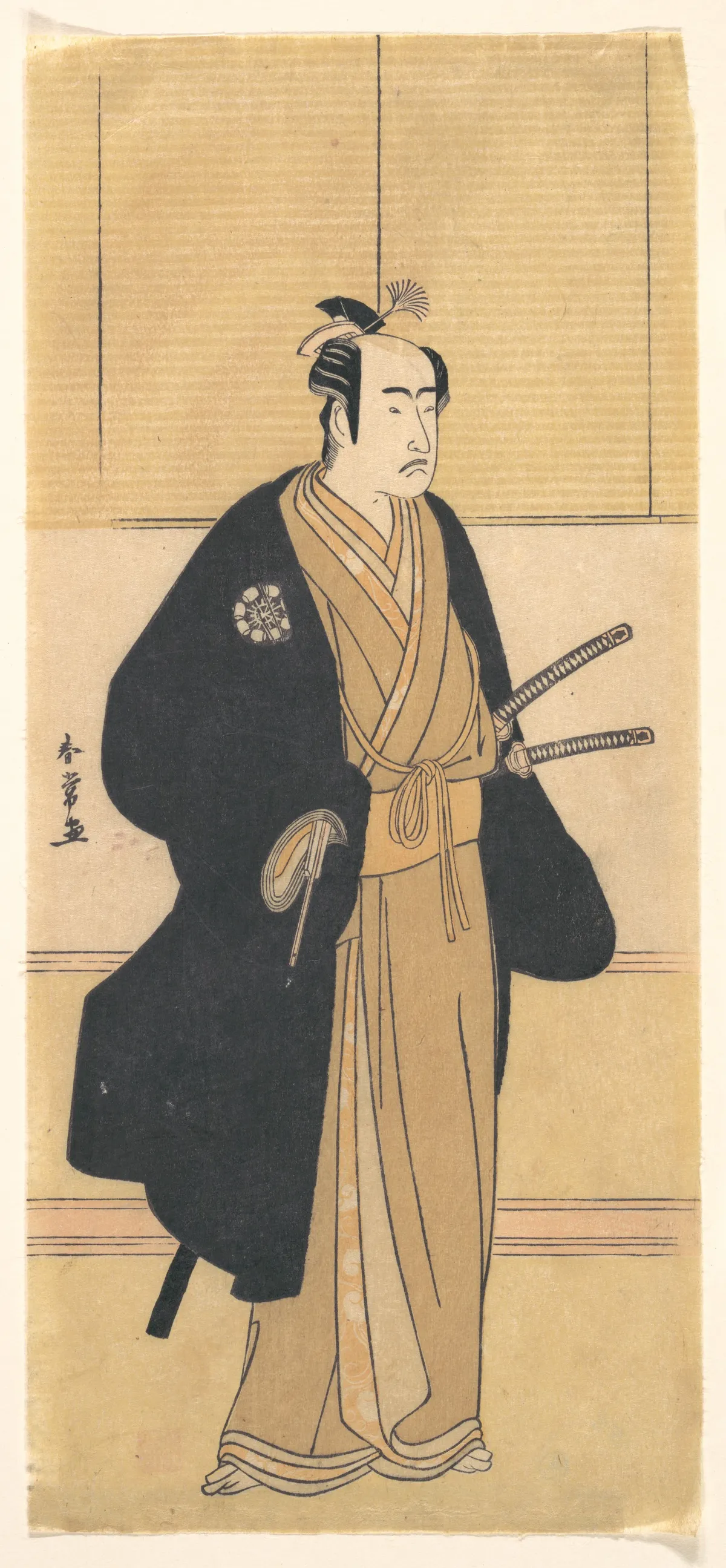
The Silent Role
The air was heavy with anticipation. Lanterns flickered, casting trembling shadows on the wooden stage. The audience, cloaked in darkness, whispered like the rustle of silk. An actor stepped forward, armour gleaming under the dim light. His identity was a mystery, a shadow of the samurai he portrayed.
His footsteps were deliberate, each step resonating with the muted thud of armour meeting wood. A sword hung at his side, its polished sheath reflecting the scattered glow. He paused, eyes scanning an unseen horizon, the weight of a thousand battles etched on his brow. The fabric of his robe rustled softly, a whisper of past stories and forgotten names.
Silence enveloped the room as he raised his hand. The pose was perfect, capturing the essence of a warrior poised between life and death. Behind him, the painted backdrop depicted a landscape of distant mountains and swirling clouds, a silent witness to the drama unfolding.
In this suspended moment, time stretched thin. The actor, nameless and faceless, became the embodiment of the samurai spirit. The audience, breath held, awaited the next move, the next breath, aware that this portrayal was not just a performance but a fleeting echo of a bygone era.
Historical Echo
In the Edo period, the theatre was a world unto itself. Actors donned the guise of heroes and villains, their performances immortalised in ukiyo-e prints. Katsukawa Shunjō captured the ephemeral nature of these roles, preserving the fleeting grace of actors like this unidentified samurai. The print is a testament to the era's fascination with the samurai's noble, yet violent, existence. Through these woodblock prints, the echoes of their stories linger, haunting the present with the shadows of the past.