

The Silent Presence
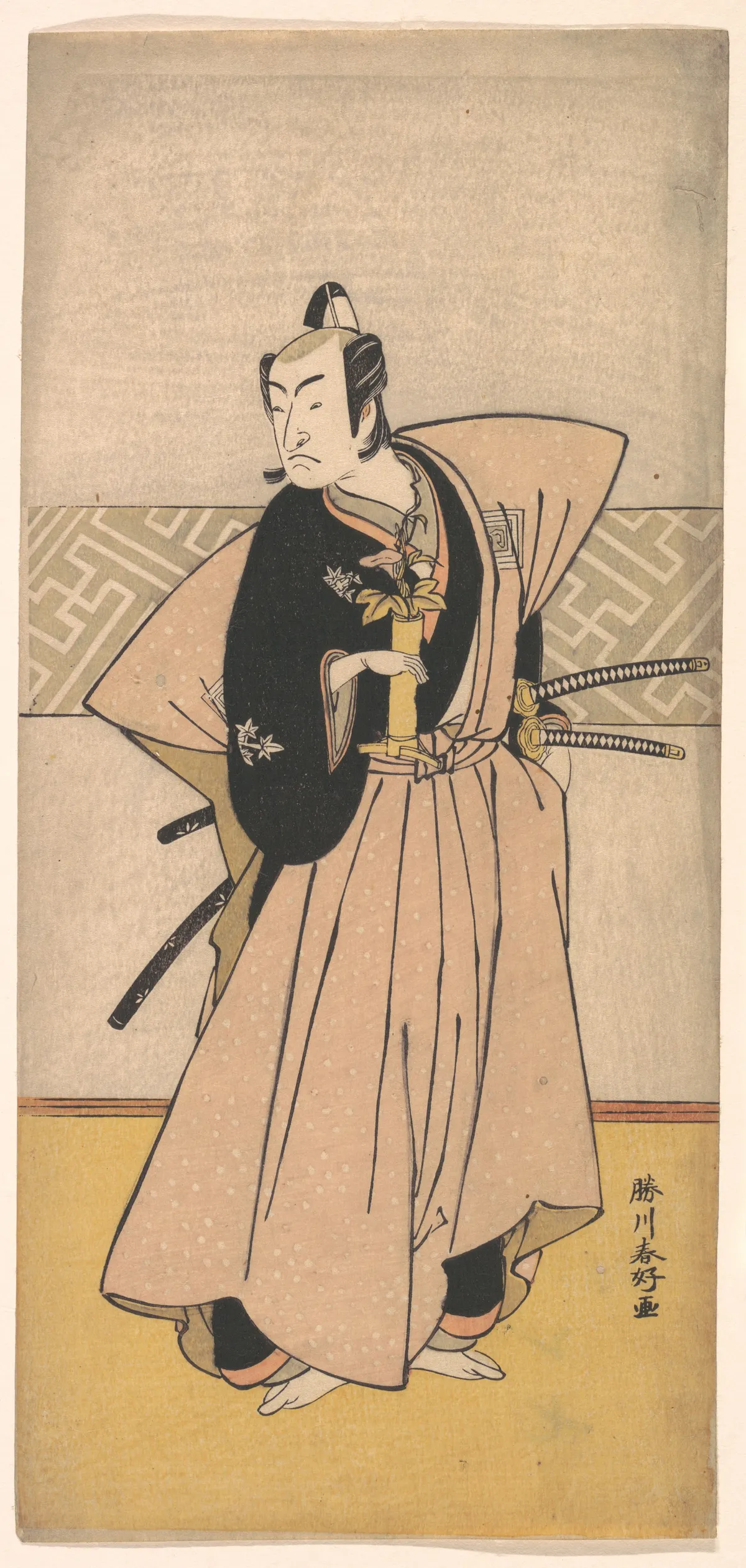
In the hush of the theatre, a lone figure stands. Ichikawa Omezo, poised as a samurai, his garments heavy with the weight of the role. The dim glow of lanterns casts long shadows on his face, accentuating the fierce intent in his eyes. Two swords hang at his side, their presence a silent promise of dignity and power.
The audience holds its breath. The air is thick with anticipation. Omezo's every movement is deliberate, a slow dance of discipline and grace. The fabric of his costume rustles softly, echoing the murmur of the crowd outside the wooden walls. Time seems to suspend itself, caught in the folds of his robe and the sharp gleam of his blades.
His gaze pierces the distance, beyond the material world, into the soul of the samurai he embodies. Within the silence, the faintest creaking of the floorboards whispers stories of past battles, of honour and duty. The actor's presence is a bridge between the living and the spectral, a glimpse into a world of shadows and light.
Historical Echo
The Edo period thrived on the vibrant energy of Kabuki theatre, where actors like Ichikawa Omezo brought legendary warriors to life. Katsukawa Shunkō captures this essence with mastery, freezing a moment in time where art and life converge. The samurai, though a theatrical portrayal, embodies the virtues of bushido—courage, honour, and loyalty—revered by the society that watched with bated breath.