

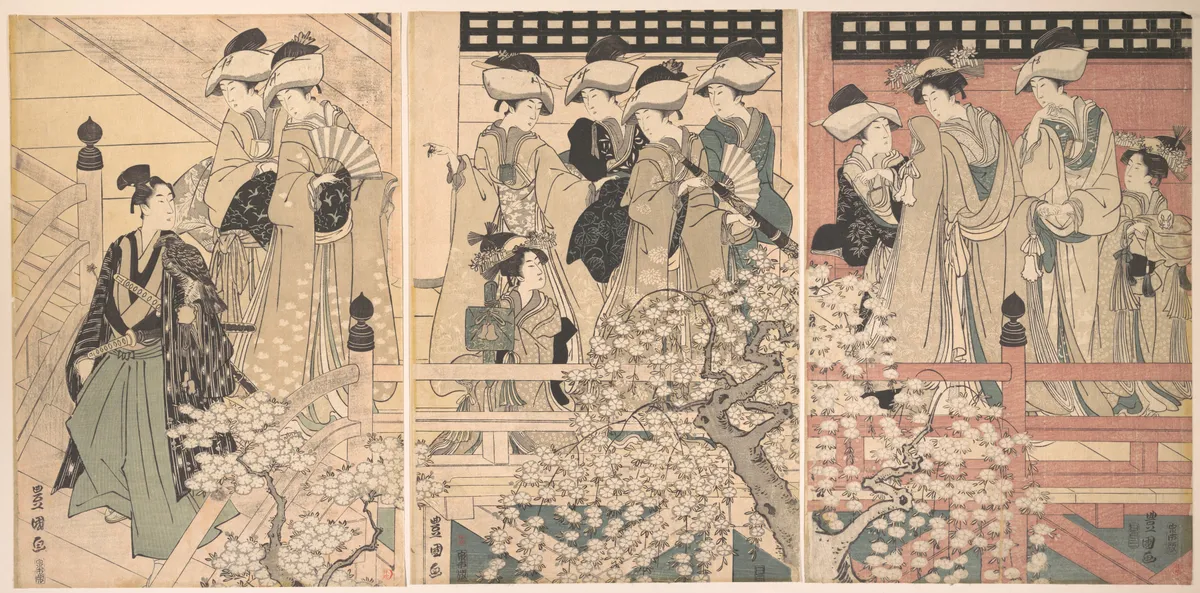
Departing Beneath the Blossoms
The samurai's sandals scuffed softly against the wooden veranda. A breeze carried the scent of cherry blossoms, mingling with the faint aroma of sandalwood from his armour. He paused, adjusting the swords at his hip, the metal whispering in the quiet of the afternoon.
Behind him, the laughter of the women was a gentle murmur, like distant water over stones. Their kimonos, vibrant against the soft pink of the blossoms, rustled as they moved closer to the railing. One of them, her hair adorned with a delicate comb, raised a hand, her voice a soft call—an invitation to linger, to stay a moment longer.
But duty was a weight upon his shoulders. He nodded, a brief, respectful bow, eyes momentarily meeting theirs. The world paused, suspended in the fragile beauty of that moment. The blossoms trembled, petals cascading like whispers of time, caught in the air between them.
With a final glance at the veranda, he turned, each step echoing the resolve of his path. The women watched, their bright eyes reflecting the dance of petals, the silence of his departure lingering long after he vanished among the trees.
Historical Echo
In the Edo period, samurai were often depicted in ukiyo-e, embodying ideals of honour and duty. Utagawa Toyokuni I captured this moment around 1800, blending the ephemeral beauty of cherry blossoms with the weight of the samurai's resolve. These prints served as both entertainment and a reflection of societal values—transient beauty juxtaposed with the steadfastness of duty.