

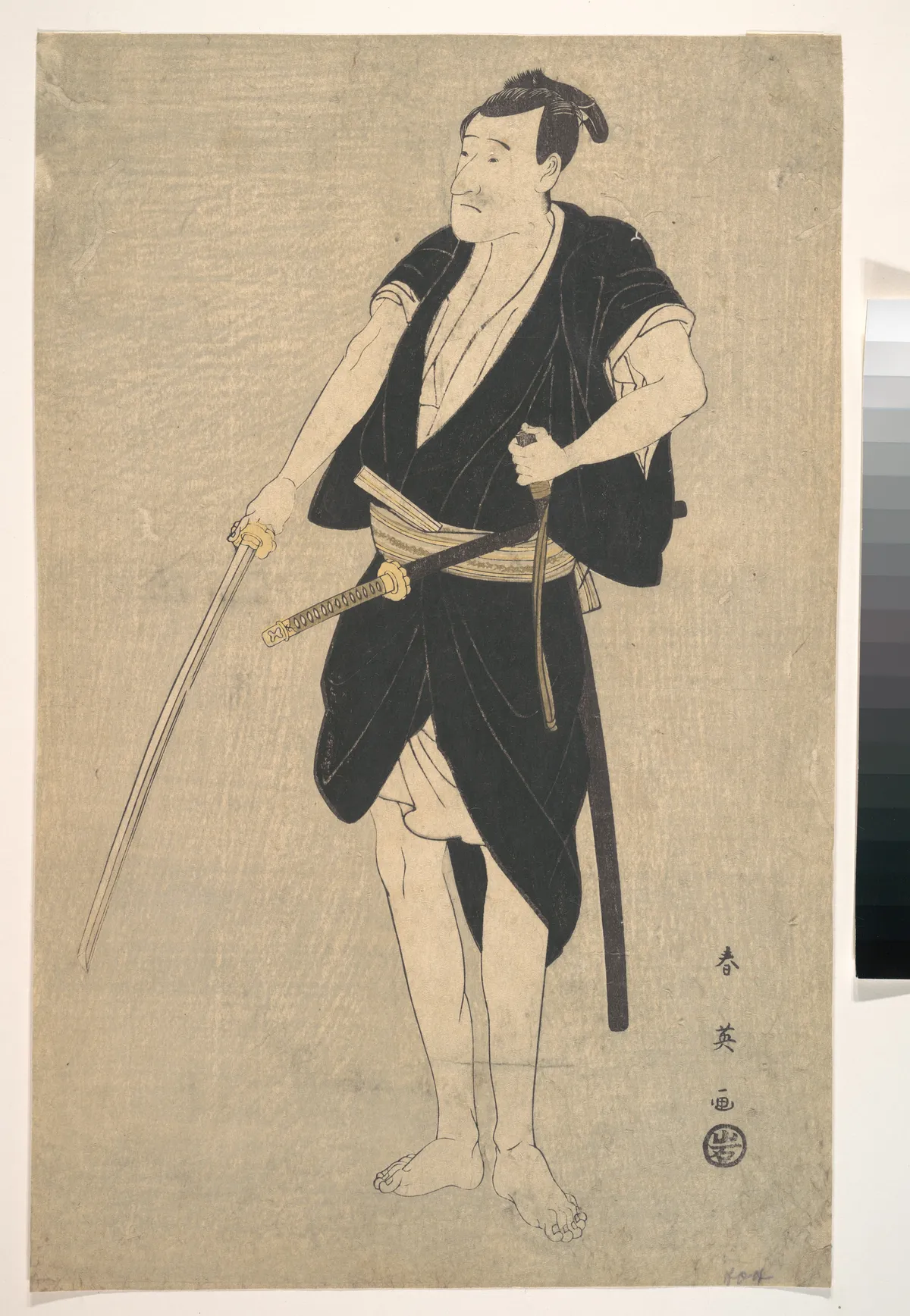
Shadowed Intent
The lantern light flickers softly against the bamboo walls. Within the dim theatre, shadows dance with the actor's movements. The audience holds its breath, caught in the silent tension. Sadakuro stands alone, his presence commanding the space. The layers of his kimono whisper as he shifts, his gaze piercing the soft gloom.
A distant echo of drums thrums through the night. The air is thick, charged with anticipation and the scent of ink and worn fabric. The actor's eyes, dark and intense, tell of betrayal and vengeance. He embodies Sadakuro, the ronin steeped in darkness, his heart hardened by loss.
In the hushed silence, every breath is a part of the story. His hand, steady and deliberate, reaches for the sword at his side. The weight of the blade promises justice or ruin. A single, charged moment hangs suspended in the theatre, where time seems to slow, and history breathes through the wooden stage.
The audience, a sea of silent masks, is transfixed. They are drawn into the depths of the tragedy, where the lines between actor and character blur. This is not just a play; it is an echo of the past, a reminder of the samurai's code and the relentless passage of time.
Historical Echo
The Forty-seven Ronins' tale is one of loyalty and revenge. It haunts the annals of Edo history. Katsukawa Shun'ei captures this essence through the actor's portrayal of Sadakuro. The ukiyo-e print immortalises a fleeting moment on stage, where performance and history meld. The audience witnesses not only a story but a living echo—a reflection of the era's values and the enduring spirit of the samurai.