

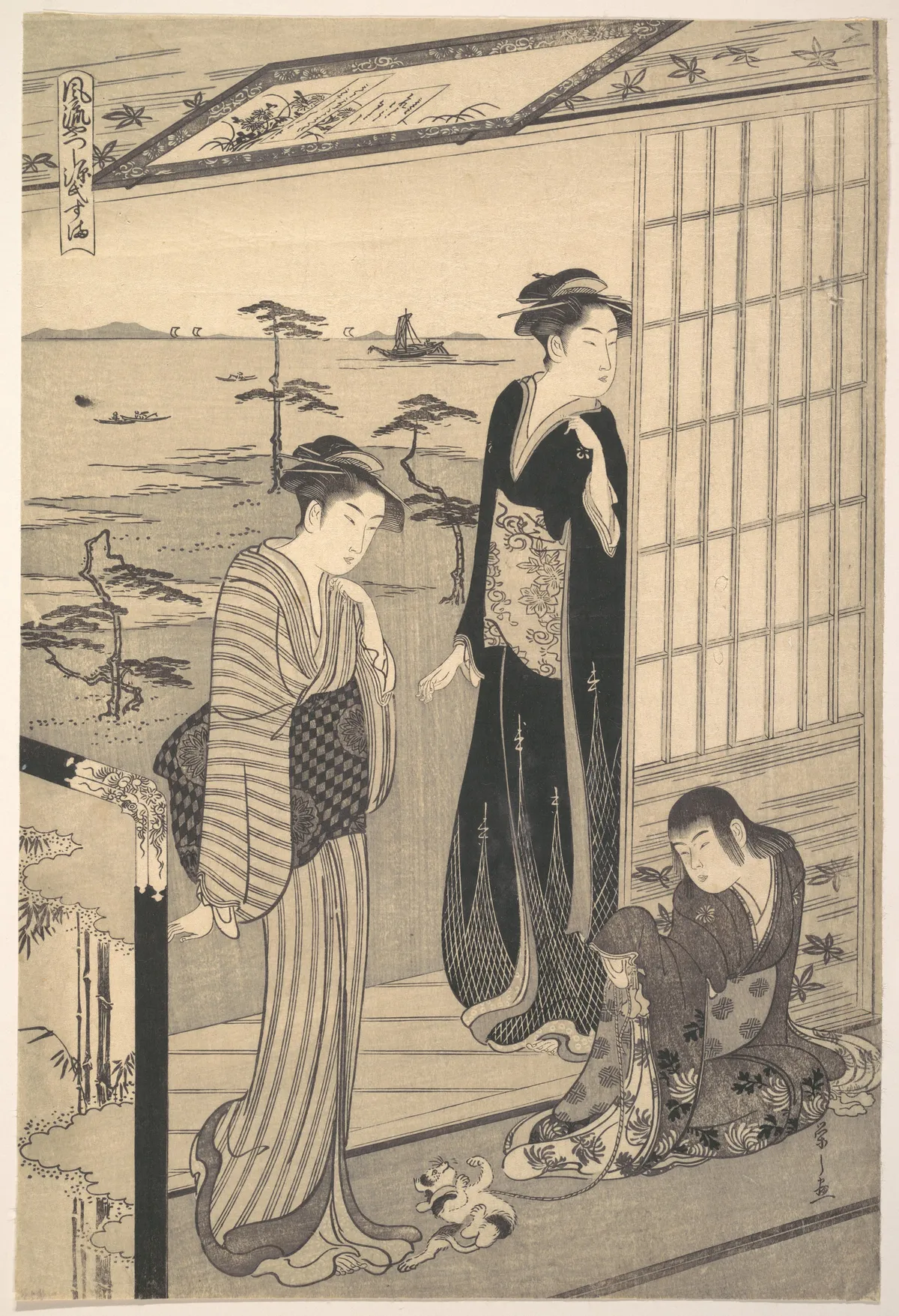
Genji's Silent Vigil
The air at Suma is heavy with sea salt. Waves murmur against the shore, a ceaseless echo. Genji stands alone, watching. His robes catch the wind, silk whispering against his skin. The sky is a grey shroud, pressing low over the water, matching the weight in his heart. Exile is a quiet thing, a slow erosion. He feels it in every breath.
A pine tree leans over him, ancient, knotted. Its needles brush against the sky, indifferent. Genji closes his eyes. Behind him, the faint scent of incense lingers, a distant memory of courtly life. It clings to him, mingling with the brine. His fingers trace patterns in the sand.
Footsteps approach, careful, measured. A servant, perhaps, or a messenger. Genji does not turn. He listens to the rhythm of the steps, their slow retreat. The world narrows to the sound of the sea, the rustle of pine needles.
Time stretches, a thread pulled taut. Genji breathes, the exile his solitary companion.
Historical Echo
The Tale of Genji, a cornerstone of Japanese literature, reverberates through this scene. Its protagonist, Hikaru Genji, finds himself exiled at Suma, a place both physical and internal. Chōbunsai Eishi captures this moment in the late 18th century, reinventing Genji for a modern audience. The print speaks to the timeless nature of longing and displacement, a delicate balance of solitude and reflection. Through Eishi's lens, Genji's exile becomes an eternal vigil, a moment suspended between past and present.