

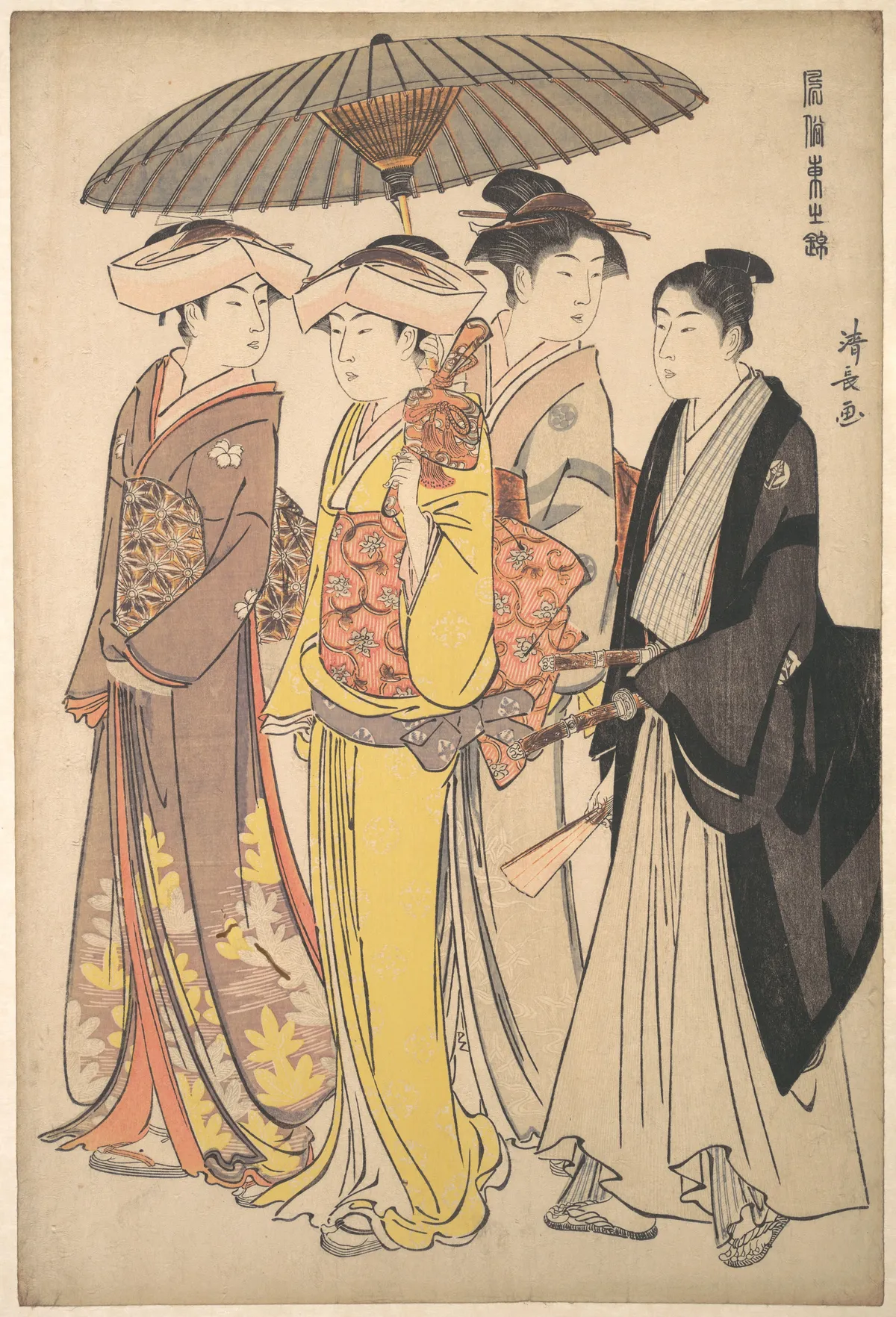
A Lady's Grace
The lanterns flicker softly. Shadows dance across the tatami mat. A lady, poised with the grace of a crane, moves through the room. Her kimono whispers with each step, a cascade of silken hues. Three attendants trail behind, their presence a quiet rustle of fabric and breath. Outside, the rain patters gently against the wooden eaves, a lullaby to the night.
Through the shoji screen, a world of samurai honour and duty lingers. The air is thick with the scent of incense, a fragrant veil over the room. The lady pauses, a moment suspended in time, her gaze distant yet profound. Her attendants, ever vigilant, await her command with the stillness of stone.
In this quiet chamber, history breathes. The echoes of samurai resolve and the elegance of courtly manners intertwine. The lady’s silence speaks of stories untold, of a world both tender and fierce. In the dim light, her presence is a painting come to life, a moment captured in the woodblock's delicate lines.
Historical Echo
In the Edo period, the samurai class was a world unto itself. Honour and tradition dictated every aspect of life. Torii Kiyonaga's depiction captures this essence. His delicate lines and careful composition offer a glimpse into the refined world of samurai households. The lady's poised figure and her attendants reflect the societal roles and expectations of the era. In the stillness, one can almost hear the soft rustle of silk, the muted conversations of a bygone time.