

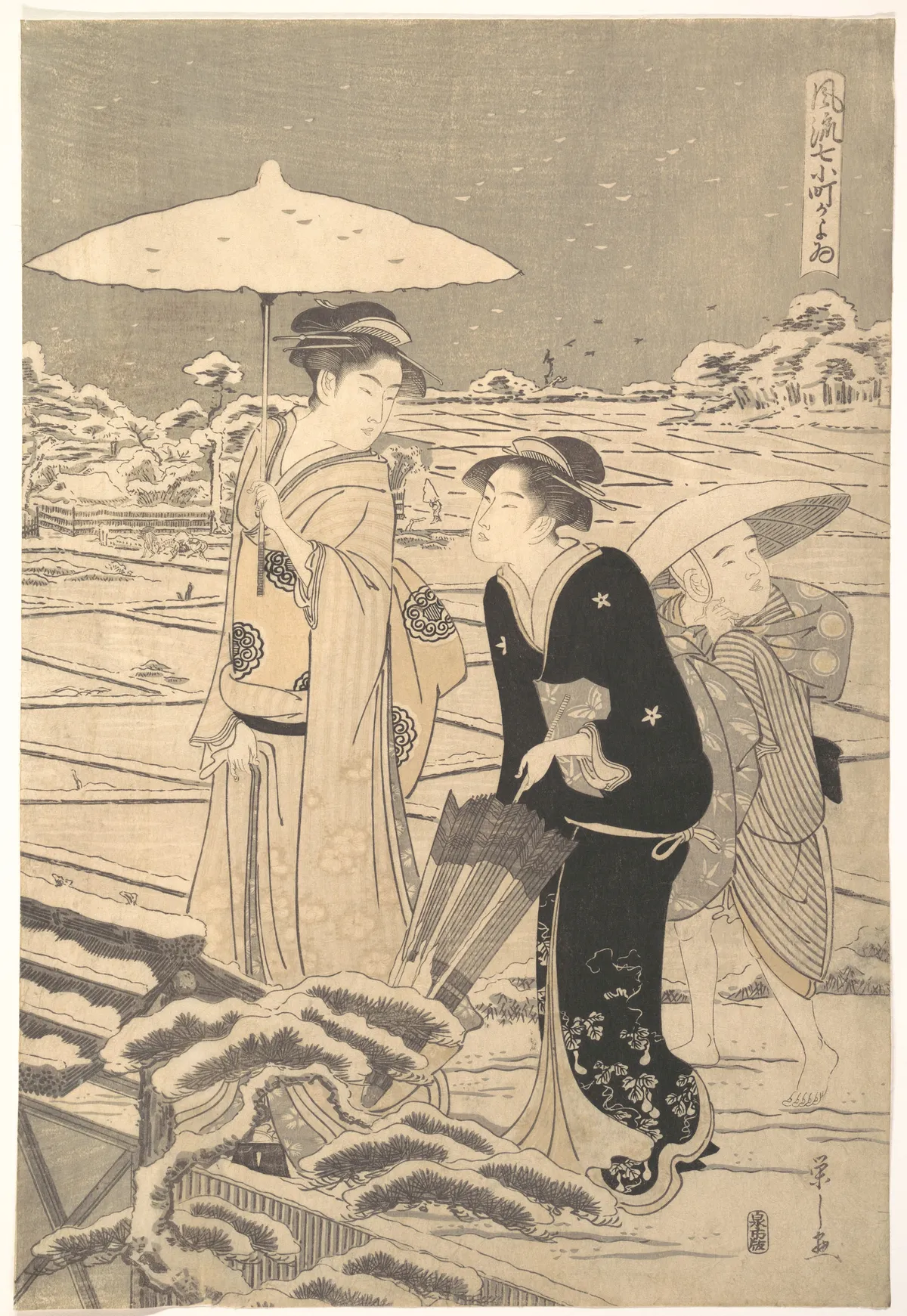
The Night of Komachi
Moonlight filtered through thin shoji screens, casting faint shadows on tatami mats. Komachi, the poet, sat alone. Her kimono, a cascade of silk, whispered softly with her slightest movement. The room was quiet, save for the distant murmur of a stream and the occasional rustle of leaves.
She held a brush, its tip resting gently on the small inkstone. Her hand moved slowly, deliberate. Characters formed, black ink against pale paper, capturing thoughts as ephemeral as the night breeze. Komachi's eyes, thoughtful and distant, seemed to search the darkness for words hidden within it.
A faint scent of plum blossoms lingered in the air, mingling with the earthy aroma of ink and rice paper. Outside, the world was sleeping, wrapped in the cool embrace of night. But within, Komachi's world was alive, vibrant with unspoken verses, each stroke a whisper of longing.
In this stillness, time seemed to falter, suspended between the gentle sway of the lantern's light and the steady rhythm of her heart. The poet paused, listening to the silence, as if expecting a reply to her silent soliloquy.
Historical Echo
Chōbunsai Eishi captured this moment in 1795, immortalising the grace of Ono no Komachi. She was celebrated not only for her beauty but for her profound poetry. In the Edo period, such prints celebrated the elegance and ephemeral beauty of life's fleeting moments. Eishi's work, with its delicate lines and subtle tones, echoes the refined world of the courtly Heian period, inviting us to linger in its serene embrace.