

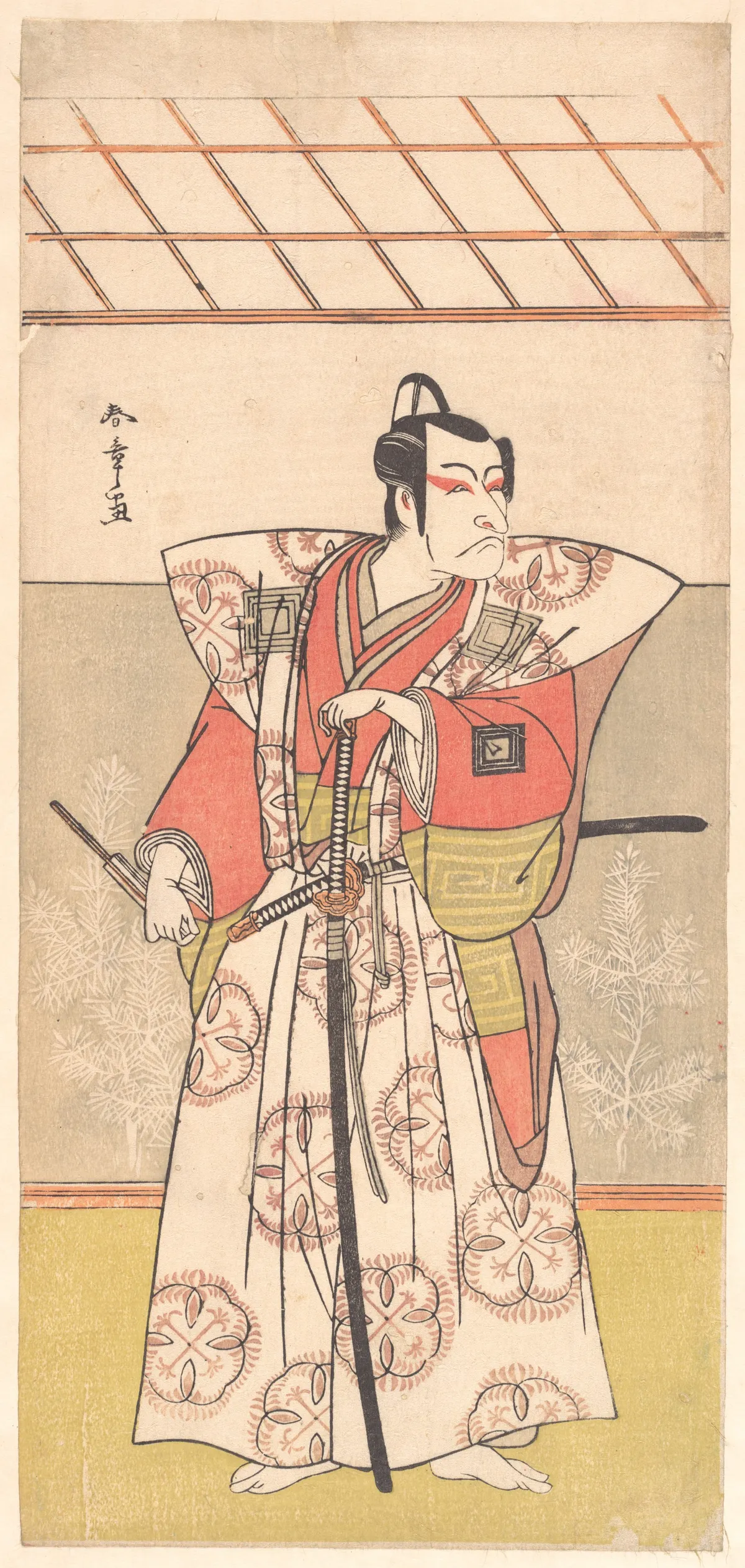
The Silent Stage
The air is tense, heavy with incense. A single lantern flickers, casting shadows. Ichikawa Danjuro V stands poised, his armour gleaming under the dim light. His eyes are sharp, unwavering. The weight of his ornate robes presses down on his shoulders. Silence envelops the theatre.
The audience, breathless, waits. Wooden floors creak as someone shifts. A distant cough echoes, then fades. Danjuro's presence commands the space, his every movement deliberate. The scent of lacquer and polished wood mingles with the faint aroma of rice powder from his makeup.
His hand grips the hilt of his katana. It glints momentarily, a flash of steel in the gloom. Outside, the wind rustles the theatre's paper walls. But inside, time seems suspended, captured in the actor's stillness.
His performance, a dance between life and legend, embodies the spirit of the samurai. A warrior's honour, dignity, and tragedy played out on this wooden stage. The audience, entranced, feels the weight of centuries in each measured step he takes.
Historical Echo
Katsukawa Shunshō captured a moment, an essence of Edo's kabuki theatre. Ichikawa Danjuro V, a celebrated actor, is immortalised as a samurai. The print, crafted circa 1778, reflects the era's fascination with theatrical heroics. In this moment, Shunshō's delicate lines and subtle colours preserve the transient beauty of performance.