

The Quiet Stage
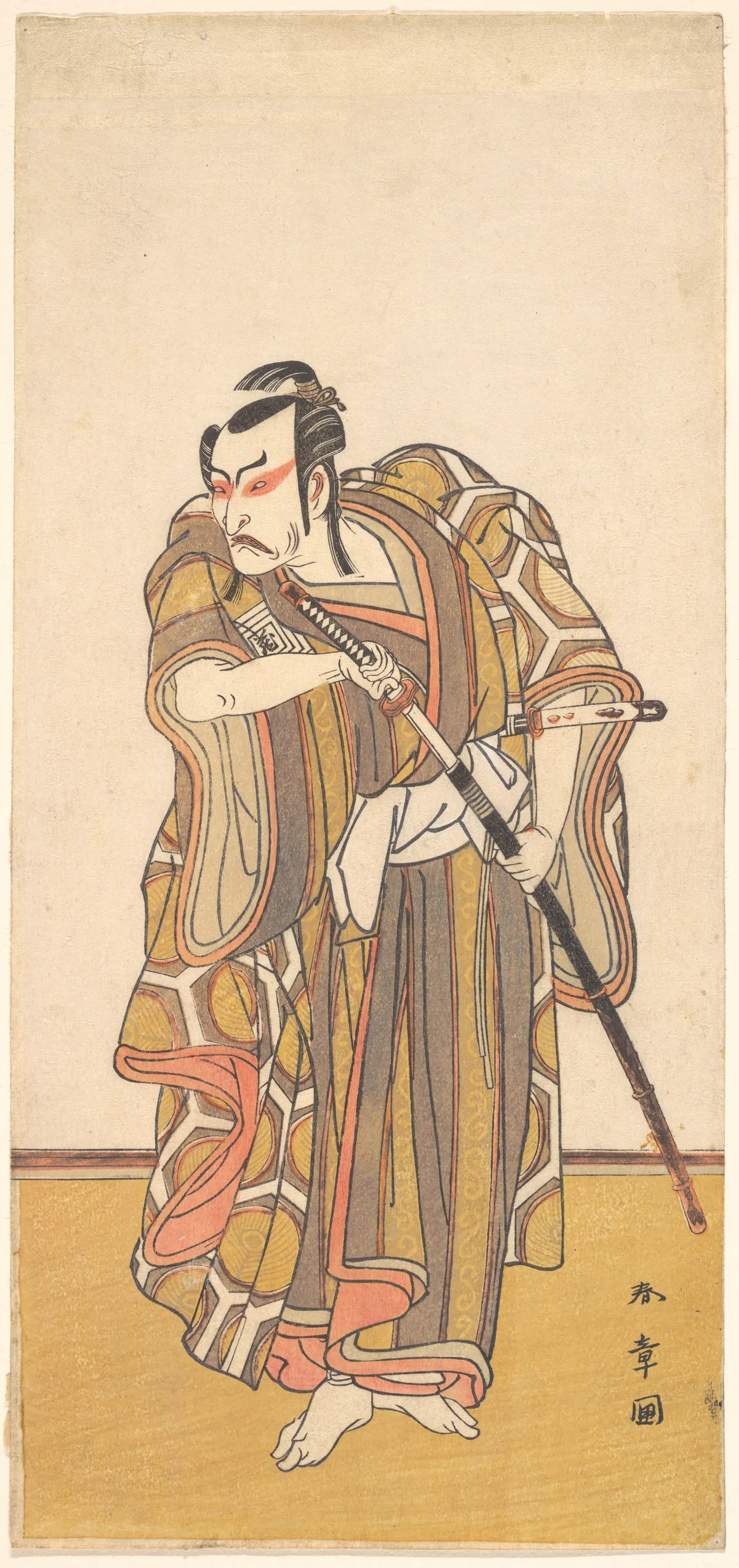
The stage is silent now. Only the rustle of silk and the distant murmur of the crowd remain. Ichikawa Danzō IV stands alone, his presence commanding the empty space. Shadows cling to the folds of his elaborate costume, deepening the reds and golds. His face, stark white, is a mask of intensity.
The air is thick with the scent of incense and the faint tang of sweat. The boards beneath his feet creak softly, an ancient echo of countless performances. In the dim light, he raises his arm, the gesture slow and deliberate. His eyes, dark and piercing, fix on an unseen audience.
There is a weight to his silence, a presence that fills the void. The actor becomes the role, every movement a story. The lanterns flicker, casting fleeting glimmers on his painted face. Time stretches thin around him as if the world holds its breath.
Outside, the city hums with life. The distant clatter of geta on cobblestones drifts in through shoji screens. But here, in this moment, Ichikawa Danzō IV is the universe, vast and unknowable. His soul, a whisper in the dark.
Historical Echo
In the 1770s, Kabuki thrived, a vibrant world of colour and drama. Actors like Ichikawa Danzō IV were revered, their performances a blend of art and life. Katsukawa Shunshō captured this essence with precision, his prints a window into the soul of Edo's theatre. The Kabuki stage was a realm where reality blurred with illusion, where each gesture spoke volumes. In this silent print, the echoes of applause still linger.