

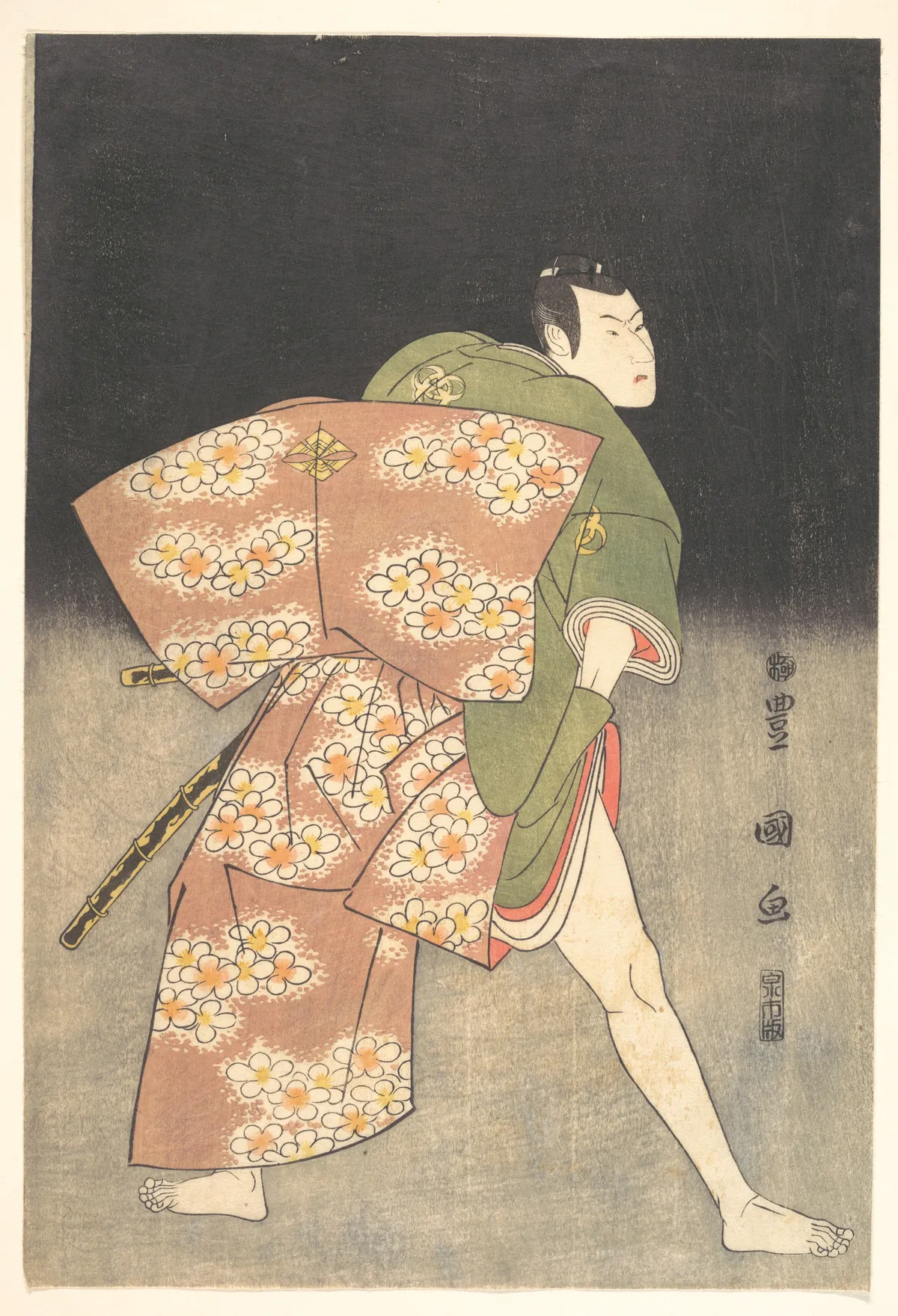
The Young Samurai
In the dim glow of lantern light, a young samurai stands poised. His armour, lacquered and gleaming, catches the flicker of distant flames. The air is heavy with incense, a haze of sandalwood and pine. He is Bandō Minosuke, yet not himself. Tonight, he is Mitsugorō III, a warrior of legend. The stage is set in Edo's bustling theatre. The audience waits in hushed anticipation, breaths held like secrets. His eyes, shadowed and intense, scan the crowd. A rustle of silk, the murmur of the crowd, and the creak of wooden boards beneath his feet. He draws his sword with a sharp metallic whisper that slices through the silence. Each movement, precise and deliberate. His expression, fierce and resolute. In this moment, the boundary between actor and character blurs. The theatre breathes as one with him, a living echo of ancient tales and whispered legacies.
Historical Echo
Kabuki theatre, a cornerstone of Edo culture, was more than mere entertainment. It was a world unto itself, a mirror of society's dreams and fears. Utagawa Toyokuni I captured these fleeting moments, immortalising actors in woodblock prints. The samurai, a symbol of honour and duty, was a popular subject. Audiences were drawn to these tales of bravery and tragedy. The actor Bandō Minosuke, in his role as Mitsugorō III, embodied this allure. His performance was a dance of strength and grace, an ephemeral story etched into the soul of the city. Such prints were cherished, collected as tokens of a night spent in the thrall of drama. They remain, silent witnesses to an era of vibrant artistry and cultural flourish.