

A Brief Encounter
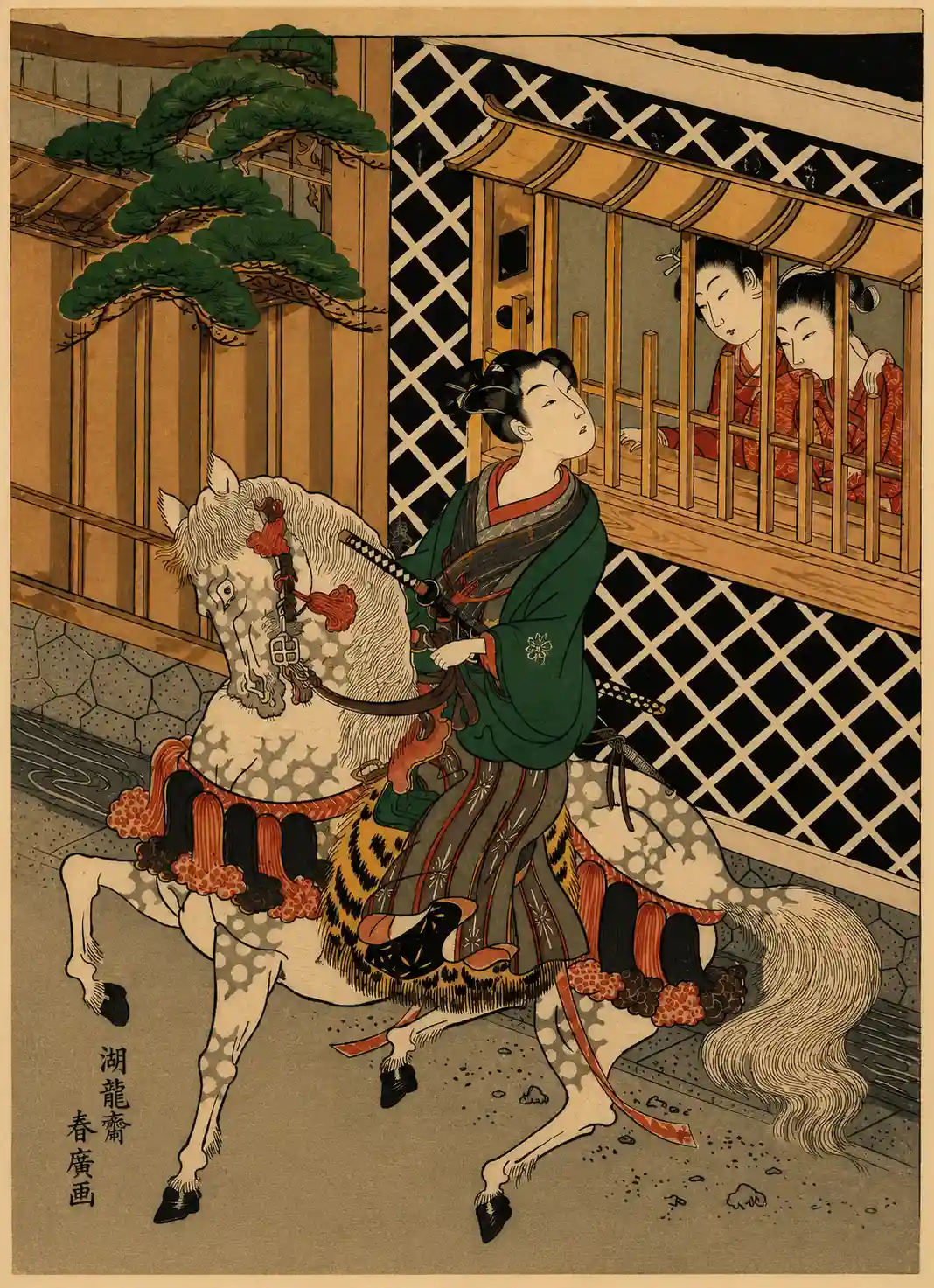
The evening air clung to the samurai's cloak as he rode. His horse's hooves thudded softly on the dirt road, a rhythm broken only by the rustling leaves. The lanterns flickered, casting uncertain shadows. From a nearby window, laughter drifted out, warm and inviting. Two women leaned on the sill, their silhouettes framed by the paper screen's glow. Their voices, soft like the rustling silk, carried gentle curiosity. The samurai paused, his gaze meeting theirs. The horse snorted, impatient. He nodded, a silent acknowledgment, before urging his steed forward. The moment lingered, a fleeting connection in the hushed Edo night.
Historical Echo
Isoda Koryūsai's print captures a transient encounter typical of the Edo period. His work, marked by delicate lines and gentle colours, reflects the era's social nuances. During Meiwa 6–7, the samurai class navigated a world in flux, their status shifting amidst peace. Koryūsai, known for his bijin-ga, also explored musha-e, depicting warriors with an intimate, almost voyeuristic lens. The print whispers of a world where duty and desire intersect, evoking the quiet, unspoken stories that passed in the flicker of a lantern.