

The Roaring Silence
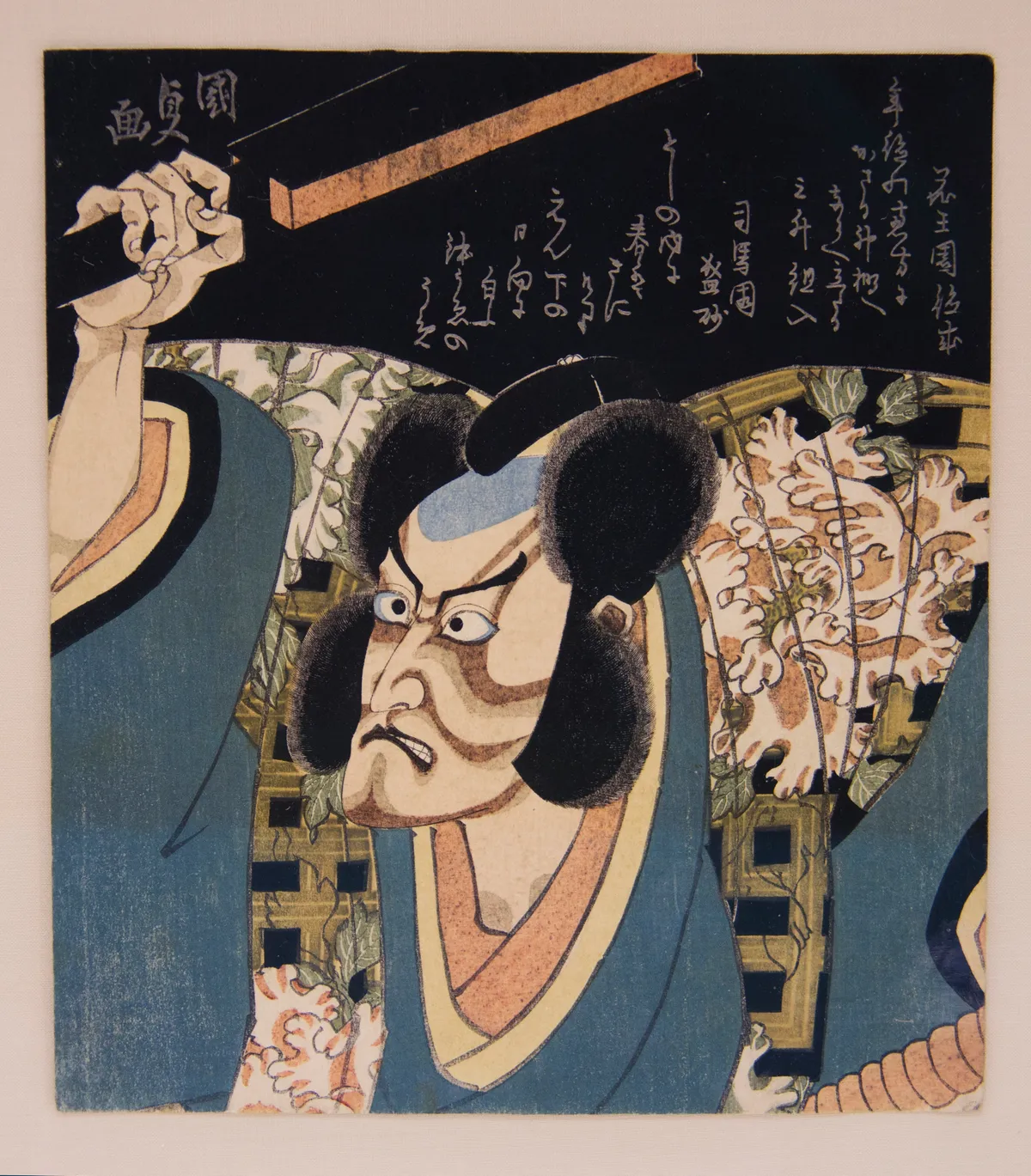
The air is thick. Heavy with incense and murmurs of the crowd. Paper lanterns cast a pale glow, flickering against wooden beams. Onstage, Ichikawa Danjūrō VII stands. His presence commands the room. Arajishi Otokonosuke, fierce as the lion he embodies. His costume is elaborate. Layers of silk and brocade. Each movement, precise and deliberate, echoes through the silent anticipation of the audience.
His eyes, dark and intense, scan the room. They pierce through the shadows, seeking and finding every gaze. The theatre is hushed, save for the occasional rustle of kimono. A fan snaps open. A breath catches.
The actor's voice breaks the silence. Deep and resonant, it fills the space. A tale of honour and vengeance unfolds. His gestures are broad yet measured. The sword in his hand gleams under the dim light. It cuts through the air, a sharp whisper.
Kunisada captures this moment. The print immortalises the spirit of the performance. The ink deepens the shadows, etches the lines of Danjūrō's face. The actor, the character, the man—each layer is there. In the stillness of the print, the roar of the lion lingers.
Historical Echo
In 1829 Edo, the theatre was a world of its own. Kabuki thrived, a living tapestry of drama and spectacle. Ichikawa Danjūrō VII was a star. His roles, legendary. None more so than Arajishi Otokonosuke.
Utagawa Kunisada, master of ukiyo-e, captured this ephemeral art. His prints preserved the luminescence of the stage. They brought the actors' prowess to life, even as the performances faded into memory. The woodblock print stands as a testament. To the power of theatre and the enduring allure of its stories.