

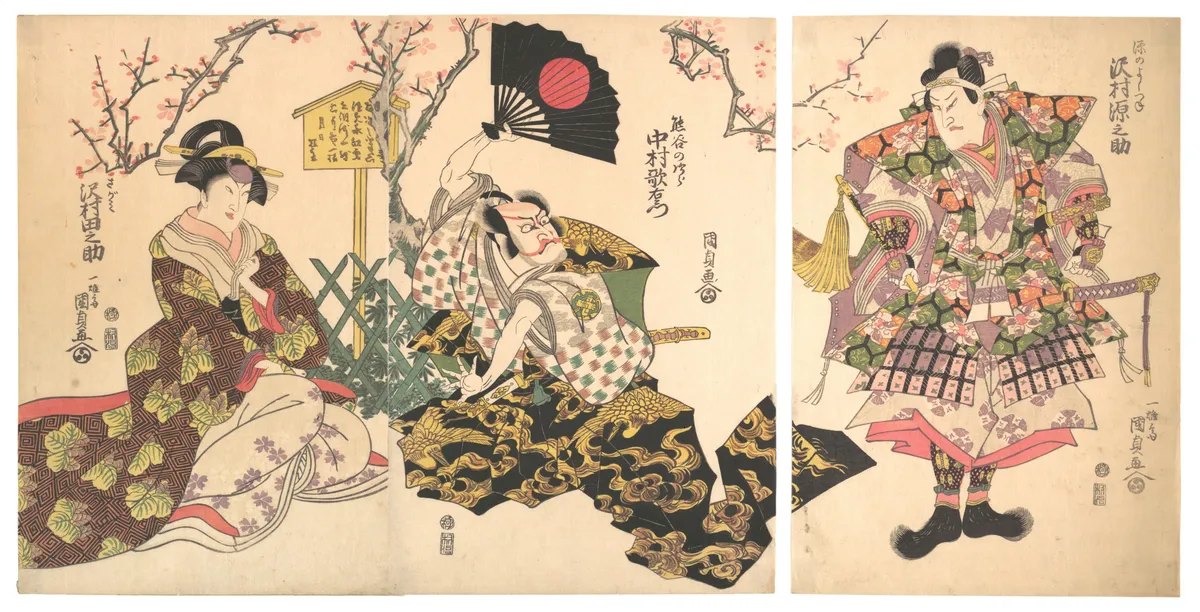
The Gathering at Kumagai's Camp
The air was thick with anticipation at Kumagai's camp. Torches flickered against the darkening sky. Shadows danced on canvas and armour. The haunting rhythm of drums echoed through the night, a distant thunder of impending doom. Warriors moved silently, their armour clinking softly, as if whispering secrets of past battles.
In the centre, Kumagai stood still, a figure of resolute calm amidst the chaos. His eyes, shadowed under the helmet's brim, scanned the horizon. He waited for a sign, for the moment when the play would reach its crescendo. The scent of earth and sweat mingled, a reminder of the humanity beneath the metal and silk.
Nearby, an actor in elaborate costume prepared for his entrance. His face, painted in fierce lines, captured the spirit of a warrior ready to step into legend. The fabric of his robe rustled with each deliberate movement, a dance of tradition and honour.
As the scene unfolded, the air seemed to hold its breath. Each gesture, each glance, was fraught with the weight of history. Time slowed, stretched, as actors and audience alike became one with the tale. The Chronicle of the Battle of Ichinotani was more than a play; it was a living memory, a shared echo of glory and loss.
Historical Echo
In the early 19th century, the fusion of Kabuki theatre and the art of ukiyo-e created a vivid tapestry of cultural expression. Utagawa Kunisada, a master of capturing the essence of the stage, immortalised these moments with his prints. The Chronicle of the Battle of Ichinotani, a tale of samurai bravery and tragic destiny, was brought to life through Kunisada's deft lines and rich colours. Each print served as both a souvenir and a gateway, allowing the viewer to step into the past, to hear the distant drums and feel the weight of a warrior's duty. The stage was not just a place of performance but a bridge to the echoes of history.