

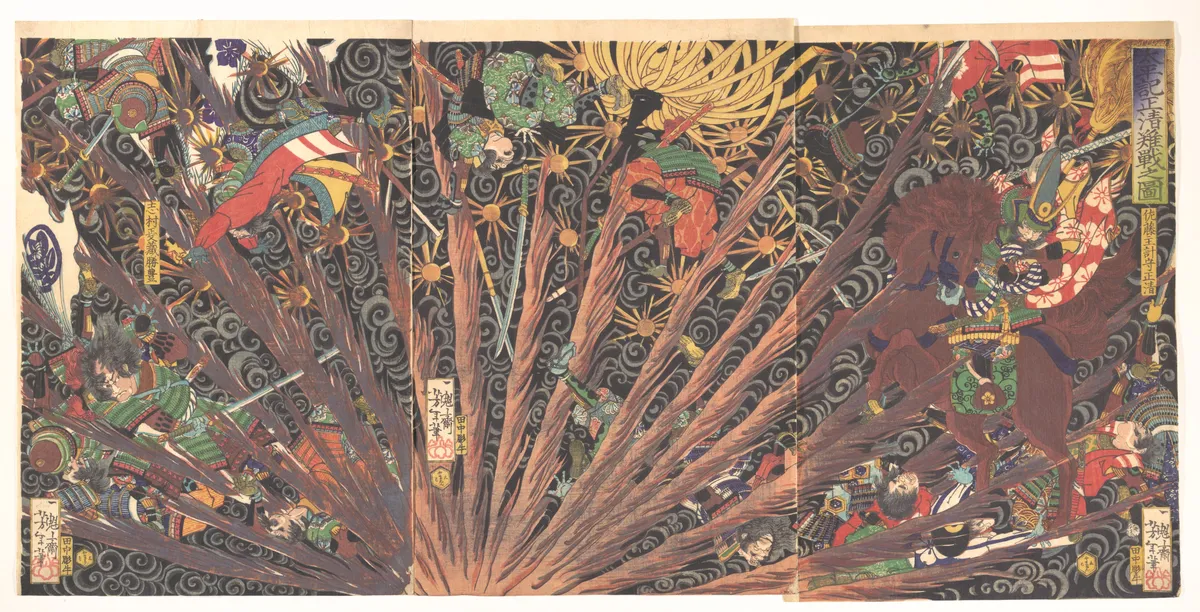
The Echo of Steel
Masakiyo stood, a lone figure amidst chaos. The air was thick with the scent of damp earth and sweat. His armour, heavy and unyielding, clinked softly with each movement. Shadows of pines danced under the pale moonlight, casting uneasy shapes.
The battlefield was a cacophony of distant shouts and the clang of steel. Masakiyo's breath was steady, his gaze fixed beyond the smouldering horizon. He felt the weight of history pressing down on his shoulders—an ancient tale of honour and blood.
In the stillness between the cries of battle, he could hear the rustle of paper, the soft murmur of the Chronicle of Great Peace. The Taiheiki whispered stories of old, tales of valor and despair. Masakiyo was both a part of this narrative and a ghost haunting its pages.
His sword, an extension of his will, gleamed coldly. It was a silent promise of both protection and destruction. The air was charged, expectant. Each footfall on the sodden ground echoed with purpose.
As Masakiyo advanced, time seemed to slow. The world narrowed to the space between heartbeats, the fleeting moments of calm before the storm. He moved with the grace of a man who knew his place in the grand tapestry of fate.
The story of Masakiyo was not just of battle, but of a quiet resolve. A testament to the shadows of history that linger in the air long after the final blow is struck.
Historical Echo
Tsukioka Yoshitoshi captured a moment of intense drama in 1866. His depiction of Masakiyo, from the famed Taiheiki, resonates with the echoes of Japan's turbulent past. The Taiheiki itself is a chronicle of the Nanbokucho period, detailing the strife and aspirations of warriors. In Yoshitoshi's hands, it becomes a haunting tableau, a reflection on the timeless dance of war and peace.