

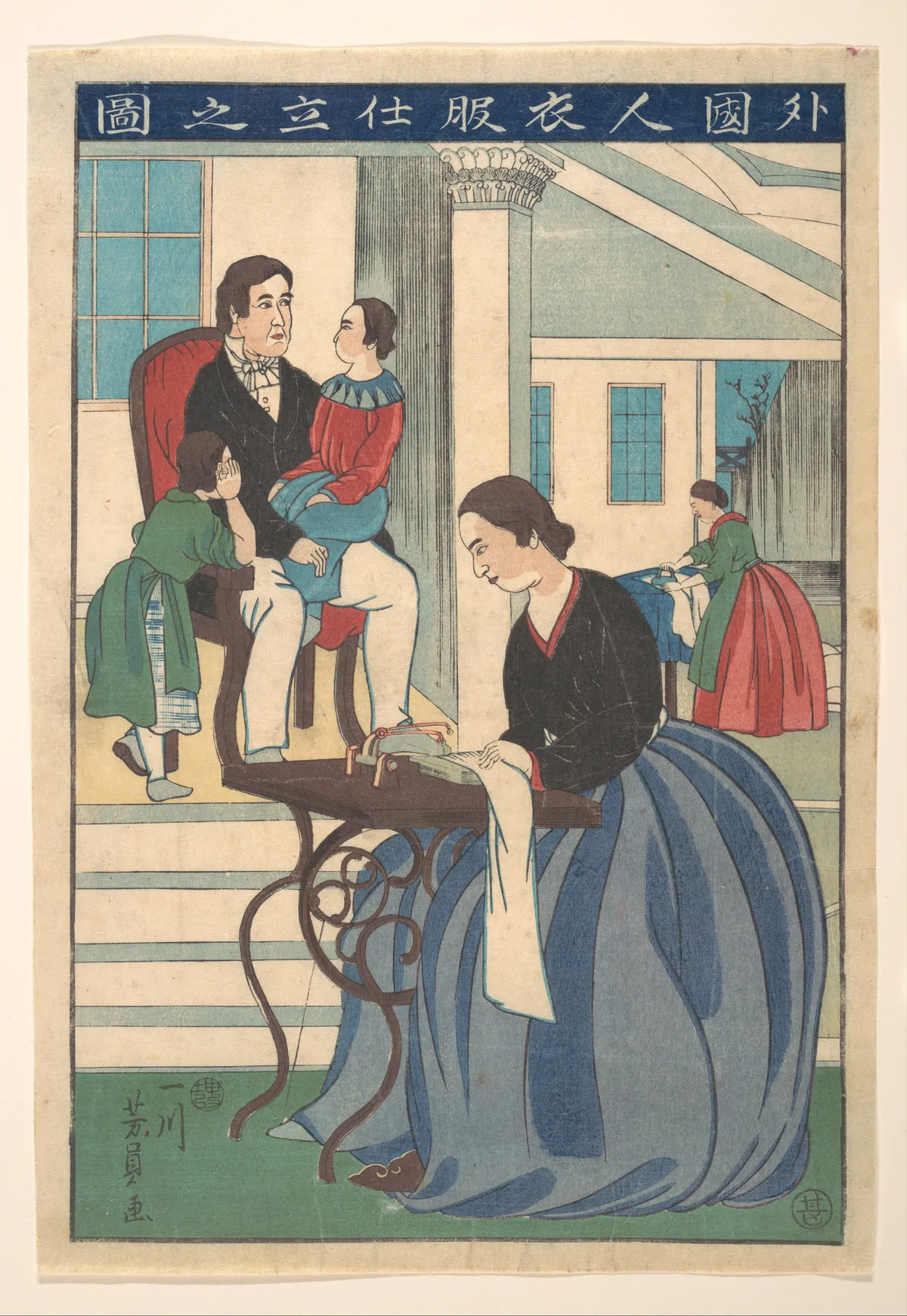
Foreign Threads
A quiet room, dimly lit by the soft glow of paper lanterns. The scent of freshly woven fabric mingles with a hint of foreign perfume. A woman sits, threading a needle with deliberate care, her fingers deftly working the cloth. She is dressed in Western attire, a stark contrast to the traditional Japanese setting. Her husband, a foreigner, reads a newspaper, the rustle of paper the only sound beside the whisper of the needle through fabric.
Their child plays nearby, surrounded by toys from distant lands. A wooden horse, a music box, each piece a fragment of another world. The child hums a tune, foreign notes slipping into the air, unfamiliar yet oddly comforting.
The woman's gaze drifts to the window. Outside, the street is a tapestry of cultures. Japanese lanterns swing gently in the breeze, while Western carriages clatter past. The air is thick with the promise of change, a new era unfolding at the intersection of tradition and modernity.
She returns to her sewing, the rhythmic motion grounding her in the present. Threads of silk and cotton intertwine, a quiet testament to the blending of worlds. In this room, time flows like a river, carrying them gently towards an uncertain future.
Historical Echo
In 1860, Japan was opening its doors to the world. The Treaty of Kanagawa had been signed just a few years earlier, ushering in an era of cultural exchange. Utagawa Yoshikazu, a master of capturing this transformative period, presents a scene of domestic life tinged with Western influence. His work reflects the curiosity and adaptation of a nation at the brink of modernisation, as seen through the intimate lens of family life. The juxtaposition of Western and Japanese elements in this print echoes the broader societal shifts occurring in Yokohama, a city at the forefront of Japan's international engagement.