

The Quiet Intrusion
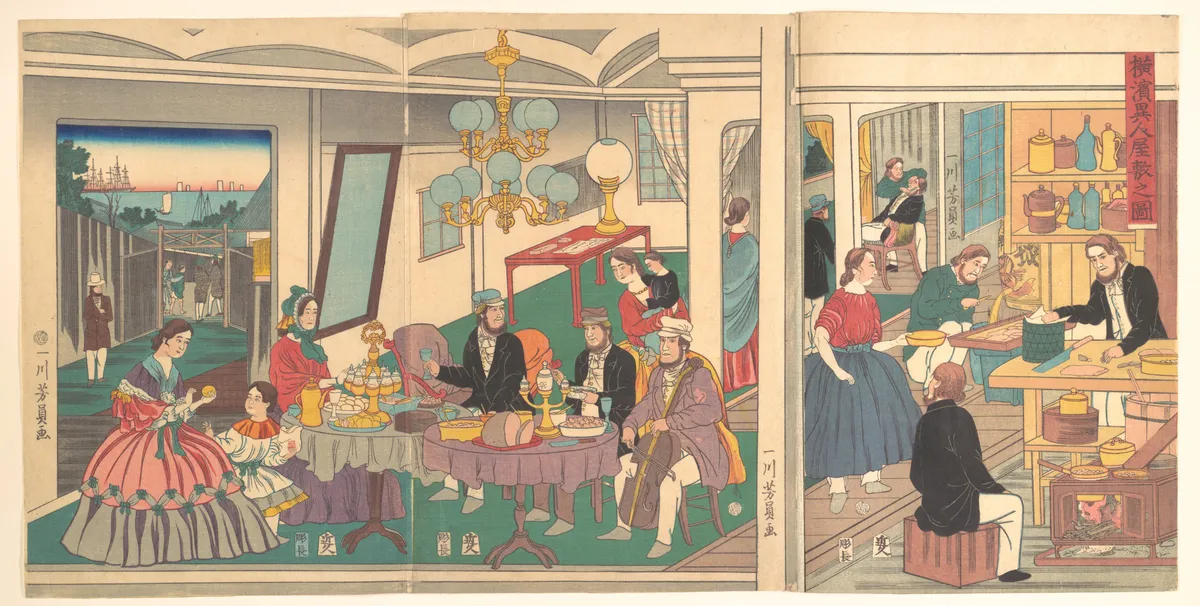
The air was thick with the scent of the sea. It lingered around the foreign residence like an unwelcome guest. The structure itself stood firm, an anomaly in the familiar landscape of Yokohama. Its unfamiliar lines and angles cast shadows that stretched long across the ground. Inside, a flicker of candlelight danced against the windows, casting soft glows onto the wooden floorboards.
Voices murmured within, hushed yet resonant. English, perhaps. Or Dutch. The syllables mingled with the aroma of tobacco and the faint clink of glassware. Outside, the night was alive with the distant sound of waves, the cries of seabirds carried on the wind. A Japanese servant moved quietly through the garden, his footsteps barely disturbing the gravel path.
He paused, listening to the laughter that escaped the confines of the house. It was strange and unfamiliar, yet there was a warmth to it. The garden lanterns swayed gently, their light casting a soft, inviting glow.
A foreign woman appeared at the window, her silhouette framed by the light behind her. She gazed out, her eyes scanning the darkness with a curiosity that was both bold and tentative. The servant watched her for a moment, then continued on his way, leaving the house and its foreign occupants to their quiet intrusion into the Japanese night.
Historical Echo
The year was 1861. Yokohama had opened its ports to the world just a few years prior. A time of change, when foreign presences mingled with the traditional Japanese landscape. Utagawa Yoshikazu captured this moment, where cultures met and hesitated at the threshold of understanding. The architecture of the foreign residence stood as a testament to this new era, a symbol of an uncertain yet inevitable future.