

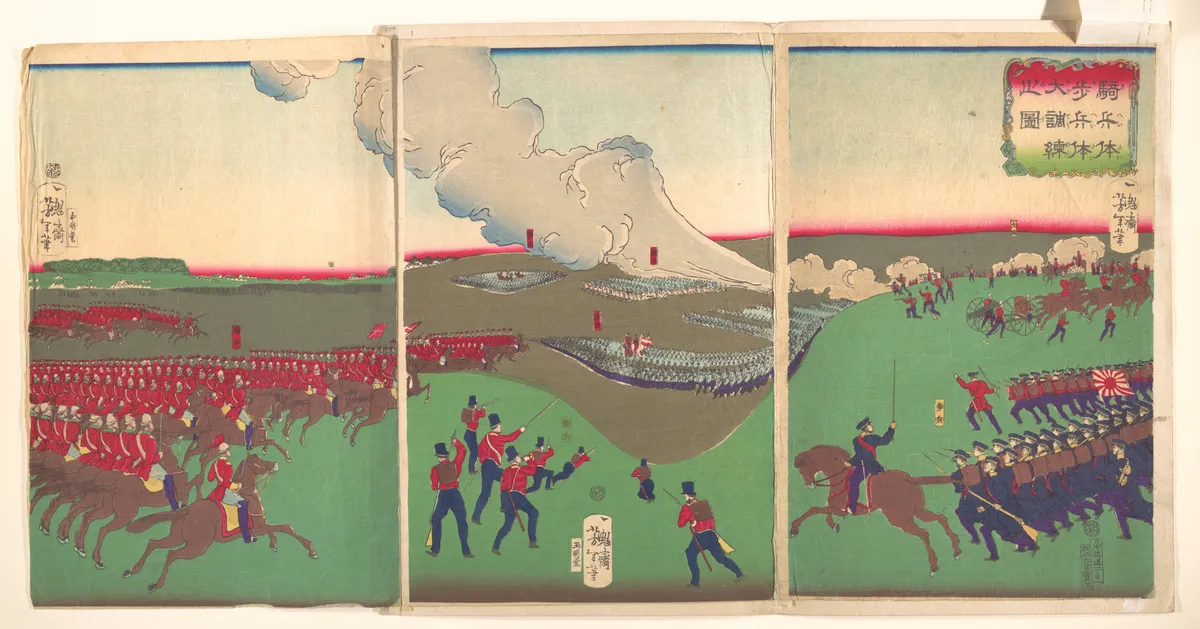
Echoes of Retreat
The air is thick with the scent of gunpowder and sweat. The ground trembles beneath the weight of retreating footsteps. Soldiers move in a disjointed rhythm, their faces etched with fatigue and resignation. Armour clinks softly in the subdued light of dusk, a metallic whisper fading into the shadows.
Hooves strike the earth with a jarring, repetitive thud. Horses, weary and laden, carry their riders away from unseen conflict. Dust swirls in their wake, a ghostly veil that obscures the path behind. The cavalry, once proud, now bows under the weight of defeat.
In the distance, the faint echo of a bugle call lingers—an unsupported note, hanging in the heavy summer air. The sound of retreat, of lives uprooted and battles unfinished, fills the evening with an unspoken lament. It is a sound that settles deep into the bones, a reminder of the relentless march of time and war.
Yoshitoshi captures this moment with a stillness that belies the chaos. His lines are sharp, his colours muted, reflecting the quiet desperation of men who have seen too much. Even the sky, a wash of greys and blues, seems to hold its breath in mourning.
Yet, amidst the retreat, a sense of resilience remains. Each step forward is a promise to return, to fight another day. In the silence, there is resolve—a silent vow carried on the wind.
Historical Echo
Tsukioka Yoshitoshi's work, created in the 8th month of 1867, reflects a turbulent period in Japanese history. The late Edo period was marked by political upheaval and conflict, as the Tokugawa shogunate's power waned. The depiction of retreating soldiers symbolises the shifting tides of power and the enduring spirit of those who lived through such times. Through Yoshitoshi's eyes, we glimpse the human cost of war and the unyielding hope for peace.