

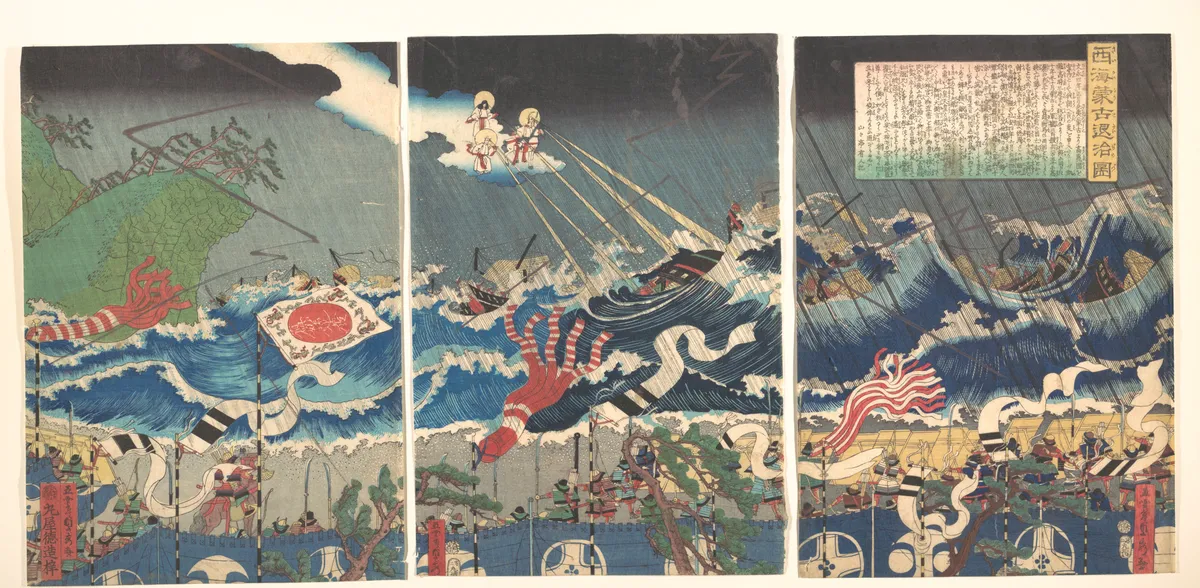
Defeat of the Mongols in the Western Sea
The wind whipped the sea into white fury. Waves crashed against the sides of wooden ships, groaning under the onslaught. Warriors clad in armour stood firm, their eyes scanning the horizon for the enemy. The air was thick with salt and tension, mingling with the cries of seabirds that circled above.
The Mongol fleet, a dark mass on the water, loomed closer. Arrows flew like a storm of locusts, their whistling drowned by the roaring sea. The samurai moved with purpose, their swords gleaming briefly in the fractured sunlight. Boats collided, the sound of wood splintering against wood echoing like distant thunder.
Amidst the chaos, a lone figure stood, commanding the scene with a calm presence. His voice rose above the din, steadying his men, guiding them through the storm of battle. The clash of blades and the shouts of men melded into a single, relentless note.
As the sun dipped lower, painting the sky in hues of blood and fire, the tide turned. The Mongols faltered, their ranks breaking under the relentless assault. Victory hung in the air, heavy as the scent of the sea.
Historical Echo
In 1863, Utagawa (Gountei) Sadahide captured a moment heavy with legend. This print immortalises Japan's resistance against the Mongol invasions of the 13th century. The scene is one of defiance, a nation standing against the tide. The woodblock print brings to life the chaos and courage of that historical conflict, where nature and strategy intertwined. The defeat of the Mongols became a testament to resilience, etched forever in the annals of history and the delicate lines of ukiyo-e.