

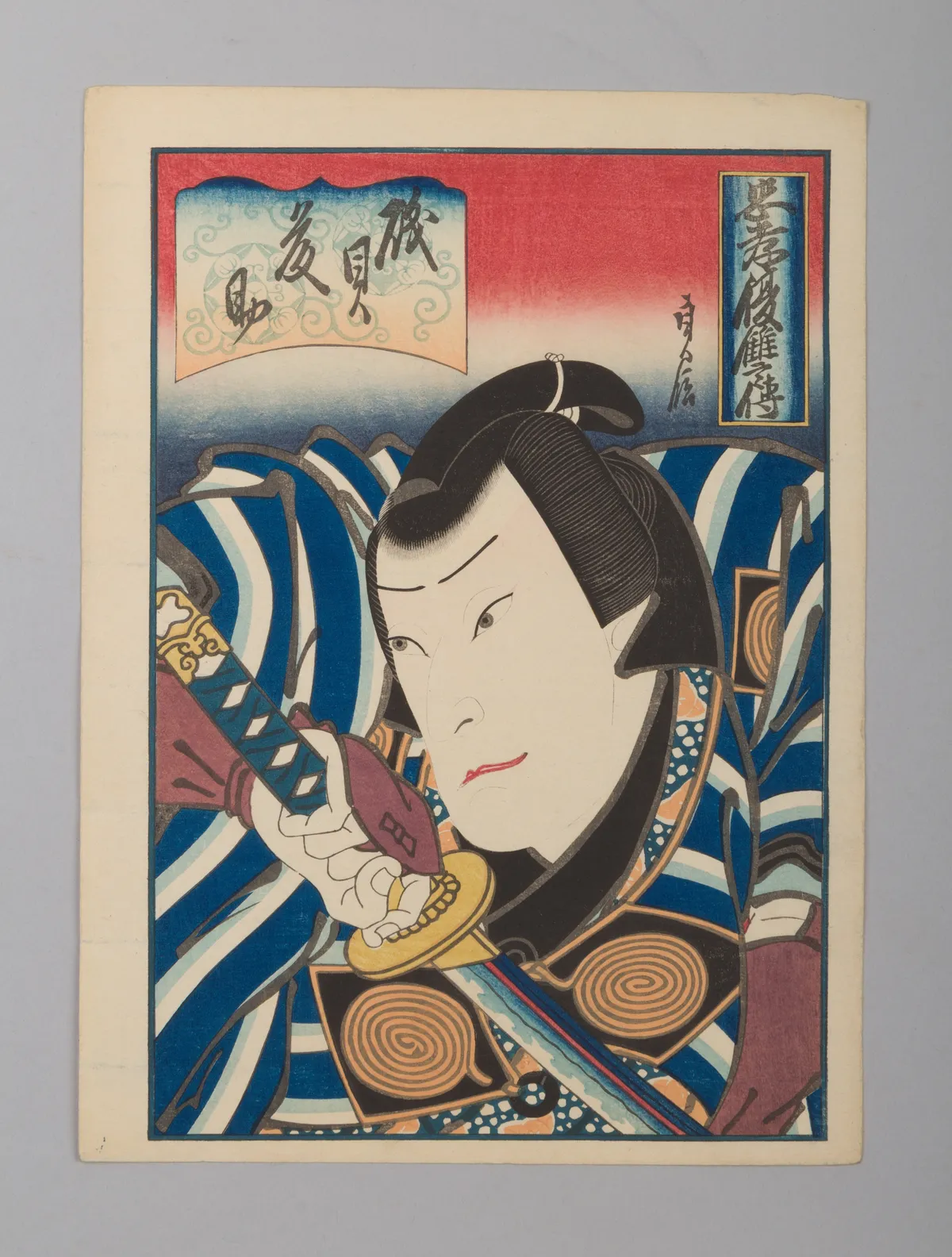
The Silent Resolve
In the dim light of the kabuki stage, Arashi Rikaku II stands as Isogai Tōsuke. His eyes, shadows beneath a painted brow, hold a storm. Beneath the layers of silk and armour, a heart beats with purpose. Silence envelops the audience, thick and expectant.
The night air is cool, carrying the scent of distant pine. It mingles with the incense from the theatre's corners. A drum's soft thud punctuates the tension, echoing like a heartbeat in the hushed arena. Tōsuke's hand rests on the hilt of his sword, fingers curling around the promise of vengeance.
His breath is steady, a whisper against the taut silence. Every movement is deliberate, each step heavy with the weight of honour. The wooden floor creaks softly underfoot, a quiet reminder of the stories built into its grain. Shadows dance across his face, flickering like the ghosts of past betrayals.
The audience holds its breath, caught in the gravity of his resolve. They sit, wrapped in their kimonos, eyes reflecting the flickering lanterns. The air is thick with anticipation, the kind that clings to the skin like mist.
Outside, the wind stirs the leaves, a gentle rustling that barely disturbs the night's stillness. But inside, the tension is palpable, a living thing that pulses with each quiet moment. Tōsuke stands, a solitary figure against the backdrop of history, poised on the edge of destiny.
Historical Echo
In 1848, Hasegawa Sadanobu captured the essence of Arashi Rikaku II as Isogai Tōsuke. This print, part of a series celebrating loyalty and revenge, reflects the era’s fascination with tales of honour. The actor's portrayal is a testament to the enduring power of kabuki, where each gesture tells a story as old as time itself. The woodblock print, with its delicate lines and rich colours, preserves a moment of silent intensity, an echo of the past living in the present.