

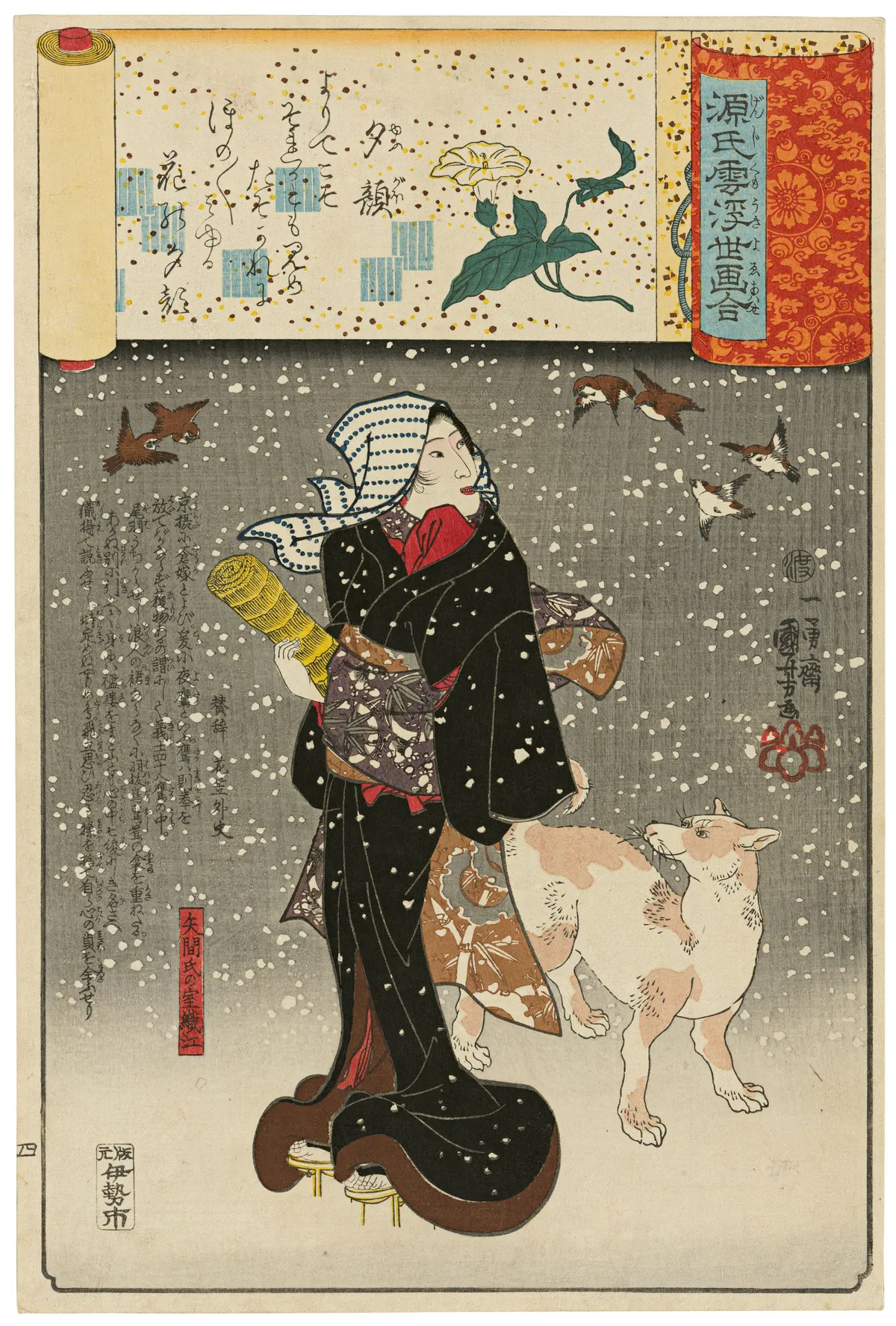
Lady of the Evening Faces
The paper lantern flickers. Its light casts long shadows on the tatami mat. Orie, Yazama's wife, sits silently. Her kimono whispers as she shifts, the silk heavy with the night's moisture. Outside, the evening faces bloom, fragile and pale against the darkening sky. Their scent mingles with the cool air, drifting through the open shoji.
Orie's gaze is distant. She listens to the rustle of leaves, the distant murmur of the river. Her fingers trace the edge of her sleeve. Each stitch a story, each thread a memory of gentle hands at work. Her heart echoes the distant drum of a festival, the past mingling with the present.
The image of Genji clouds haunts the room, ethereal and unattainable. Orie's mind wanders, touching upon the tales of old. She breathes in the quiet, letting it fill the spaces between her thoughts. The night deepens, wrapping her in its embrace. She closes her eyes, surrendering to the whispers of the evening.
Historical Echo
The print is part of Utagawa Kuniyoshi's series, "Scenes amid Genji Clouds Matched with Ukiyo-e Pictures." Created in 1845–46, it captures the delicate interplay between literature and art. The character of Yūgao from "The Tale of Genji" embodies mystery and ephemeral beauty. Kuniyoshi's portrayal of Orie as the "Lady of the Evening Faces" reflects this essence. Her presence is a quiet nod to the impermanence cherished in Edo-period aesthetics.