

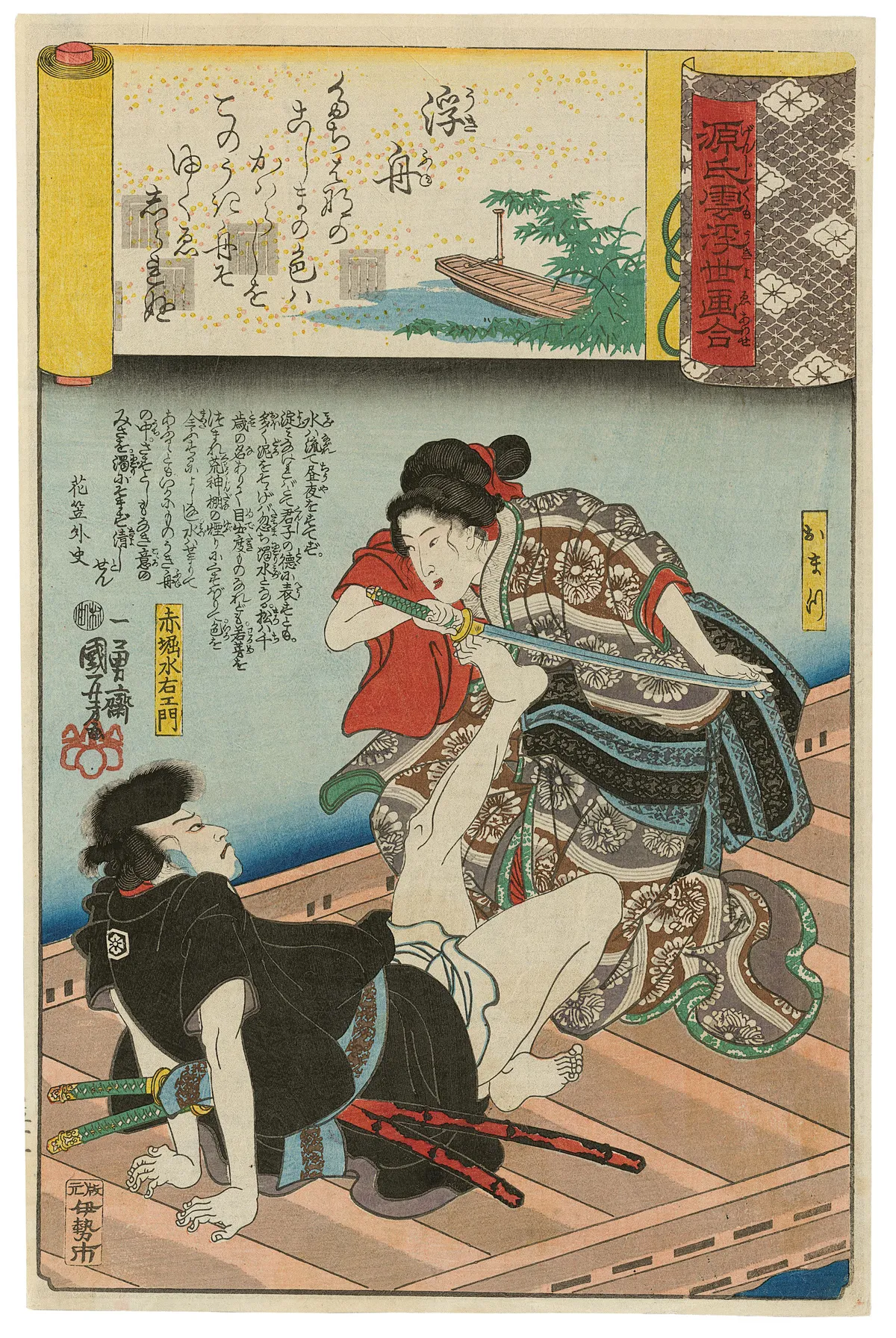
A Boat Cast Adrift
The river stretched wide under a slate-grey sky. Omatsu's small frame leaned against the boat's edge, her eyes scanning the rippling surface. The air was heavy, charged with the foreboding of a storm. Akabori Mizuemon sat opposite her, his face a mask of stoic resolve. His hands gripped the oar with a quiet determination, each stroke echoing in the stillness.
Water lapped against the hull, a rhythmic whisper against the tense silence. The boat drifted, caught between the currents and the whims of fate. Omatsu glanced at Mizuemon, reading the unspoken words in the set of his jaw, the furrow of his brow. They were cast adrift, not just on the river, but in the turbulent sea of their destinies.
Above, clouds gathered, swirling like the spirits of the past. The air thickened with a sense of impending change. Omatsu's kimono rustled softly as she shifted, her gaze fixed on the horizon, where the river vanished into mist. Her heart beat in time with the relentless flow of water, a quiet pulse of defiance against the encroaching night.
Historical Echo
In 1845–46, Utagawa Kuniyoshi captured the essence of a moment poised on the brink of transformation. Omatsu and Akabori Mizuemon, figures from a tale interwoven with the legendary Genji, found themselves adrift in both narrative and time. Kuniyoshi's strokes rendered the boat a symbol of isolation and resolve, set against the vast uncertainty of the waters. The print, part of the series "Scenes amid Genji Clouds Matched with Ukiyo-e Pictures," reflects the Edo period's fascination with drama and the human condition, echoing through the muted colours and deliberate lines of the ukiyo-e tradition.