

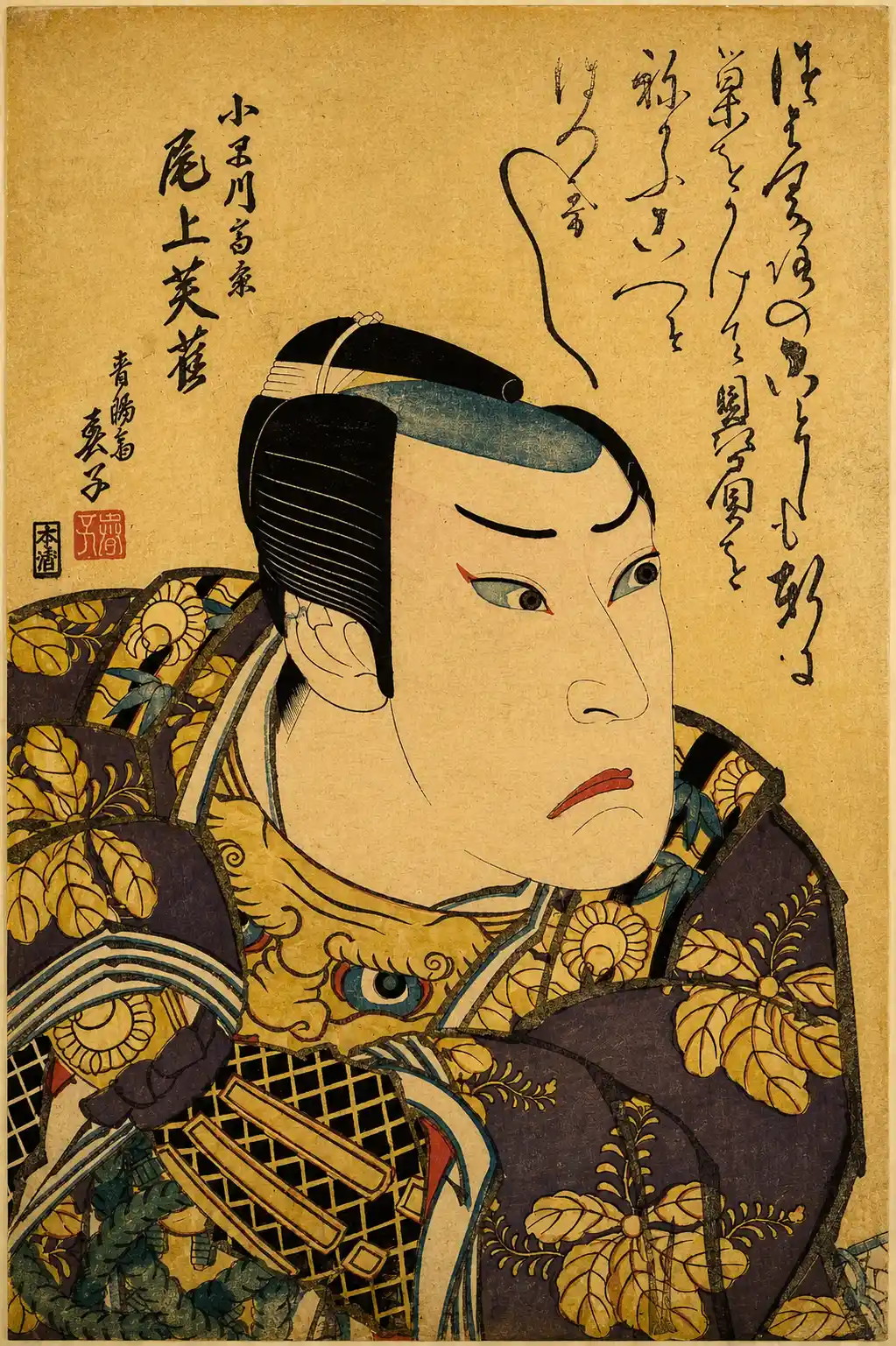
The Heavy Gaze
A solitary lantern flickers. Shadows dance on the tatami floor. The actor stands, embodying the fierce spirit of Kobayakawa Takakage. His robes, heavy with history, whisper with every subtle motion. The room is silent but for the distant murmur of the river, a constant companion to the night.
His eyes, intense and unwavering, hold the weight of battles long past. The air is thick with the scent of aged wood and fresh ink. Somewhere beyond the paper screens, a nightingale sings, its notes fragile against the stillness. The actor breathes deeply, filling his lungs with the rich, damp air of the theatre.
His stage is one of memory—a place where warriors tread and legends are born. The face he wears is not his own, but that of a samurai, poised between duty and destiny. His hand rests on the hilt of a sword, its presence both reassuring and ominous. The silence stretches, a canvas waiting for the first stroke of dawn.
Historical Echo
In the mid-1820s, the kabuki stage was a realm where history and performance entwined. Onoe Fujaku III, an actor of great repute, became the vessel for Kobayakawa Takakage, a figure of power and intrigue. The ukiyo-e captures not just the likeness but the essence of a time when stories were carved into the fabric of life, as enduring as the woodblock itself.