

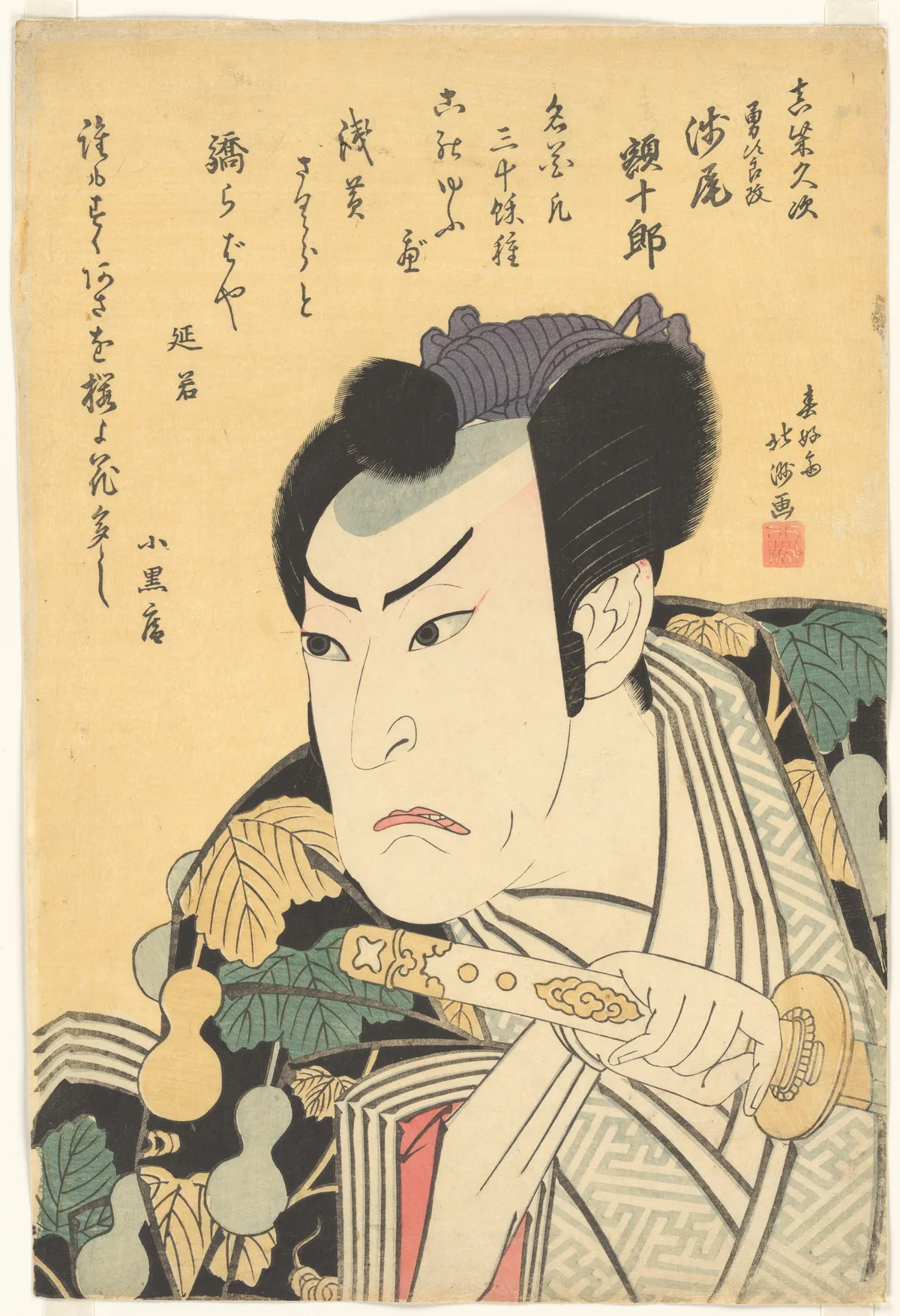
The Actor's Stage
A hush falls over the theatre. Candlelight flickers against wooden walls. The air is thick with anticipation. Asao Gakujūrō I steps forward, his presence commanding, his eyes fierce. The role of Mashiba Hisatsugu demands power. His robe, heavy with patterned silk, rustles as he moves. Each step deliberate, a dance of shadows and light beneath the stage’s dim glow.
Hisatsugu's story is one of loyalty and revenge. The crowd knows it well. Yet, they lean forward, drawn by Gakujūrō’s intensity. His voice, deep and resonant, cuts through the silence. The echoes of his words linger. The wooden boards creak, a reminder of the theatre's age. A place where stories come alive, night after night.
Gakujūrō’s face, painted with care, transforms with emotion. Hisatsugu’s anger, his sorrow, all visible in the actor's gaze. The weight of history, of duty, hangs heavy in the air. The audience holds its breath, caught in the performance’s grip.
Outside, rain begins to fall, a soft patter against the roof. Inside, the world narrows to the stage. Time slows, each moment stretched thin. The actor spins a web of tension, pulling the audience deeper.
In this space, past and present blur. The actor becomes the character, the character the story. A tale told through silk and shadow, voice and silence.
Historical Echo
In 1822, the Kabuki stage was a realm of transformation. Actors like Asao Gakujūrō I brought legends to life. Each performance a fleeting moment, yet indelible in memory. Shunkōsai Hokushū captured these moments in woodblock prints. Art and theatre, forever intertwined, preserving the ephemeral in enduring form.