

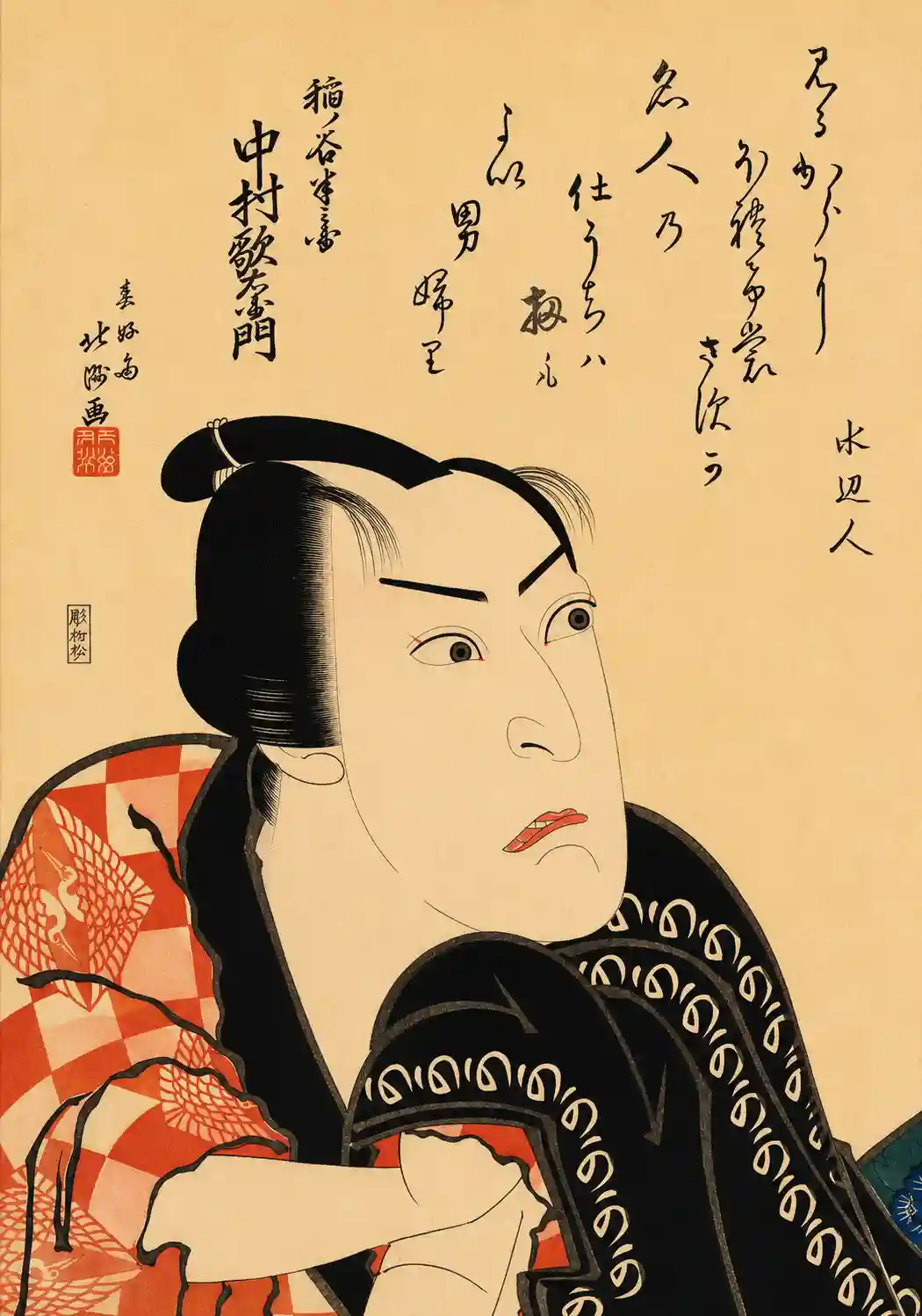
The Shadow of Hanbē
The stage is dim. A single beam of moonlight cuts through the darkness. It falls upon Nakamura Utaemon III. He stands as Inanoya Hanbē. His kimono rustles softly with each calculated breath. The air is thick with incense, mingling with the faint scent of old wood.
Utaemon’s eyes flicker, capturing the essence of a man tormented by destiny. His hands, delicate yet firm, grasp an invisible sword. Shadows dance across his face, hinting at a past unspoken. The audience leans in, breath held, as if afraid to disturb the fragile silence.
A distant drum echoes. It reverberates through the theatre, a heartbeat steady and foreboding. Utaemon shifts his weight. The fabric whispers against his skin, a subtle symphony of movement and restraint. His presence fills the space, commanding it with a quiet power.
In the stillness, his voice emerges—gravelly, resolute. Words of honour and revenge hang heavy in the air. The spectators are enraptured, drawn into the world of Hanbē. A world where the line between actor and character blurs, dissolving into the shadows of the Edo night.
Historical Echo
The year was 1820. The city of Edo thrived, its streets alive with the spirit of kabuki. Nakamura Utaemon III was a master of his craft, renowned for his transformative performances. As Inanoya Hanbē, he captivated audiences, weaving tales of drama and intrigue.
Shunkōsai Hokushū, the artist, captured this essence in woodblock form. His lines, bold yet delicate, mirrored the actor's intensity. The print remains a testament to a time when theatre and art intertwined, offering glimpses into the soul of a bygone era.